How to Start a Med Spa: A Step-by-Step Guide

As more people seek subtle, non-invasive ways to enhance their appearance, the med spa industry is projected to soar to more than $110 billion by 2030. That creates enormous opportunities, and it makes it an exciting time to launch your own med spa business.
Opening a med spa can be an enriching experience. However, given the industry's rapid growth, it requires careful planning, industry knowledge, and compliance with medical regulations.
If you’re interested in starting your own med spa, we’re sharing practical steps to help safeguard your success.
Key takeaways
- Starting a med spa is an achievable goal, but it does require careful planning and the right support
- Before you open your doors, your med spa must be fully compliant, both legally and operationally
- For a well-rounded med spa business, you need the right staff, systems, and support
Starting a med spa takes time, focus, dedication, and responsibility. With the right planning and support, you can create a rewarding and sustainable business. If you're considering starting a med spa, we’re sharing seven practical steps you can take to build your med spa business from the ground up.
- Confirm whether you can own a med spa in your state
- Choose your medical director and clinical oversight model
- Understand your permits, compliance, and licensing requirements
- Build your med spa business plan and startup budget
- Determine your services based on demand, scope, and safety
- Finalize your systems, staff, and training
- Ready your marketing plan for launch
Step 1: Confirm whether you can own a med spa in your state
Cosmetic treatments are medical services. Therefore, depending on local laws and regulations, you may need an alternate approach if you're not a physician. This hinges on whether your state enforces the Corporate Practice of Medicine (CPOM), which restricts ownership of a med spa to licensed medical professionals.
You can still own a med spa in states that enforce CPOM rules, but you’ll need to structure your business differently. This is where the Management Services Organization (MSO) model comes in. It separates the two sides of the med spa business, allowing ownership while remaining compliant.
Under the MSO model, the management side is responsible for practice administration operations, while the professional side is responsible for patient care and clinical operations.
Through this model, you would own the management side of the business, while a licensed medical professional owns the clinical side. This is brought together under a Management Services Agreement (MSA), which outlines who is responsible for what part of the business.
States not governed by CPOM rules are still governed by general laws around the practice of medicine, nursing, and facility operations. Doing your due diligence will ensure your med spa operates properly, meeting all necessary regulations.
Partnering with a provider like Fresh Clinics can also make things much easier and more streamlined. We provide best-in-industry support to help you keep every treatment, consent, and record secure and aligned with state and federal requirements. You’ll also have access to a medical director, which is essential for complying with state and federal laws.
Your medical director is the person who sets the standard of clinical care, supports safe treatment delivery, and helps protect both your patients and your business. So finding the right one is the natural next step in your med spa business journey.
Step 2: Choose your medical director and clinical oversight model
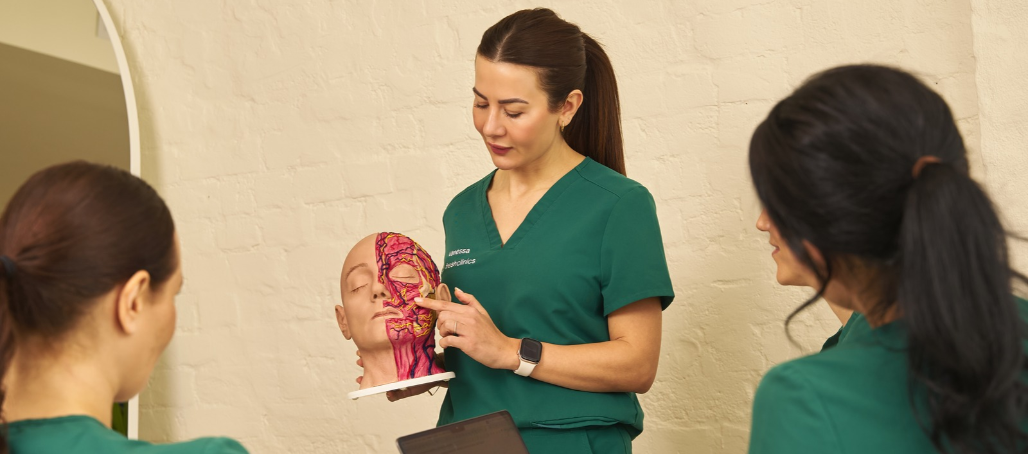
Clinical oversight is the supervision and management of patient care by senior medical experts. Your medical director will be that expert, and they’ll oversee all clinical-related aspects of your business.
Your medical director will:
- Perform patient evaluations
- Conduct Good Faith Exams where required (medical consultations done prior to treatment and performed only by qualified medical professionals)
- Run treatment protocols
- Delegate clinical tasks
- Train staff
- Oversee prescriptions
- Ensure thorough documentation
- Handle complication escalation
- Oversee clinical patient safety
As you can see, choosing the right medical director is a key decision that will set the foundation for your success.
What to look for in a medical director
As an executive position in your med spa, it’s important to take a considered approach when finding your medical director. Start by verifying their state eligibility and licenses.
You should also consider:
- Their aesthetic experience: the right experience ensures they will be able to properly manage clinical operations.
- Their availability: the proper capacity to handle the needs of your med spa is essential, especially in emergencies.
- Written agreements: clearly define their role and ensure you create a written agreement.
- Clear escalation pathways: since the medical director will be handling clinical compliance, they need to understand and be able to implement escalation pathways.
At Fresh Clinics, we connect you with licensed medical directors who support your practice, offer consistent oversight, and provide access to Good Faith Exams.
With the clinical obligations handled, now it’s time to consider your business set-up. (For example, determining each treatment in your med spa and understanding which permits you need to obtain.) This is an important step to finalizing the legal foundations of your business.
Step 3: Understand your permits, compliance, and licensing requirements
Your med spa compliance checklist will change depending on your business location. Every state has different legal licenses, certifications, and compliance regulations that dictate who you hire, the registrations you need, and the systems to implement.
Here is a bird’s-eye view of the typical permits, licenses, and compliance requirements for a med spa. Remember to also double-check this against your local state laws:
- Hiring a medical director
- Ensuring active, state-specific medical licenses for clinical staff, with cosmetic/laser requiring its own certification
- DEA registration and FDA approval if you decide to offer controlled substances, such as chemical peels
- Passing an inspection and obtaining a state health department permit
- Protecting patient information through the Health Insurance Portability and Accountability Act (HIPAA)
- Meeting OSHA standards to create a safe working environment for staff
- Conducting Good Faith Exams (GFE) and GFE workflows
- Having insurance coverage (at a minimum, professional liability, general liability, and workers’ compensation)
Your medical director will handle your clinical compliance requirements, but you can check these yourself through AMSPA, your state medical board, scope of practice for nurse practitioners and physician assistants, and the cosmetology or esthetics board.
Now that you have a compliant business model, it’s time to start scoping. A business plan will help you identify key information like proposed budgets, who you’re marketing to, which services are viable, and your specific business goals.
Step 4: Build your med spa business plan and startup budget
Sometimes a concept isn’t fully formed until you write it down. A business plan prompts questions, sparks new ideas, and builds your med spa launch framework. It’s where your concept will solidify, and it maps out an action plan.
To get started, make sure you cover these fundamentals:
- Ownership and legal structure: confirm how you want to structure your business to comply with state laws and legislation
- Medical director and compliance model: make sure your clinical obligations are covered with medical oversight based on your med spa structure and state laws
- Treatment menu: finalize what you’ll offer based on your ideal patient and gaps in the market
- Startup costs and funding: put together an overview, estimate, and/or projection of your initial investment to guide your cost-based decisions
- Location selection: determine where you’ll set up your business, e.g. within an existing spa or a brand new fitout
- Staffing: consider staff requirements based on your preferred treatment menu
- Software and operations: make sure you have the right technology and software to support your med spa now and when you’re ready to scale
- Marketing and patient acquisition: plan your brand identity and marketing strategy
- Revenue assumptions and success metrics: decide on key benchmarks such as revenue, existing patient retention, etc. to measure success
- Risk management: create a risk profile to outline what can go wrong, what to do, and who is liable
A well-thought-out business plan will guide your decisions, ensure everything is legally compliant, and help secure financing if needed. This is where your startup costs and capital investment come into play.
Med spa startup costs
Setting up any new business, including a med spa, comes with upfront costs. It’s an investment that will pay off over time. When planning your budget, you’ll need to factor in costs like:
- Treatment equipment
- An interior build-out
- Rent
- Medical supplies
- Software
- Staff training
- Insurance (such as liability or malpractice insurance)
- Marketing
The cost will also depend on the size of your business and how premium or luxurious you want your med spa to be on opening day.
Med spa startup costs, based on business size
- Single room: $50,000 - $120,000
- 2-3 treatment rooms: $150,000 - $300,000
- Premium practice, multiple rooms: $400,000+
This is a good starting point to gauge your initial startup cost, but sometimes it’s helpful to know what these costs include. To break this down further, here are the main one-off costs for each category.
Note: ongoing costs (such as rent, utilities, and wages) aren’t included in this breakdown.
Med spa startup costs by category
- Entity formation and legal ($1,500 - $10,000): state filing fee, registered agent, operating and shareholder agreements, state board registrations, healthcare attorney to confirm structure
- Build-out and lease deposits ($20,000–$200,000): subleasing a suite, fit-out a vanilla shell, conversion of non-medical retail to medical clinic, lease deposits, design fees
- Equipment and devices ($40,000–$300,000+): energy-based devices (IPL, fractional CO2, etc.), non-energy clinical equipment (chairs, tables, stools, etc.), refrigeration, sharps containers, office equipment, emergency response kits
- Initial inventory ($5,000–$30,000): consumable products, pharmaceuticals, needles, syringes, gloves, PPE
- SOPs, consent forms, and compliance documentation ($0–$15,000): dependent on your method of sourcing documentation
- Initial marketing ($5,000–$50,000): website with booking integration, SEO optimized content, brand identity and logo, photography, reviews funnel, opening campaigns, grand opening launch promotion
- Software setup ($0–$10,000): practice management platforms, payment processing, email marketing, bookkeeping and accounts
With the costs scoped, it’s time to look at the more exciting part of owning a business: your projected profits and profit margins.
Med spa profits and profit margins
Compiling projected expenses and revenue is the best way to know how your business finances will look. Use this to gauge what your return on investment (ROI) expectations should be.
This is called using profit margins — a benchmark for ROI health. The two types of margins and their associated healthy profit percentages include:
- Gross profit margin (between 60-70%): This is revenue minus the cost of services, products, supplies, and labor. This provides a good idea of how profitable your services and treatments are.
- Net profit margin (between 15-25%): This is the revenue minus all expenses such as rent, overheads, marketing and admin. This provides a good idea of how your business is performing and its overall profitability.
These margins will flex up and down depending on things like business location, costs, pricing, new patient business, and patient retention. They will also depend on the types of treatments and services you offer.
Your business plan should give you a general direction for your treatments, but you’ll need to investigate them properly before adding them to your treatment menu.
Step 5: Determine your services based on demand, scope, and safety
What will bring in the most business? That’s the main question for your treatment menu. To answer this question, you’ll need to check demand, profitability, and the required scope of practice.
Treatment demand and revenue potential
When it comes to demand and revenue, some treatments outshine the rest. Thanks to their popularity, lower startup cost, and potential profit margins, some of the more profitable cosmetic procedures for med spas include:
- Injectables: these have high demand and low equipment cost, but require medical oversight, inventory control, and training
- Laser treatments: they made up 24% of minimally invasive procedures in 2024, but have higher upfront costs for device and utilization planning, and require malpractice and liability insurance
- Body contouring
- Skin-tightening packages, especially as part of a treatment plan
Knowing the demand is the first step to outlining your treatment menu based on what patients want in your area. Next, you’ll need to layer in scope of practice, which may restrict your menu due to legal obligations or additional staff costs.
Scope of practice
The rules around who can administer or perform certain treatments may limit your menu, depending on your state. For example, in California, laser treatments can only be performed by a licensed physician (or a nurse or physician’s assistant strictly working under the physician’s supervision). Whereas in Arizona, nurse practitioners are given full independent scope of practice authority, so medical supervision isn’t required.
Doing your due diligence will help avoid any non-compliance issues around staff training and treatment procedures.
At Fresh Clinics, we help keep costs down with our inventory management portal. Whatever treatments you decide, you get access to competitive pricing on toxins, fillers, skincare, devices and consumables.
You’ll also access practice management software to support your business, staff, and training requirements now and in the future. The right software acts as the connective tissue between staff, patients, operations, and everything in-between. It’s one of the final necessities in readying your business for its grand opening.
Step 6: Finalize your systems, staff, and training
With your business plan confirmed, it’s time to focus on the operational systems that will bring all those moving parts together.
Choose your system
Spreadsheets, documents, and paper notes are quick to create, but they are a privacy risk if not handled correctly. To give you the best chance at running a seamless and compliant med spa, you’ll need the proper software that supports your business through all parts of the pipeline, such as:
- Bookings
- Patient records
- Patient consent
- Good Faith Exam workflows
- Treatment notes
- Photos
- Inventory and stock
- Appointment reminders
- Reporting
If you prefer a more comprehensive solution for your systems, Fresh Clinics provides software built specifically for med spas with the purpose of having everything you need in one place. Once your systems are set up, you’ll want the right people running them. This is where your hiring strategy comes into play.
Hire your staff
Having the right people can make the difference between a good med spa and a great one. Knowing the common roles will help you scope the staffing side of your business based on legal obligations around your treatments and services.
Hiring clinical staff
Everyone on your clinical team must be properly licensed and experienced in the treatments they deliver. That includes nurses, doctors, or other medical professionals who are legally allowed to perform or supervise the services you offer. Depending on your services, common clinical roles you may need to fill include:
- Medical director
- NP/PA (where allowed)
- RN or licensed clinical staff
- Esthetician (for permitted non-medical services)
Hiring administrative staff
Your organizational team will keep things running behind the scenes. They’ll handle things like appointments, patient experience, admin tasks, and keep the office humming. Most med spa businesses usually start with:
- Front desk receptionist
- Practice manager
- Marketing coordinator
As your med spa grows, your admin staff will expand to include roles such as marketing manager, patient care coordinator, and an accounts specialist for billing and payments.
With your clinical and admin roles mapped out, the final piece is ensuring all are properly trained for their responsibilities.
Staff training
The training required for your staff will change depending on their role and whether they operate in the clinical or management side of your med spa. Here’s a quick checklist of common training requirements for each staff category.
Clinical staff training requirements can include:
- OSHA Bloodborne Pathogens (BBP)
- HIPAA training (patient privacy)
- OSHA training (workplace safety)
- CPR/BLS certification
- Aesthetic training
- Clinical training
- Protocols and record keeping
- Consent
- Documentation
- Photography
- Emergency response procedures
- Complication escalation
Administrative staff training requirements can include:
- HIPAA training (patient privacy)
- OSHA training (workplace safety)
- Bloodborne pathogen training
- Software training
- General product and treatment training
- Protocols and record keeping
- Documentation
- Emergency response procedures
- Patient communication and rebooking
Your team should also feel confident using equipment, following protocols, and knowing exactly how you want things done.
Fresh Clinics gives you support across systems, staff, and training requirements, including medical directorship, practice management software, compliance resources, and ongoing training compliance.
Once your team is in place, it’s time to set up the plan to market your med spa to attract new patient business. You’ll want to choose your channels, understand your brand voice, and lay out how you want to position your business.
Step 7: Ready your marketing plan for launch
You’ve got your med spa business plan, treatment menu, staff, and training locked in. Now it’s time to package it up and go to market. How you attract patients will depend on their age, habits, and preferred media channels.
Key channels for your marketing strategy
Each marketing channel has its own benefits. Which you use comes down to your budget, audience, and your preferences. These benefits could be higher ROI, better organic visibility, or simply staying front-of-mind. On most of these platforms, you can share results you’ve achieved, patient testimonials, behind-the-scenes content, and special offers.
In your strategy, you’ll want to cover most — if not all — the channels below:
- Your website: this is arguably one of the most important marketing tools in your toolkit. Make sure it’s properly optimized to bring in new patients, has clear contact information and a booking system, tells your story, and boosts brand visibility.
- Local SEO: optimizing for local search channels like Google Maps and Google Business Profile will further improve your med spa’s visibility online.
- Email: this is one of the most effective marketing channels when it comes to ROI. Use it to reach the right patients at the right time.
- Social media: target your ideal audience with social media posts that speak to their unique needs; this will form a large part of building your brand online.
- Referrals and reviews: asking patients to share their experiences may persuade other potential patients to make their own bookings. However, it’s important to market this carefully, as there are rules around patient reviews.
Be sure to add clear next steps to every touchpoint, such as booking a consultation, learning more from your website, or calling your med spa. All marketing should be educational, transparent, and careful with results-based claims.
Before you hit publish or send, it’s a good idea to run a few tests first to make sure everything works. This will be part of what’s called a ‘soft launch’.
Trial a soft launch for your med spa
A soft launch is like a trial launch to make sure your systems, marketing, and workflows are working as they should. Soft launches help identify issues in critical areas and give you time to fix them. It all leads to a smoother and less stressful grand opening.
Your med spa launch checklist
Ready to launch? Here’s a quick checklist to help you cover the most important actions before opening your doors.
Legal
- Set up legal structure
- Implement necessary protocols
- Ensure all staff hold correct licenses and permits
- Complete all operational compliance requirements
- Set up insurance (at minimum professional liability, general liability, and workers’ compensation)
- Ensure adherence to HIPAA and OSHA policies
Staff
- Medical director agreement
- All staff positions filled
- All staff training requirements are met
Clinical
- Ensure the medical director is across all clinical compliance
- Implement Good Faith Exam workflows
- Emergency escalation plans are in place
- Set up documentation flows
Operational
- Software requirements are complete and set up
- Consent forms are correct and ready to use
- Equipment is calibrated and working properly
- Premises are properly set up and ready to receive patients
Marketing
- Complete a marketing action plan
- All proposed marketing activity is compliant
Pre-launch
- Soft launch complete
- All issues or blockages are fixed and cleared
Fast track your med spa launch
Opening a med spa can be a thrilling experience. It’s a journey made especially exciting with the right ideas, plans, staff, and compliance systems in place.
At Fresh Clinics, we make it easier to build, run, and scale a successful aesthetic med spa without losing sight of what matters most: safe, exceptional outcomes for every patient. We offer a purpose-built system for med spa businesses, built by MDs to support med spas from start-up to scale-up.
Join Fresh Clinics today to access software, medical oversight, training resources, and a connected community of med spa professionals.
FAQs
Can I open a med spa if I am not a doctor?
Yes, you can, but it depends on your state’s local laws. If your state is governed by Corporate Practice of Medicine (CPOM), you’ll require the proper business structure that splits ownership between the clinical side and the operations side. This is done using the Management Services Organization (MSO) model.
Do I need a medical director to start a med spa?
Depending on your state law, yes. You will need a medical director if you’re not a licensed medical professional and your business is located within a state governed by CPOM. CPOM restricts clinical operations to fully licensed medical directors. This means your med spa's clinical operations can’t be run by anyone without appropriate medical qualifications. Even outside CPOM states, most med spas still hire a medical director to oversee clinical safety and treatment protocols.
What are the best treatments to offer when starting a med spa?
The best treatments to offer when starting your med spa depend on your ideal patient and your initial investment capabilities. Some of the more popular med spa treatments include:
- Wrinkle-relaxing injectable treatments
- Dermal fillers
- Laser hair removal
- Skin resurfacing
- Microneedling
- Body contouring
- Medical-grade skincare
CONTACT US

US med spa compliance: Medical Directors and Good Faith Exams
What is the role of a Medical Director at a med apa?