Featured Articles
How to work out your med spa's margins and break-even point
A step-by-step walkthrough for clinic owners who trained clinically. Work out your gross margin on one treatment, then your weekly break-even point.
Fresh Clinics' State of Medical Aesthetics Report 2025 found that 63% of med spa owners are not confident understanding their financial performance. If you trained clinically and picked up the business side as you went, below is a guide for where to start with understanding the numbers behind your business. Set aside twenty minutes and have last month's figures where you can see them:
Step 1. Start with last month
Write down everything the med spa spent last month, including rent, product, consumables, electricity bills, then write down what came in from patients. The gap between those two is your profit for the month, and that's a profit and loss statement. Megs Reid, our Head of Partnerships, describes P&Ls a snapshot of how the business is performing.
Step 2. Pick one treatment, not your whole menu
Profit for the whole med spa tells you whether you made money for the month, but not which treatments were the most successful. Margin per treatment answers that, so choose a treatment you perform often and write down what a patient pays for it and what it costs you to deliver.
Step 3. Work out the margin
Subtract the cost from the price, divide what's left by the price, then multiply by 100. That's your gross margin on that treatment (Gross margin % = (Price − Cost) ÷ Price × 100). Then run it on a second treatment. Two treatments priced similarly can leave very different margins, so start with the one that fills your diary and the one you assume is most profitable.
Step 4. Check what you counted as cost
Most cost columns are missing something. Add freight, gloves and anything else consumed in the room. Device and peel treatments need one extra line, because they carry little product cost but a lot of chair time, so put a value on the time and add it in. Don't chase precision here, because within a couple of percent is close enough to make a decision.
Step 5. Work out what you need to bill each week
Add up your fixed costs for the year, meaning the commitments that don't move month to month, like rent, insurance, electricity and wages. Divide that annual figure by 52, and you have what the med spa costs every week before it earns anything. Now divide that weekly figure by your gross margin from step 3. The result is the revenue you need to bill each week to break even, so compare it against what you billed last week.
Step 6. If a margin looks lower than you expected
You have three levers before price, so look at what you're buying, who you're buying it from, and whether a larger order gets you a better rate. Weigh a bigger order against your cash flow before you place it, and check you can still cover rent and wages that month.
Step 7. Put it in the diary
Book an hour or two a month and block it at the start of the week, before the diary fills. Megs treats that time as working on the business rather than in it. Review your prices on a slower cycle, twice a year. Patients absorb small regular adjustments more easily than one large correction, so put the question in your calendar rather than waiting for a margin to slip.
What changes once you've done it a few times
On the first episode of Fresh Pod, Megs compares a set of business numbers to a blood test. You get the results, one is fine and another is low, and the low one tells you what to change. Listen to the full episode here.
.jpg)
Nationwide: the FDA's GLP-1 telehealth crackdown and the prescriber-network gap
The FDA's warning letters on compounded GLP-1 marketing exposed how telehealth platforms and prescribing networks split responsibility. What med spas should check.
Key facts:
- The FDA issued 30 warning letters to telehealth companies over compounded GLP-1 marketing.
- One named company, MEDVi, was cited in a February 20, 2026 letter.
- Many platforms don't prescribe themselves. Affiliated medical groups do, which can create accountability gaps.
- Intake-form-only evaluations may not meet state prescribing standards.
What did the FDA flag?
The FDA issued 30 warning letters to telehealth companies marketing compounded GLP-1 drugs with claims it called false or misleading. In a February 20, 2026 letter to MEDVi, the FDA cited claims like "same active ingredient as Wegovy and Ozempic," which are misleading because compounded drugs are not FDA-approved. See the FDA warning letter.
What is the prescriber-network issue?
A March 2026 analysis found that many of these platforms don't actually prescribe. They rely on clinicians in affiliated medical groups to evaluate patients and write prescriptions. That split between the marketing platform and the prescribing group can leave gaps in who's accountable for patient evaluation, prescribing, and follow-up. Asynchronous, intake-form-only evaluations may not meet state requirements for prescribing injectables.
What it means for your med spa
If you work with any telehealth or prescribing partner, get clear on who owns each step. Vet partners for compliance with state prescribing laws and scope of practice, make sure evaluations meet your state's Good Faith Exam standard, and confirm your marketing matches how care is actually delivered.
FAQs
Are intake-form-only evaluations enough to prescribe GLP-1s?
Often not. Many states require a real evaluation that an intake form alone may not satisfy.
Why does the platform-versus-prescriber split matter?
It can blur accountability for evaluation, prescribing, and follow-up, which is exactly where enforcement looks.
Fresh Clinics helps med spa owners vet partners and meet Good Faith Exam standards. Learn more about Fresh Clinics membership.
Nationwide: Amazon's One Medical GLP-1 program and what it signals for med spas
Amazon launched a GLP-1 program through One Medical, bundling telehealth, prescribing, and pharmacy. Here's the signal for how med spas should structure GLP-1 care.
Key facts:
- On April 21, 2026, Amazon launched a GLP-1 Management Program through One Medical, nationwide.
- It bundles screening, provider consults, prescribing, follow-up, and pharmacy fulfillment.
- On-demand telehealth handles renewals only, not new prescriptions.
- This is a commercial launch, not a regulatory action.
What did Amazon launch?
On April 21, 2026, Amazon introduced a GLP-1 Management Program through its One Medical platform, available nationwide. It runs a single care pathway: pre-visit screening, a structured consultation with a licensed provider, prescribing, follow-up visits, and clinical monitoring. Prescriptions can be filled at the patient's pharmacy of choice. See Amazon's announcement.
Is this a regulation?
No. It's a commercial program, not a government action. But it matters because it sets a market benchmark for what doing GLP-1 properly looks like: provider-led evaluation, real follow-up, and documentation, with on-demand telehealth limited to renewals rather than new prescribing.
What it means for your med spa
If you offer GLP-1 services, this is the bar patients will start comparing you to. Build a care pathway with genuine assessment, prescribing by a licensed provider, follow-up, and monitoring. Align provider involvement with your state's requirements, and document how prescriptions are issued and filled, especially when a third-party or integrated pharmacy is involved.
FAQs
Can patients get a new GLP-1 prescription through Amazon's on-demand telehealth?
No. That channel handles renewals only. New prescriptions go through the structured consultation.
Does this change any law for med spas?
No. It's a commercial program, but it signals the standard of care patients will expect.
Fresh Clinics helps med spa owners build compliant, well-documented GLP-1 care pathways. Learn more about Fresh Clinics membership.

Latest Articles
Nationwide: the CMS-FDA RAPID device pathway, and why it likely won't touch your med spa
Key facts:
- On April 23, 2026, CMS and the FDA announced the RAPID coverage pathway.
- It aligns FDA authorization timing with Medicare coverage review for certain Breakthrough Devices.
- It applies only to eligible Class II and Class III devices for serious or life-threatening conditions.
- Elective cosmetic and aesthetic devices are not in scope.
What is RAPID?
On April 23, 2026, CMS and the FDA announced the RAPID (Regulatory Alignment for Predictable and Immediate Device) pathway. It coordinates the timing of FDA market authorization with Medicare's National Coverage Determination review, so eligible devices reach Medicare coverage faster. See the CMS announcement and the FDA announcement.
Does it apply to aesthetic devices?
Almost certainly not. RAPID applies only to certain FDA-designated Breakthrough Devices, which are for life-threatening or irreversibly debilitating conditions. The agencies did not identify elective cosmetic devices or routine med spa procedures as eligible. Energy-based systems, body contouring, and lasers stay under their existing FDA authorization pathways, such as 510(k), and state oversight.
What it means for your med spa
This one is mostly a good-to-know, not an action item. Still, it's a useful prompt to review how each of your device-based technologies is FDA-classified and authorized, and to make sure your marketing reflects the actual cleared indications. More detail is coming through a Federal Register notice and public comment.
FAQs
Will RAPID speed up coverage for my laser or body-contouring device?
No. Those are elective aesthetic devices and fall outside the Breakthrough Devices Program and RAPID.
What devices does RAPID cover?
Certain FDA-designated Breakthrough Devices for serious or life-threatening conditions.
Fresh Clinics helps med spa owners keep device marketing aligned with FDA-cleared indications. Learn more about Fresh Clinics membership.
Nationwide: 36 states have no med spa-specific rules, per the AMA
Key facts:
- In April 2026, the AMA reported that 36 states have no med spa-specific laws or regulations, citing a 2025 Dermatologic Surgery study.
- 44 states lacked patient-protection requirements specific to med spas.
- Only 12 states had any med spa-specific provisions.
- Roughly 70% of med spas operate without affiliation to a physician practice.
What did the AMA report?
On April 6, 2026, the American Medical Association highlighted a 2025 study in Dermatologic Surgery finding that 36 states have no identified laws or regulations specific to med spas, and 44 states lacked med spa-specific patient-protection requirements. Only 12 states had any med spa-specific provisions: Connecticut, Iowa, Illinois, Indiana, Massachusetts, New Mexico, Oklahoma, Rhode Island, Tennessee, Texas, Utah, and Wisconsin. See the AMA article.
If my state has no med spa rules, am I unregulated?
No, and this is the trap. In states without med spa-specific rules, oversight still comes through the general laws governing the practice of medicine, nursing, and facility operations. Regulators apply those. The AMA brief notes roughly 70% of med spas operate without affiliation to a physician practice, which is exactly the gap regulators are watching.
What it means for your med spa
Don't mistake no med spa statute for no rules. Check your supervision and delegation structure against your state's medical and nursing laws, confirm every clinical staff member is properly licensed for what they do, and keep documentation for patient evaluation, treatment planning, and consent. Enforcement sweeps are already happening, including a New York inspection of 223 med spas that cited 87 for violations.
FAQs
Which states have med spa-specific rules?
Per the study, twelve: Connecticut, Iowa, Illinois, Indiana, Massachusetts, New Mexico, Oklahoma, Rhode Island, Tennessee, Texas, Utah, and Wisconsin.
What governs med spas in the other states?
General laws on the practice of medicine, nursing, and facility operations.
Fresh Clinics helps med spa owners build a supervision structure that holds up under general medical and nursing law. Learn more about Fresh Clinics membership.
Nationwide: FDA removes 12 peptides from Category 2, but they're not cleared
Key facts:
- On April 22, 2026, the FDA removed 12 peptides from Category 2 of its 503A bulk drug substances list.
- The removal happened because nominators withdrew their nominations, not a new safety finding.
- Removal does not mean the peptides are eligible for compounding.
- Several go to Pharmacy Compounding Advisory Committee review, with meetings expected through February 2027.
What did the FDA do?
On April 22, 2026, the FDA removed 12 peptide substances from Category 2 of its 503A bulk drug substances list. The list includes BPC-157, LL-37 (Cathelicidin), Dihexa acetate, DSIP (Emideltide), Epitalon, injectable GHK-Cu, KPV, PEG-MGF, Melanotan II, MOTs-C, Semax, and TB-500. You can see the FDA 503A bulk drug substances list.
Does removal mean they're approved for compounding?
No, and this is the part that trips people up. The substances came off Category 2 because the parties who nominated them withdrew their nominations, not because the FDA decided they're safe to compound. Removal does not establish that they meet the criteria for compounding under section 503A. They remain under evaluation.
What happens next?
Several go to the Pharmacy Compounding Advisory Committee for review, with meetings expected through the end of February 2027. The committee gives non-binding recommendations, and the FDA acts after that. Existing 503A rules stay in effect. See the advisory committee meeting page.
What it means for your med spa
Don't read the headline as a green light. Verify each peptide's eligibility under section 503A before sourcing or using it, audit your compounding pharmacy partners, and keep prescriber documentation for patient-specific prescriptions. Watch the advisory committee outcomes through early 2027.
FAQs
Can I use these 12 peptides now?
Not on the basis of this change. Removal from Category 2 is not approval for compounding, and they remain under review.
Why were they removed?
The nominators voluntarily withdrew their nominations. It was not a new safety determination.
Fresh Clinics helps med spa owners stay on top of compounding eligibility and sourcing. Learn more about Fresh Clinics membership.
Nationwide: FDA's MoCRA cosmetic rules, what they mean if you sell skincare
Key facts:
- MoCRA (2022) expanded FDA authority over cosmetics: facility registration, product listing, adverse-event reporting, safety substantiation, and recall authority.
- On February 11, 2026, the FDA updated its Cosmetics Direct portal ahead of biennial registration renewal.
- Manufacturers and processors register facilities. A responsible person lists each marketed product.
- It's most relevant to med spas selling retail or private-label skincare.
What is MoCRA?
The Modernization of Cosmetics Regulation Act of 2022 gave the FDA broader authority over cosmetics. It added requirements for facility registration, product listing including ingredients, serious adverse-event reporting, safety substantiation, records access, and mandatory recall authority. On February 11, 2026, the FDA updated its Cosmetics Direct submissions portal to help facilities prepare for biennial registration renewal. See the FDA update and the MoCRA overview.
Does this apply to a med spa?
It depends on your relationship to the products you sell. If you only resell another company's finished, already-listed products, the manufacturer usually carries the registration and listing duties. If your practice's name is on the label, you market a private-label line, or you're involved in manufacturing, distribution, or listing, you may be a responsible person with obligations of your own. There are exemptions for some small businesses.
What it means for your med spa
Map your retail and private-label products to a responsible person. Keep supplier documentation showing who manufactures, labels, and lists each product, and set a clear path for routing adverse reactions and complaints to the right party.
FAQs
What is a responsible person under MoCRA?
The party responsible for listing a cosmetic product with the FDA, typically the manufacturer, packer, or distributor whose name is on the label.
Does selling retail skincare automatically trigger MoCRA registration?
Not necessarily. Reselling finished, already-listed products usually keeps the obligation with the manufacturer. Private-label or own-brand products are where duties can attach to you.
Fresh Clinics helps med spa owners keep their retail and product operations compliant. Learn more about Fresh Clinics membership.
Ohio: new IV therapy compliance standards for med spas
Key facts:
- On May 15, 2025, Ohio's Medical, Pharmacy, and Nursing Boards issued a joint statement on IV therapy in clinics and med spas.
- Only physicians, PAs, or APRNs with prescriptive authority can diagnose, prescribe IV medications, and oversee treatment.
- Standing orders for IV therapy are prohibited. Each treatment needs an individual evaluation.
- Only licensed professionals can prepare or administer IV medications.
What did Ohio's boards say?
On May 15, 2025, Ohio's Medical, Pharmacy, and Nursing Boards issued a joint statement aimed at IV therapy clinics and med spas, citing concern about improper diagnoses, drug preparation, and unlicensed administration. It sets out clearly who can do what.
Who can prescribe and administer IV therapy in Ohio?
Only a physician, PA, or APRN with prescriptive authority can diagnose a patient, prescribe IV medications, and oversee the treatment plan. Only licensed medical professionals can prepare or administer IV drugs. Aestheticians, medical assistants, and front desk staff cannot.
Are standing orders allowed?
No. Pre-set protocols that let IV therapy proceed without a real prescriber-patient relationship are prohibited. Each IV treatment requires an individual evaluation by a qualified prescriber, citing Ohio Administrative Code Rule 4729-3-12. Telehealth can establish that relationship, but it has to meet the same standard of care as an in-person visit, with documentation.
What it means for your med spa
If you run IV therapy in Ohio, drop any standing-order model and build a workflow where a qualified prescriber evaluates each patient. Confirm that only licensed staff prepare and administer. Enforcement risks include fines and license suspension.
FAQs
Can a med spa use standing orders for IV drips in Ohio?
No. Each treatment requires an individual evaluation by a qualified prescriber.
Can a telehealth visit establish the prescriber relationship?
Yes, if it meets the in-person standard of care and is documented.
Fresh Clinics helps med spa owners run compliant IV therapy with telehealth Good Faith Exams and medical oversight. Learn more about Fresh Clinics membership.
New Jersey: emergency APN practice flexibilities extended, for now
Key facts:
- On February 13, 2026, New Jersey's Governor extended the State of Emergency through April 2, 2026, keeping temporary APN supervision flexibilities in place.
- The extension delays, but does not cancel, the return to pre-emergency rules.
- Once it ends, APNs resume written joint protocols, documented physician collaboration, and controlled-substance protocols.
- It affects APN-led injectables, IV therapy, and device-based services.
What changed?
In January 2026, New Jersey signaled that pandemic-era practice flexibilities would expire within 30 days. Then, on February 13, 2026, Governor Sherrill signed an executive order extending the State of Emergency through April 2, 2026, which kept temporary modifications to APN collaboration and supervision requirements in place. See the Governor's announcement.
Is this new practice authority?
No. The extension only delays the return to pre-emergency rules. It does not grant anything new. When the emergency ends, APNs go back to maintaining written joint protocol agreements with collaborating physicians, documented collaboration, DEA registrations and controlled-substance protocols, and clear ownership and provider authority.
What it means for your med spa
Treat this as a deadline, not a reprieve. If your practice leaned on modified collaboration or remote supervision during the emergency, those arrangements may draw scrutiny once standard rules resume. Review and update your joint protocols, prescribing parameters, and physician collaboration before the emergency lapses.
FAQs
When do pre-emergency rules return?
After the State of Emergency ends, currently extended through April 2, 2026.
Does the extension expand what APNs can do?
No. It only postpones the return to standard supervision and collaboration requirements.
Fresh Clinics helps med spa owners get supervision agreements in order ahead of changes like this. Learn more about Fresh Clinics membership.

New Jersey: independent practice for APNs, but not for aesthetics
Key facts:
- On March 30, 2026, New Jersey's Governor signed S2996/A4052, giving qualifying APNs permanent independent practice authority.
- It applies to APNs in primary or behavioral health care with more than 5,000 practice hours.
- The law explicitly excludes elective aesthetic and cosmetic services.
- Aesthetic APNs still need a joint protocol with a collaborating physician.
What did New Jersey change?
On March 30, 2026, Governor Mikie Sherrill signed S2996/A4052, letting qualifying advanced practice nurses (APNs) practice without a joint protocol with a collaborating physician. To qualify, an APN must have more than 5,000 hours in an applicable population focus such as family practice, adult gerontology, pediatrics, women's health, or behavioral health. See the Governor's announcement and the official bill text.
Does this apply to aesthetic clinics?
No. The law explicitly states that qualifying independent APNs cannot provide elective aesthetic or cosmetic services. So an APN delivering injectables, IV therapy, or other cosmetic services in New Jersey still operates under the existing joint protocol rules, including prescribing standards, chart review, annual protocol review, and physician availability.
What it means for your med spa
If your New Jersey practice runs on APN-delivered aesthetic services, your supervision obligations have not changed. Keep your joint protocol agreements current, and don't assume the headline about independent practice applies to cosmetic work. The Board of Nursing is expected to issue implementing rules, so watch for those.
FAQs
Can an aesthetic nurse practitioner work independently in New Jersey now?
No. The independent practice authority excludes elective aesthetic and cosmetic services.
What do aesthetic APNs still need?
A joint protocol with a collaborating physician, with chart review, annual protocol review, and physician availability.
Fresh Clinics helps med spa owners keep their supervision structure sound as state rules shift. Learn more about Fresh Clinics membership.
Utah: physician indicted over non-FDA-approved peptides from China
Key facts:
- On April 1, 2026, a federal grand jury indicted a Utah osteopathic physician who owned a wellness clinic.
- He allegedly sold non-FDA-approved peptides imported from China to more than 200 patients between February 2024 and April 2025.
- Named substances include tirzepatide, semaglutide, BPC-157, TB-500, and NAD+.
- He faces eight counts involving misbranded drugs. The case was investigated by the FDA Office of Criminal Investigations.
What is the case?
On April 1, 2026, the U.S. Attorney's Office for the District of Utah announced a federal indictment of a licensed osteopathic physician who owned a wellness clinic in Utah. You can read the Department of Justice press release.
What is he alleged to have done?
Between about February 2024 and April 2025, the physician allegedly used an intermediary to obtain discounted, non-FDA-approved peptides from a supplier believed to be in China, then sold them to more than 200 patients. The peptides allegedly arrived in unlabeled vials, and he allegedly added labels that did not identify the manufacturer, packer, or distributor, which is what makes a drug misbranded under federal law. He is also alleged to have skipped comprehensive medical histories and provided syringes for self-injection without monitoring protocols. He faces eight counts.
What it means for your med spa
Imported or research-grade peptides are a live federal enforcement target, and holding a medical license is no shield. Verify the source, FDA status, and lawful pathway for every peptide or GLP-1 product before it reaches a patient. Make sure labels carry the required source information, and document patient evaluation, prescribing, and dispensing.
FAQs
What makes a drug misbranded?
Among other things, a label that fails to identify the manufacturer, packer, or distributor, or that is false or misleading.
Which peptides were named in the indictment?
Tirzepatide, semaglutide, BPC-157, TB-500, and NAD+, among others.
Fresh Clinics helps med spa owners build compliant sourcing and documentation into how they operate. Learn more about Fresh Clinics membership.
Texas: criminal charges in the Jenifer's Law med spa death case
Key facts:
- In April 2026, felony charges were filed against the former owner and former medical director of a Texas med spa over a 2023 IV therapy death.
- The case is the one behind Texas HB 3749 (Jenifer's Law), effective September 1, 2025.
- The Texas Medical Board found the medical director failed to supervise an unlicensed owner who made treatment decisions.
- In Texas, only physicians, PAs, or APRNs can prescribe or order elective IV therapy, and only physicians, PAs, APRNs, or RNs can administer it, under physician supervision.
What happened?
On April 29 and 30, 2026, prosecutors in Freestone County, Texas filed felony charges against the former owner and former medical director of a med spa in Wortham, Texas. The charges, which include murder, manslaughter, and criminally negligent homicide, stem from the July 2023 death of a patient after an IV infusion at the spa. The case is ongoing.
How does this connect to Jenifer's Law?
The patient's death prompted HB 3749, known as Jenifer's Law, which took effect September 1, 2025 and set delegation and supervision rules for elective IV therapy. You can read the enrolled bill text on the Texas Legislature site. The criminal case is separate from the law, but it's the event that drove it.
What did the Texas Medical Board find?
In August 2024, the Texas Medical Board disciplined the medical director for failing to properly supervise the owner, who was not licensed or qualified to make treatment decisions or administer prescription medications. The board found IV therapy with prescription drugs was given without proper safety protocols, emergency procedures, or adequate on-site licensed oversight. You can see the Texas Medical Board newsroom for its disciplinary actions.
What it means for your med spa
This is the clearest possible signal that supervision is not a paperwork formality. Under current Texas rules, only a physician, PA, or APRN can prescribe or order elective IV therapy, and only a physician, PA, APRN, or RN can administer it, always under physician supervision. An unlicensed owner cannot make treatment decisions. Document your delegation chain, emergency protocols, and supervising physician involvement.
FAQs
Who can order and administer elective IV therapy in Texas?
A physician, PA, or APRN can prescribe or order it. A physician, PA, APRN, or RN can administer it, under physician supervision.
Is this the same thing as HB 3749?
No. HB 3749 (Jenifer's Law) is the statute. This is a separate criminal prosecution arising from the same 2023 death.
Fresh Clinics helps med spa owners put real supervision and documentation in place, from telehealth Good Faith Exams to medical oversight. Learn more about Fresh Clinics membership.
Texas: what Jenifer's Law (HB 3749) means for med spas
Key facts:
- Texas HB 3749 (Jenifer's Law) took effect September 1, 2025.
- It regulates elective IV therapy provided outside a hospital or doctor's office.
- A physician, NP, or PA must evaluate the patient before an elective IV, which is a Good Faith Exam (GFE).
- Only a physician, NP, PA, or RN can start and administer the IV.
- It adds no new state requirements for injectables, laser, or other cosmetic procedures.
What is Jenifer's Law (HB 3749)?
HB 3749 is a Texas law named for Jenifer Cleveland, who died in 2023 after an IV infusion at a med spa in Wortham, Texas. Governor Greg Abbott signed it into law on June 20, 2025, and it took effect September 1, 2025. You can read the enrolled bill text on the Texas Legislature site.
The first draft was sweeping. It would have regulated cosmetic procedures across the board, required a physician to perform every initial exam, and mandated a physician on site. After industry input, the version that passed is far narrower and focuses on elective IV therapy.
What counts as elective IV therapy?
Elective IV therapy is the non-emergency administration of fluids, vitamins, or medications into the bloodstream for hydration, wellness, or temporary symptom relief, delivered outside a hospital or doctor's office. Think vitamin drips, hydration infusions, and mobile IV services. IV care given in a hospital or licensed clinic is regulated separately and isn't covered here.
Who can administer IV therapy in Texas now?
Before an elective IV is administered, a physician, nurse practitioner, or physician assistant must evaluate the patient, which in practice is a Good Faith Exam (GFE). Only a physician, NP, PA, or registered nurse can start and administer the IV. Medical assistants, licensed vocational nurses, paramedics, and unlicensed technicians can no longer perform that step. A physician can still delegate ordering and administration to qualified providers under adequate supervision.
Does Jenifer's Law affect injectables or laser treatments?
No. If your med spa offers injectables, laser, or other cosmetic treatments and not IV drips, HB 3749 adds no new state requirements to those services. The rumored on-site physician mandate did not make the final law. Existing Texas Medical Board rules still apply: a physician, PA, or NP must establish the patient relationship through a Good Faith Exam, which can be done via telehealth, before any aesthetic procedure, and at least one person trained in basic life support should be on site during procedures.
What should Texas med spas do about it?
If you offer IV therapy, check who starts your IVs and confirm every patient is evaluated first. If you don't, treat this as a prompt to confirm your GFE process, documentation, and supervision agreements are solid. Regulators are paying closer attention to the med spa industry, and the practices that stay ahead of it are the ones already running by the book.
FAQs
When did Jenifer's Law take effect?
September 1, 2025.
Does the law require a physician on site at all times?
No. It requires adequate physician supervision and delegation, not a full-time on-site physician. Existing Texas Medical Board rules govern supervision and emergency readiness.
Can a nurse practitioner or physician assistant perform the Good Faith Exam?
Yes. A physician, NP, or PA can evaluate the patient before an elective IV.
Who can legally start an elective IV in Texas?
A physician, NP, PA, or registered nurse. Medical assistants, LVNs, paramedics, and unlicensed technicians cannot.
Fresh Clinics helps med spa owners put this infrastructure in place, from telehealth Good Faith Exams to medical oversight and documentation. Learn more about Fresh Clinics membership.

Nationwide: what the FDA's peptide review means for your med spa
Key facts:
- On February 27, 2026, HHS Secretary Robert F. Kennedy Jr. said the FDA may take new action on about 14 peptides then restricted in Category 2.
- The comments came in a podcast interview, not a formal FDA action.
- In 2023, 19 peptides were placed in Category 2, making them ineligible for compounding by 503A pharmacies.
- Peptides discussed include BPC-157, thymosin beta-4 (TB-500), AOD-9604, and CJC-1295.
- The FDA later removed 12 peptides from Category 2 on April 22, 2026, but removal is not approval (see below).
What did RFK Jr. say about the FDA peptide restrictions?
On February 27, 2026, HHS Secretary Robert F. Kennedy Jr. said in a podcast interview that the FDA was looking at new action on about 14 of the peptides then sitting in Category 2 of the agency's 503A bulk drug substances list. He argued the original designations went through without the safety signal the FDA normally requires. Those were remarks in an interview, not a rule change.
What is Category 2 of the FDA's 503A list?
In 2023, the FDA moved a group of peptide substances into Category 2, the group it reserves for ingredients that raise a significant safety or regulatory concern. Category 2 substances are not eligible for compounding, which means licensed 503A pharmacies cannot legally formulate them for patient-specific prescriptions. You can read the FDA's explanation of these bulk drug substances that may present significant safety risks, and the underlying list in 21 CFR 216.23.
Which peptides are affected?
The peptides discussed include ones some practices know well, such as BPC-157, thymosin beta-4 (TB-500), AOD-9604, and CJC-1295. For a med spa, Category 2 status is the difference between being able to source an ingredient from a licensed compounding pharmacy and not.
Has anything actually changed for med spas?
At the time of the interview, no. Since then, on April 22, 2026, the FDA did remove 12 peptides from Category 2, but because their nominations were withdrawn, not because they were cleared for compounding. Removal is not approval, and the existing Section 503A requirements remain in effect. The safest position is to treat the current rules as the rules and watch for formal FDA action. (We cover the April 22 removal in a separate post.)
What should med spas do now?
- Confirm every peptide in your treatment protocols is currently eligible for compounding under FDA bulk substance guidance.
- Review prescriber documentation so patient evaluations and medical necessity are recorded properly.
- Check that the compounding pharmacies you work with are licensed and supplying under Section 503A.
- Keep your marketing language tied to prescriber authority, and steer clear of therapeutic claims you can't support.
FAQs
Did the FDA remove peptides from Category 2?
When this story broke in February 2026, no. The FDA later removed 12 peptides from Category 2 on April 22, 2026, but that was due to withdrawn nominations, not approval for compounding.
Can my med spa source BPC-157 or CJC-1295 right now?
Not on the basis of these developments. Removal from Category 2 is not approval, and eligibility under Section 503A still has to be confirmed before sourcing.
What is a 503A compounding pharmacy?
A pharmacy that compounds medications for individual patient-specific prescriptions under Section 503A of the Federal Food, Drug, and Cosmetic Act.
Fresh Clinics gives med spa owners the clinical oversight and compliance infrastructure to stay ahead of changes like this one. Learn more about Fresh Clinics membership.

What marketing strategies actually grow a med spa
Most med spa owners spend more on marketing every year and watch the return shrink. Paid acquisition costs keep climbing. Platform algorithms change before any one strategy gets a chance to compound. New patient counts go up, then down, then sideways. The numbers don't add up to growth.
The mistake isn't the spend. It's the assumption that marketing means advertising. The med spas growing right now have figured out that the biggest growth lever isn't at the top of the funnel. It's everywhere else.
The marketing most med spas underinvest in
On our recent Member webinar, The Profit Treasure Map, Jade Spehr from Jade Start (a consulting firm Fresh works with) walked through the performance numbers she sees across hundreds of aesthetics practices. Rebooking rates. Average patient value. Retail mix. The cost to deliver a single treatment. Most practices sit well below the benchmarks she'd consider healthy.
The gap isn't effort. It's where the effort goes. A practice spending heavily on ads while leaving rebooking systems, retention metrics, and patient experience untouched is paying full price for new patients and letting half of them walk out the door for good. Marketing spend can't out-run an operational leak.
Jade also raised something most owners haven't thought about: not posting is still creating a brand. Her background is in insolvency, and she's watched what happens when businesses go quiet on public channels. Patients scroll past an empty feed and assume the practice has closed. The algorithm makes it worse. Once you stop posting, your reach drops, and rebuilding takes longer than starting fresh.
Megs Reid, Fresh Member Lead, added what she sees across the member base. The practices that pulled back during tough stretches didn't come back stronger. They came back to a colder audience and a harder rebuild.
Three growth levers that aren't paid ads
The practices growing right now aren't spending more on acquisition. They're investing in the parts of the business that compound.
Rebooking is a marketing strategy. A patient who rebooks before they leave has already made their next buying decision. That's not just operational efficiency. It's the cheapest, most predictable patient acquisition channel in the business, because it isn't acquisition at all. It's retention done well. Practices with structured rebooking systems (point-of-care booking, recall intervals, tracked retention metrics) consistently outperform practices relying on ad spend to keep the funnel filled.
Word-of-mouth is a marketing strategy. Patient referrals don't show up in your ad reporting, but they're often the highest-converting channel in the practice. They're also the channel most owners do nothing to engineer. Kerry Johnson of Joy by Nature shared something on a recent Fresh webinar that surprised the room. Alongside her aesthetic work, she'd started offering women's health consults, and the word-of-mouth from those consults grew faster than her injecting business ever did at the beginning. The reason wasn't the new service. It was the depth of the conversation. Patients who feel heard about their sleep, their energy, their hormonal health refer differently. They send friends. They mention you by name. Expanding what you offer isn't just a revenue decision. It builds the kind of patient relationships that generate referrals as a byproduct.
Patient experience is a marketing strategy. The consultation is where most of the conversion work actually happens. On the same webinar, Megs raised the concept of a "what's possible" gallery, used inside the consultation room with patients. Instead of leading with side-by-side before-and-after shots, you walk patients through what's achievable for someone in their situation. The shift is from "look what we did" to "here's what's possible when you work with a practitioner who knows what they're doing." It's a small change in how you run a consultation, and it changes what patients walk out believing about your practice.
What this changes for your marketing
The strongest move isn't to spend more on ads. It's to audit the parts of the business where money is already leaving the door.
Look at your rebooking rate. If you don't know it, that's the first finding. If you do know it and it sits below 50%, the marketing problem is downstream of an operational one. No amount of paid acquisition fixes a leaky bucket.
Look at your service mix. The practices building referral pipelines aren't doing it through cleverer Instagram captions. They're doing it through deeper patient relationships, which come from offering more reasons for patients to come back and more time spent with them when they do.
Look at how your team handles consultations. The consultation is the highest-leverage moment in the patient relationship. Most practices treat it as a transactional step on the way to a treatment, when it's the most powerful marketing asset in the building.
Fresh Clinics supports med spa owners and clinicians with the operational infrastructure to build a practice that grows on its own terms, not the algorithm's. Learn more about Fresh Clinics membership.

Why your rebook rate matters more than your pricing (and how one Fresh Member built 88% retention)
If you've been in aesthetics for a few years and your med spa is past the survival phase, you've probably hit the same question every growth-focussed clinician hits eventually. How do I keep the patients I've already got, instead of constantly chasing new ones?
The answer almost always lives in the consult. Not the technique. Not the pricing. The conversation that happens before the needle comes out.
This is the topic of the latest episode of Fresh Pod with one of our experienced AU clinicians. She sat down with our team and pulled her real numbers live on the recording. Over the last 12 months, her practice is holding 88% rebook rate and 90% retention. She surprised herself when she saw the figures.
What's interesting is that none of what she's done is complicated.
The shift she made
Most practices treat the rebook conversation as the last thing that happens before a patient walks out the door. Treatment is finished, the patient is putting their bag on, and someone says 'would you like to book your next appointment?' It feels awkward because it is awkward. The conversation has nothing to anchor it to.
She flipped this. Every patient gets a treatment plan at the very first consult, before anything is treated. The plan covers what's possible, what's recommended, and the timeline that makes clinical sense. The rebook is written into the plan from day one.
In her words on the episode: 'If you try to bolt it on at the end it feels awkward. Front-load it and it just becomes part of the experience.'
By the time the next appointment needs booking, the conversation has already happened. The patient knows it's coming. There's no pressure, no salesy energy, no awkward upsell. It's just the next step in a plan they've already agreed to.
Why this works clinically as well as commercially
There's a reason this approach is showing up in the practices with the strongest patient retention. It's not just good for business. It's better medicine.
When a patient understands what they're trying to achieve, what's realistic, and how the work happens over time, they make better decisions. They're less likely to ask for things that aren't right for them. They're less likely to walk in with unrealistic expectations. They're more likely to follow the aftercare. And when something does go sideways (a bruise, an asymmetry, a slow result), they're more likely to call you instead of disappearing.
For clinicians in the growing phase of building a practice, this is the part that often gets overlooked. The pressure to scale makes it tempting to focus on getting new patients in the door. But your existing patients are the highest-trust, lowest-cost source of growth you have. Every patient you retain is one you don't have to acquire.
The other shifts worth noting
The treatment plan is the headline move, but it's not the only one. A few other things she mentioned on the episode.
She doesn't treat new patients differently to long-term ones. Every patient gets a full facial assessment, every patient gets a treatment plan. Consistency is what builds the trust that turns first-visit patients into ten-year patients.
Her two-week follow-up is automated and booked by default, not opt-in. Patients can cancel if they don't need it. Most don't.
She doesn't get drawn into pricing conversations. Her line on the episode: 'If you want it cheaper, you can go there.' She's confident in the service she provides, and patients respond to that confidence.
She built her practice's four core values into the way she consults. Hers are authenticity, advocacy, care, and excellence. Every decision, every patient interaction, every plan ladders back to those four. It's worth the time to write your own.
What this looks like for a growing practice
If you're early in building and the idea of writing a treatment plan for every single patient feels like a lot, start smaller. Pick one new patient this week. Sit down for fifteen minutes after the consult and write out what you'd recommend over the next 6, 12, and 18 months, based on what they told you. Send it to them.
You'll be surprised how often patients respond. Most have never had a healthcare practitioner take them seriously enough to plan ahead with them. It's the part of the experience that turns a one-off treatment into a relationship.
Once you've done it for a handful of patients, you'll start to see the patterns. The plan becomes faster to build. The conversation becomes natural. Within a few months, it's just how you consult.
Want to hear the full conversation?
The full Fresh Pod episode is worth a listen on the way to work. She gets into the systems she uses, how she trains her team to consult the same way she does, and the one automated text message she set up two years ago that meaningfully shifted her rebook rate.
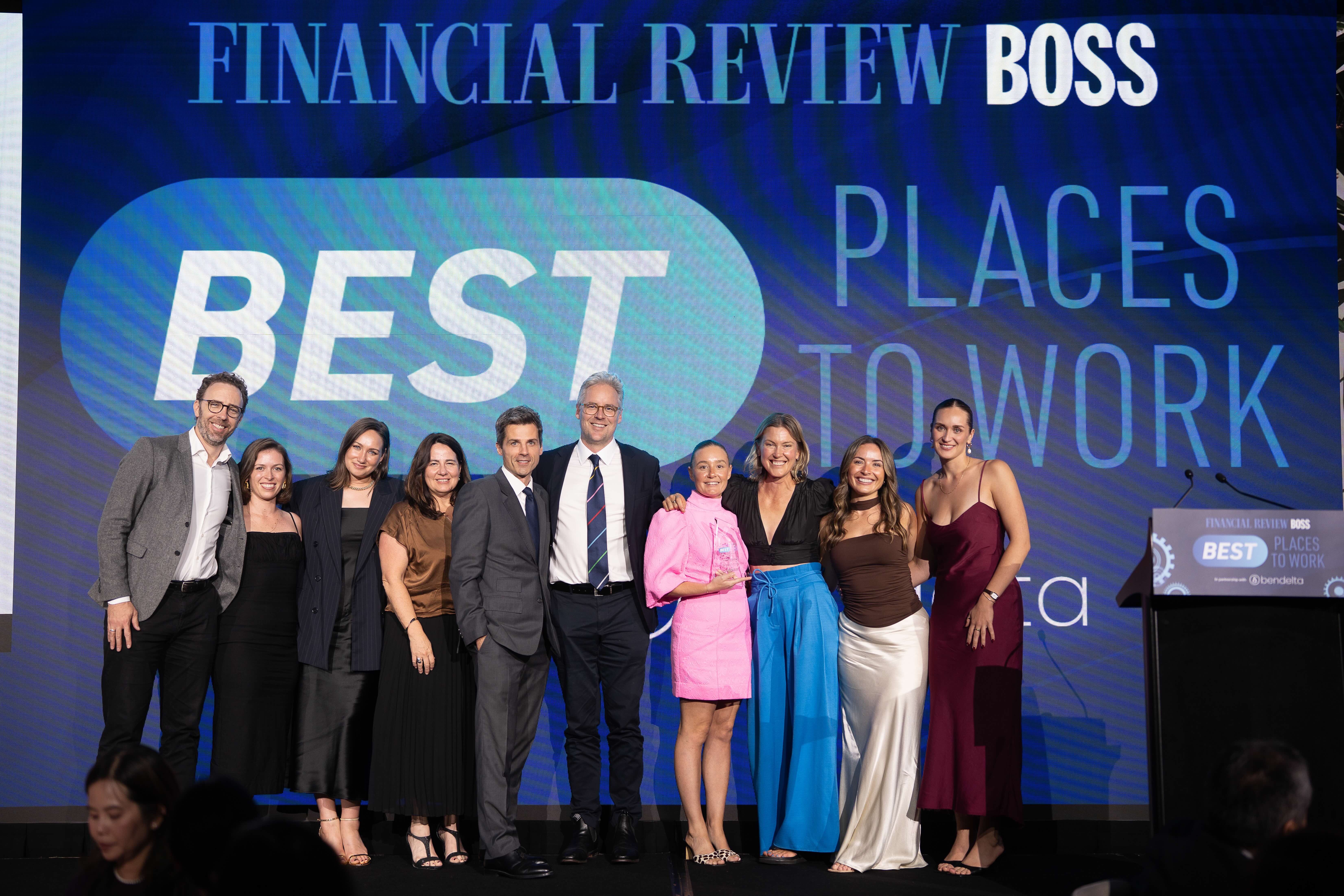
Fresh Clinics awarded at AFR BOSS Best Places to Work 2026
We’re incredibly proud to announce that Fresh Clinics has been named one of the AFR BOSS Best Places to Work for 2026. Not only did we make the prestigious list, but we were also honoured with the special award for ‘Energising’ – a recognition given to the business that best demonstrates a culture that motivates, inspires and brings out the absolute best in its people.
The Australian Financial Review recently shared insights into what makes a workplace truly exceptional, and it is a topic that hits home for us. As our Chief People Officer, Ally Atkins, puts it, "This award is evidence that you don't need to follow the masses with post-work drinks or ping-pong tables to make a difference in your people's lives." Instead, it is about creating an environment where you don't just show up, but where you actually get to be your best.
For those of us in the aesthetics industry, this is particularly relevant. Whether you are running your own clinic or working within a team, the atmosphere you cultivate directly impacts the care you provide to your patients.
Read the full article in the Australian Financial Review here.

The #1 Way Med Spas Grow Their Business
In today’s booming aesthetics industry, med spas are popping up on every corner. Many chase growth with ads, discounts, and quick-win marketing tactics. But the truth is: the fastest-growing med spas aren’t the ones spending the most on ads — they’re the ones delivering the best patient outcomes.
At Fresh, we’ve supported more than 2,000 nurses and doctors in building thriving practices. The data is clear: clinical excellence is the #1 driver of med spa growth.Why? Because excellence fuels patient trust, and trust fuels referrals.
In this article, we’ll share:
- Proprietary insights from Fresh’s network of clinics
- Why referrals, not ads, are the ultimate growth engine
- The Fresh 4-Pillar Growth Model for sustainable med spa success
The Problem with “Quick-Fix” Med Spa Growth
The aesthetics industry is often framed around leads, discounts, and fast revenue. Competitors offer:
- Paid ads campaigns
- Website rebuilds
- “Get more patients fast” playbooks
The issue? Patients notice the difference.

Poor consultation processes, unprepared injectors, and inconsistent results lead to disappointment — and in some cases, safety risks.
Even major media outlets have highlighted the danger. In his HBO segment, John Oliver exposed the growing trend of under-qualified injectors chasing quick profits. This isn’t just bad press — it’s a warning signal for patients.
Med spas built on short-term marketing tactics struggle to retain patients and eventually burn out.
Fresh Data: Referrals Are the Growth Engine
Fresh’s work with thousands of injectors has revealed a simple truth: **referrals account for the majority of sustainable growth in med spas.
- Practices that focus on complication management training see up to 2x more referrals within 6 months.
- Practitioners who adopt Fresh’s consultation mastery framework report a 35% increase in repeat patient bookings.
- Med spas that deliver consistently superior outcomes see organic referral growth surpass paid acquisition by Year 2.
This is the compounding power of excellence. Each happy patient tells a friend, leaves a glowing review, and builds the practitioner’s reputation.
The Fresh 4-Pillar Growth Model
We’ve codified what works into the Fresh 4-Pillar Growth Model — a framework built on what we’ve seen across 2,000+ aesthetic clinics.
1. Consultation Mastery
- Patients don’t just buy treatments — they buy confidence.
- A structured consultation builds trust and ensures tailored outcomes.
2. Complication Confidence
- When practitioners are trained to handle complications, confidence radiates.
- Patients sense this security — leading to stronger loyalty and referrals.
3. Patient Experience
- Every touchpoint matters: from the first consult to follow-ups.
- A superior patient journey drives love, loyalty, and advocacy.
4. Business Growth through Referrals
- Delivering excellence creates a flywheel: Great outcomes → Referrals → More patients → Sustainable revenue.
Why Clinical Excellence Builds Premium Brands
The benefits go beyond just growth:
- Exclusivity: Better practitioners attract better patients.
- Pricing Power: Superior outcomes justify premium pricing.
- Future-Proofing: As competition intensifies, only practices with clinical excellence will stand out.
- Industry Stewardship: Putting patients first sets Fresh and its members apart from negative industry trends.
In short, excellence isn’t just a growth strategy — it’s a brand strategy.
Key Questions Answered
What is the #1 way med spas grow?
Referrals. And referrals come from delivering excellent patient outcomes.
Why are referrals better than ads?
Ads can buy attention. But only excellence earns trust — and trust is what fuels long-term patient advocacy.
What role does complication management play in growth?
Confidence in handling complications radiates to patients. It builds safety, trust, and loyalty — all drivers of referrals.
What is the Fresh 4-Pillar Growth Model?
A framework for sustainable med spa success: Consultation Mastery, Complication Confidence, Patient Experience, and Business Growth via Referrals.
Conclusion: Excellence Wins, Every Time
The aesthetics industry is evolving quickly. In the short-term, anyone can buy ads. In the long-term, only those who build their practices on clinical excellence will thrive. At Fresh, we’ve helped over 2,000 nurses and doctors achieve their dreams — by putting patients first, building confidence, and creating practices that grow on referrals, not hype.
The future of aesthetics is clear: Excellence drives growth.

Day 2 at The Fresh Life 2025
-2.png)
The content of this blog is designed and intended for the education of Healthcare Professionals.
Day 2 at The Fresh Life began on the Rivershed Deck with breathwork, a grounding ritual to set intention and focus for the day ahead. Meanwhile, Allergan Aesthetics hosted an intimate, invite-only breakfast with Dr Cara McDonald, exploring Distinct Definition and the artistry of advanced facial aesthetics.
Over on the main stage, Dr Kim Booysen opened with The Collagen Economy, mapping the profitable and clinical pathways to long-term skin quality. She was followed by the session everyone was buzzing about - Map. Measure. Master. Full Face Toxin with global sensation, The Injector Bunny, who brought her trademark precision and energy in a Fresh Clinics exclusive, all the way from the USA.
Momentum kept building as entrepreneur Franziska Iseli inspired the crowd with The Courage Equation, sharing practical tools to thrive in a fast-changing world.

Breakouts and group training then offered delegates a chance to deep dive into focused clinical sessions:
- Dr Michael Zoran showcased advanced full-face techniques in Rejuran DOT™ Revolution.
- Dr Jake Sloane sparked debate in Are Hyaluronic Acid Fillers Finished?, challenging assumptions about the future of HA.
Over lunch, Hugel hosted a private sponsor session with Dr Jimmy Wang, presenting his 24-month review of Letybo.
The afternoon returned to the main stage with a burst of energy from Evolus in Be Fearless, Be Unapologetic, Be You - a powerful panel with Agnes Dube, Jamal Ammar, Sharna Hill, and Elly Seymour. From there, Molly Brown took a closer look at Hugel’s Byryzn Opuluxe V, sharing results that build both clinical confidence and patient satisfaction. Dr Georgia Rigas then introduced A Fresh Change: Obesity and Weight Management, highlighting the expanding role of aesthetic clinics in tackling one of Australia’s most pressing health challenges.
Over in the Fresh Lounge, conversations turned practical and collaborative. Rogen Eulatic (Laseraid) and Róisín McGee (Venus Concept) shared Technology Integration strategies to drive clinic success, while a powerhouse panel - Dr Kristy Kostalas (The Skincare Company), Charlotte Clarke (Murad), Selina Mithen (AST), and Rajdi Gemeri (Raan Medical) - unpacked Hormones and Their Influence on the Skin, with a focus on supporting patients through menopause.

As day 2 came to a close, delegates gathered at Fiume Rooftop for Aperitivo Hour, hosted by Dermalogica PRO - a relaxed evening of city views and connection. Later, Merz hosted an invite-only dinner, where Dr Kim Booysen led an exclusive discussion on Skin in the Game: Navigating the New Aesthetic Landscape.
Day 2 delivered a dynamic mix of inspiration, science, and strategy, reminding us that The Fresh Life is as much about professional growth as it is about building a community that supports one another.
The second day of The Fresh Life 2025 was certainly one to remember, and we can't wait for a final epic day!
.avif)

Day 1 at The Fresh Life 2025
The content of this blog is designed and intended for the education of Healthcare Professionals.
The Fresh Life 2025 opened at the iconic Howard Smith Wharves in Brisbane today, with energy, insight, and a clear reminder of why this community comes together each year: to share, to learn, and to grow stronger as an industry.
The morning began bright and early with our official pre-conference ritual: The Fresh Run Club. Attendees laced up for a light run (or walk) along the Brisbane riverfront, setting intentions and energising together for the days ahead.
The day then kicked off with a dose of mindset mastery, as Chelsea Pottenger, Director & Founder of EQ Minds, set the tone in her keynote, The Mindful High Performer. Chelsea equipped the room with practical tools to avoid burnout and thrive under pressure - showing how emotional flexibility, resilience, and creativity can transform not just performance, but wellbeing too.
From there, Dr Dan Kennedy, Specialist Plastic Surgeon, returned to the stage with Relfydess in Real Life, sharing six-month outcomes from this next-generation biostimulator. His candid insights gave delegates a realistic view of what can be achieved in practice.

Next up, we heard from Dr Konstantin Fran in Beyond Rheology, where he unpacked the science of G Prime, demonstrating how Croma’s Macro Technology is redefining precision in structural treatments. Meanwhile, Dr Kim Booysen’s session, Precision Matters, gave practitioners a masterclass in forehead toxin optimisation, covering dilution, dosage, anatomy, and product choice.
The spotlight then shifted to one of the most pressing health issues facing Australians: obesity. Dr Anita Sharma’s session, Mounjaro: Your Questions Answered, unpacked the science behind this new GLP-1/GIP medicine and its role in reshaping obesity and metabolic care.
Midday also saw an invite-only highlight: Evolus hosted a private lunch, Be Fearless: The Showcase, featuring Agnes Dube, Jamal Ammar, Sharna Hill, and Elly Seymour. Guests were treated to inspiring insights and bold conversations about the future of aesthetics.
The business and patient experience sessions were just as compelling. Kelly George led Results-Driven Practice, offering strategies to align innovation with sustainable clinic growth. Then Samantha Cox brought the luxury lens to From Guests to Clients, teaching how intentional client care can transform experiences and elevate retention.

The afternoon closed with two packed stage sessions. In The Unfiltered Filler Look, Alex Pike tackled the evolving aesthetic desires of patients influenced by TikTok and Instagram, exploring how practitioners can meet these shifting expectations without compromising artistry. Then, Wayne Griffiths and Helen Planting showcased a powerful live demonstration in Power Pairing: PRP + Radiesse, highlighting how regenerative medicine is reshaping skin quality and subdermal support.
As the sun set, delegates gathered for the Evolus Welcome Event on the river deck. With bubbles in hand and Brisbane’s skyline as the backdrop, conversations flowed as new connections were made and old ones rekindled.
The first day of The Fresh Life 2025 was a huge success! We can't wait to see what Day 2 has in store!

Marketing Mastery for Med Spas
Marketing your med spas isn’t just about aesthetic pictures or promotions; it's about building trust, authenticity, and connection.
That was the key message from our recent Marketing Mastery for Clinics workshop, part of the Fresh Clinics State of Medical Aesthetics (SoMA) series.
Joined by Ryan from Self Cosmetic Science and Grace from ANO Cosmetics & Skin, the session explored how leading clinics are navigating the challenges of compliance, standing out in a crowded market, and building sustainable brands that patients love.
Build from the inside out
Both Ryan and Grace emphasised that marketing success starts with clarity on your brand’s ethos. For Ryan, it’s all about patient safety, honesty, and authenticity.
“In a saturated market like injectables, patients only have mental space for a handful of brands. You need relentless consistency in your branding and messaging.”
Grace echoed this, sharing how ANO’s community-first approach and emphasis on team personality create meaningful patient connections, even before a booking happens.
Your team is your best content
Employee-generated content is leading the way. Patients want to know the people behind the treatments.
“If you're a solo operator, you are the face of your brand,” said Tealle, Fresh Clinics’ Community Insights & Content Manager.
The evolving regulatory environment (including the tighter rules on before-and-after images and S4 medication mentions) has pushed med spas to get more creative. Ryan decided to remove all non-compliant content early on, and it paid off.
“It was scary at first, but it forced us to build a personal brand, develop a voice, and focus on the people behind the brand.”
Grace shared how leaning into skin services, diversifying offerings, and spotlighting team members helped ANO remain visible and relevant while staying compliant.
According to the Fresh Clinics SoMA report, many practitioners believe that price is the primary reason for patient attrition. But both Ryan and Grace disagreed.
“The entire patient experience - from your DMs to your treatment room - should be high quality, " said Ryan.
Finding new patients is important, but keeping them matters just as much:
- Reward loyalty with email-only offers, exclusive invites, or referral programs.
- Keep your tone consistent, from social media to the treatment room.
- Ensure that the values you promote online are reflected in your real-life actions.
“Marketing is about creating stickiness,” said Grace. “Our patients come back not just because of the service, but because they trust our team.”
Think beyond socials
Digital is vital, but don’t ignore physical marketing. Mailbox drops, billboards, and community involvement can still drive awareness, especially in local areas.
“One clinic built their entire client base from zero using mailbox flyers,” Tealle noted. “It’s not outdated, it’s just underutilised.”
Even if ROI is small, physical marketing builds credibility and can also be repurposed for digital content.
One of the most revealing stats from the SoMA Report: only 18% of med spas have a formal marketing plan.
“You don’t need to be a professional marketer. Just print out a free plan template, jot down your goals, and stick it on the wall,” Tealle advised. “Marketing is about small, consistent deposits over time.”
Marketing today is about authenticity, consistency, and connection. Put your people front and centre. Align your online tone with your in-clinic experience. And most importantly, start with a plan.
To remain compliant with your marketing strategy, ensure you read and are familiar with the TGA & Ahpra guidelines.

How to Attract and Keep the Right People in Your Clinic
Watch the full session here.
When we asked clinic owners about their biggest growth challenges in the 2025 State of Medical Aesthetics Report, nearly a quarter said one thing stood out: finding and keeping the right staff. And it’s not surprising. Having the right people beside you can make or break your business.
That’s what we recently explored in our SoMA session, 'Building Your Dream Team: Attracting and Keeping Top Talent in Your Clinic.' Hosted by Aniella, Business Development & Key Account Manager, from Fresh Clinics, the discussion featured two inspiring clinic owners, Olivia from A&O Cosmetics and Skin in Shepparton, and Hannah from Self Cosmetic Science in Adelaide. Between them, they’ve grown thriving teams in very different markets, but share one philosophy: get the culture right, and the rest will follow.
Hiring in a regional vs. city market
For Olivia, building a team in regional Victoria brings both challenges and benefits. “The pool that you are employing from is significantly smaller,” she shared. “People just really aren’t floating around here, being cosmetic nurses.” But being in a small town also means connections run deep. “When you do interview people, I’ve always known of them somehow. It has its pros and cons, but it’s worked out well for us so far.”
Hannah agreed that hiring is rarely easy, even in Adelaide. “It has taken time; we haven’t always had our dream team. I always say hire on personality, not on skill, and hire slowly. Our last hire took nine months. Do not rush it.”
Why personality matters
Both speakers agreed that a candidate’s personality, values, and ethics matter far more than their resume. As Hannah explained, “I don’t really care what experience someone has… they just need to be a good person and have really good ethics. I’m more than happy to then train someone up; they just need to be the right fit for the team.”
Olivia added that passion is a major green flag in an interview. “Those that’ll just be like, ‘I’ll do anything to work for you’ - that’s the drive you want to see.”
On the flip side, there are red flags that are just as obvious. Hannah warned against candidates who speak negatively about previous employers: “It puts a question in my mind - am I then going to be the person they talk about at their next interview?”
Rethinking the interview process
Like most business owners, both Olivia and Hannah admitted their approach to interviewing has evolved over time. Olivia laughed, remembering how nervous she was in her first interview: “I felt like I was going to vomit before it. It just came very unnaturally.” Today, her interviews are more conversational, focusing on personality and goals rather than stock standard questions. “I just trust my gut a lot more now,” she said.
Hannah has also moved away from rigid Q&As. “We try and be a lot more conversational now. We peel the onion back, find out their motivations, and we’re much more direct. Before, we wanted our staff to like us, but now it’s about making sure it’s the right fit both ways.”
Retention through culture
Attracting staff is one thing, but keeping them is where the real work begins. For both Hannah and Olivia, the secret lies in culture.
Flexibility is non-negotiable. “Most of my staff are mums. I’m a mum to two kids, so I get the juggle,” said Olivia. “If they need time off or want to go on holiday, if you give me notice, it’s nearly always a yes.”
Hannah has taken the same approach: “We only work a four-day work week. We don’t work weekends, and we’re not open on Wednesdays. Our staff absolutely love it.”
Recognition also plays a huge role. Olivia is deliberate about making her staff feel valued: “I’m always thanking my staff and celebrating their achievements. Feeling valued and appreciated is something you don’t get in a lot of workplaces, but it’s so important.”
Beyond pay and perks, what keeps staff loyal is the sense of belonging. Hannah’s approach is to find out what motivates each individual. “For some, it’s discounted treatments. For others, it’s flexible working arrangements or more education opportunities. It’s not always the obvious things.”
Both Hannah and Olivia also invest in shared experiences. From team dinners and after-work drinks to attending conferences together, they emphasise the importance of connection. “We’ve all become quite good friends,” said Hannah. “We celebrate our wins together, and that makes a huge difference.”
Setting new hires up for success
The onboarding process can make or break a new hire’s success. For Olivia, that means shadowing from day one, no matter how much prior experience someone has. "Regardless if they have experience, we will be doing things differently. It’s also about introducing them to the team, my family, even my kids - it’s social as well as clinical.”
Hannah also emphasised shadowing, but with a focus on consulting skills and clinic culture. “It’s not just about teaching them clinical skills. It’s more about how to talk to clients, our policies, and our procedures. That really can’t be taught in a day.”
Building your dream team isn’t about luck. It’s about patience, leadership, and creating a culture where people feel valued. As Olivia summed it up, “This is an us thing, it’s never a me thing. As I grow, I want to bring my team up with me.” When you put people first, you don’t just attract talent, you keep it.
Want more industry insights and business tips you won't find anywhere else? Join Fresh now!
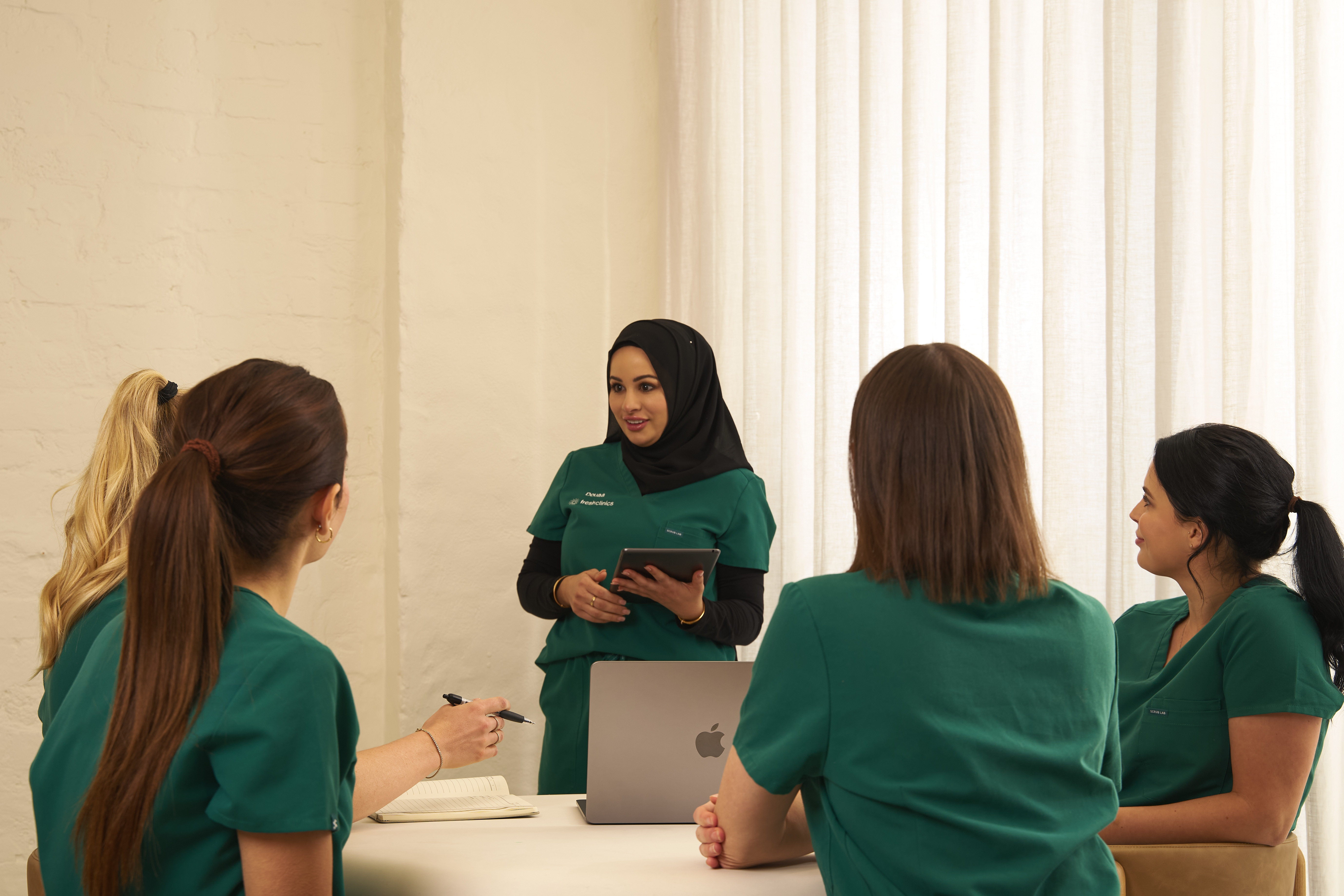
Building your dream team: Attracting and keeping top talent in your clinic
Access this exclusive session with some of Australia's top clinics as they share their insights on how to build a thriving team.
Brought to you by Fresh Clinics exclusive State of Medical Aesthetics Report, 2025
Join our special guests:
- Olivia Feldtmann, ANO Cosmetics and Skin
- Hannah Rivers, Self Cosmetic Science
- Hosted by Aniella Leeks, Business Development and Key Account Manager at Fresh Clinics
What you'll learn:
- Simple but effective recruitment approaches that help you find the right fit, not just the right resume
- Onboarding secrets that set new team members up for success from day one
- How to create a clinic culture that makes staff want to stay for the long-term
- Practical leadership techniques that boost team satisfaction and performance
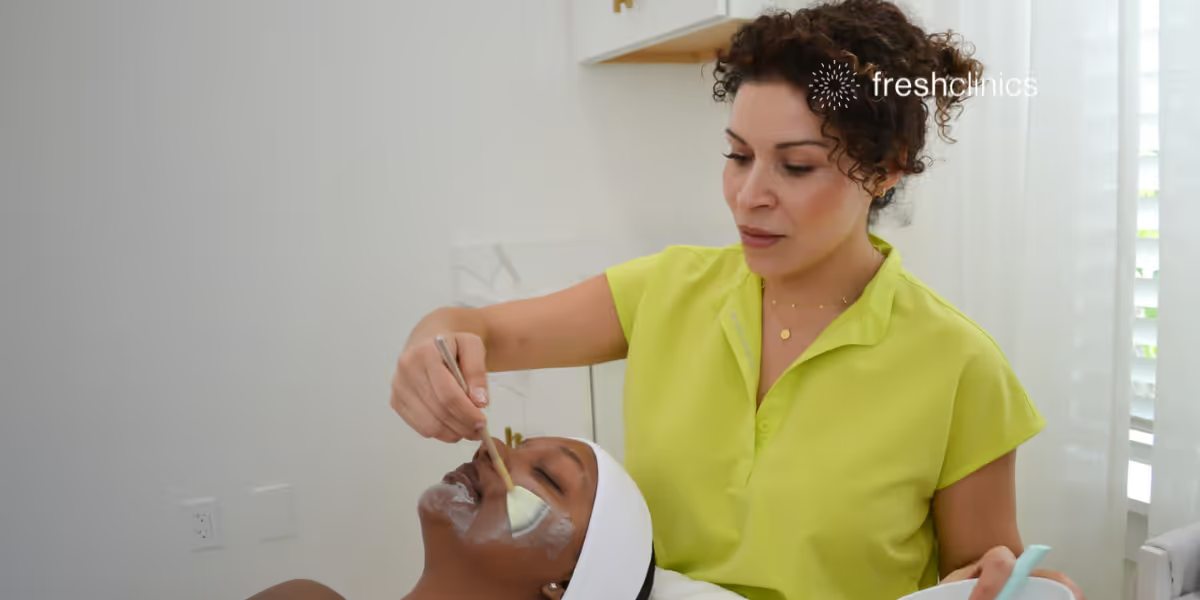
The Fresh Approach to Skin Fundamentals
Last week, Fresh Members had the opportunity to hear from Niva Leones, a passionate aesthetic nurse injector and founder of Bulverde Med Spa.
With over 20 years of experience in the industry, Niva brought her signature warmth, depth of knowledge, and practical strategies to a packed session focused on skin assessments, product integration, and patient outcomes.
‘’Aesthetics - I love it with all my heart," Niva shared. "I've been blessed to work alongside great cosmetic surgeons, and I want to pass on what’s helped me build a loyal, thriving patient base."
And if there’s one thing Niva made clear from the very beginning, it’s that: "Cosmetic medicine isn’t just about treatments. It’s about trust. It’s about connection. That’s how you build a long-term career."
Start with the skin
It’s tempting to focus on injectable plans or treatment menus, but as Niva reminded us, real results come from taking the time to understand the canvas you’re working with - the skin.
"They don’t teach skincare in nursing school," she said. "If you want to offer comprehensive care, you need to really understand the skin, and not be afraid to touch the face, assess the tissue, and ask the right questions."
Niva spoke passionately about using tools like the Fitzpatrick Scale* - not in a textbook sense, but with a human-first mindset. She encouraged open, respectful conversations about a patient’s background, skin structure, sensitivity, hormonal balance, heritage, and lifestyle.
"It’s not intrusive to ask about a patient’s background; it’s critical for giving them the right care," she explained. "That’s how you deliver results that patients trust you for."
*The Fitzpatrick Scale is a system used to classify skin types based on their response to ultraviolet (UV) radiation exposure. It categorizes skin into six types, with Type I being the most sensitive to the sun and Type VI being the least sensitive.
This scale helps in determining appropriate sun protection measures and understanding a person's risk of skin damage.
Why microneedling and peels matter (more than you think)
Niva encouraged our members to master the fundamentals first. Start with:
- Specialising in microneedling
- Offering chemical peels
- Dermaplaning and skin prep
- Layer in laser hair removal or simple energy devices when you're ready
"You don’t need to invest $300,000 in fancy equipment straight away," Niva said. "You need technique. You need trust. And you need a strong understanding of the skin’s needs."
Build your product range the smart way
Selling skincare products can sometimes feel awkward - unless you follow Niva’s golden rule: Only recommend what you genuinely believe in and use yourself.
"Patients can tell if you’re pushing something," she said. "Start small. Stock the products you love. Trust builds from there."
She also encouraged practitioners to leverage programs like Alle and Aspire to create loyalty incentives without extra cost, adding value to the patient experience while strengthening retention.
Above all, Niva encouraged nurses and PAs to be confident in recommending treatments and products as part of their professional duty of care.
"As nurses, recommending the right treatments isn’t about sales, it’s about helping your patients feel their best. Stick to what you know. Stick to science. Trust will follow."
Ready to take the next step?
Whether you're just starting out or looking to expand your med spa, Fresh Clinics is here to support your growth. Reach out to our team today!
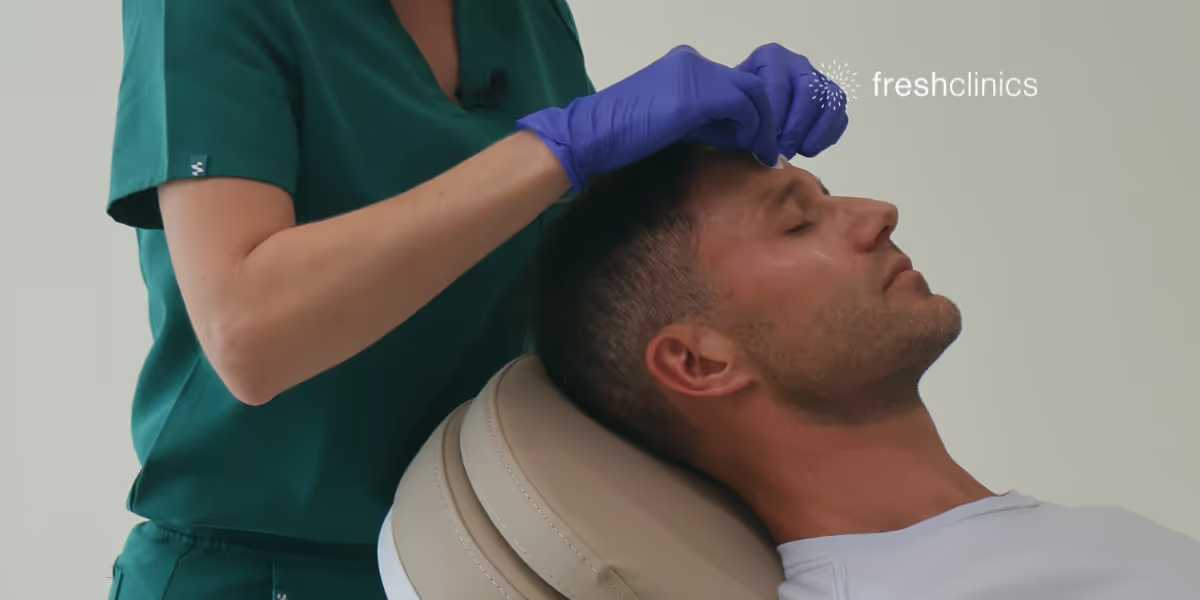
Why Med Spas are Adopting Exosomes
Are you searching for the next groundbreaking innovation in skincare to offer to your patients?
Welcome to the world of exosomes, the tiny yet mighty cellular communicators revolutionizing skin quality.
During a recent Fresh Clinics webinar, expert trainer Rajdi Gemeri, a registered nurse and owner of Pause Mediclinic in Australia, explored the science behind exosomes, their clinical applications, and how practitioners can integrate them into their med spas.
What are Exosomes?
Exosomes are tiny extracellular vesicles that play a crucial role in cell communication. They carry proteins, lipids, and nucleic acids as molecular messengers that promote skin regeneration, collagen production, and overall tissue repair.
"I like to explain exosomes to my patients as ‘text messages for your skin,’ sending signals to behave optimally," explained Rajdi.
Unlike traditional growth factors used in skincare, exosomes offer a more advanced, targeted approach by delivering bioactive materials directly to skin cells, resulting in stronger, healthier, and more resilient skin.
Clinical Application: Bringing Exosomes to Your Practice
The versatility of exosome therapy allows it to be seamlessly incorporated into existing treatments. In fact, exosomes are most effective when combined with procedures that create microchannels in the skin, allowing deeper penetration:
- Micro-needling: When combined with micro-needling, exosomes penetrate the skin more effectively, enhancing their regenerative effects. The micro-needling process creates tiny channels that allow exosomes to deliver deeper into the skin layers, resulting in improved texture, reduced pore size, and a reduction in pigmentation
- Energy-Based Devices: Exosomes can be applied post-treatment for those with access to lasers or radiofrequency devices. They accelerate healing, reduce downtime, and act as an anti-inflammatory
- Injectable Combinations: Exosomes can be applied alongside bio stimulators for enhanced skin rejuvenation
One of the greatest advantages of exosomes is their simplicity of use. Clinicians can add exosome therapy to existing treatments without extending session times.
"If you're already offering micro-needling or laser treatments, adding exosomes is a natural next step. It enhances results, improves patient satisfaction, and increases your service value,” Rajdi shared.
Boosting Your Business: Financial Benefits
Many clinics report doubling their hourly turnover after introducing exosome treatments.
For instance, a clinic that typically charges $350 for skin needling can add exosome therapy as an additional $350 service, increasing treatment revenue to $700. This straightforward addition can increase business profitability while delivering impressive outcomes for patients.
Patients are becoming more educated and are actively seeking non-invasive, regenerative treatments. Businesses that offer exosome therapy set themselves apart in an increasingly competitive market.
Rajdi’s advice is clear: "Don't overthink it. Just go with it and watch the magic happen."
The future of skincare is here. Want to incorporate exosomes into your clinic? Reach out to our team today.

Member Spotlight: Glam Haux
Nestled in the heart of downtown McKinney, Texas, Glamhaux Med Spa is redefining beauty and wellness, thanks to its founder's expertize and passion, Taryn Hooper.
With over 20 years of experience in the beauty industry, including 15 years in nursing and aesthetics, Taryn has built a reputation for delivering natural-looking results that empower her clients to feel confident and radiant.
“I’ve always been passionate about aesthetics,” Taryn shared. “Helping people enhance their natural beauty and feel good about themselves is what drives me every day.”
A Journey of Empowerment
Taryn’s journey into aesthetics began after years of working in nursing and teaching. Her experiences at other med spas inspired her to branch out on her own in 2024, creating a space where she could personally connect with her clients and focus on their unique needs.
“It just made sense to go out on my own,” Taryn explained. “I’ve worked for different med spas and taught at an institute here in Dallas, but my passion is really about working closely with my patients. Owning my own practice allowed me to integrate that personal touch.”
When it came to taking the leap, Taryn leaned on her network of fellow nurses and nurse practitioners for advice and encouragement. “My friends and even my patients believed in me before I believed in myself,” she recalled. “That support made all the difference.”

Partnering with Fresh Clinics
Taryn discovered Fresh Clinics through a recommendation from a close friend and fellow nurse practitioner. Since joining, she has relied on Fresh for compliance, medical directorship, and support.
“Fresh Clinics has been amazing,” Taryn said. “From the onboarding process to ongoing support, they’ve walked me through every step. Their team is always there when I need help, whether it’s compliance checks or product-related issues.”
One feature Taryn particularly appreciates is the ease of managing good faith exams. “Having everything in the app, from approvals to patient history, saves so much time and keeps me compliant. It allows me to focus on what I love - treating my patients.”
Beyond compliance and medical oversight, Taryn values the sense of community that Fresh Clinics encourages. “It’s a big world, but the aesthetics community can feel so small. Connecting with other practitioners has been incredibly rewarding.” she shared.
Glamhaux Med Spa offers a range of services, including neurotoxins, fillers, microneedling, and wellness-focused treatments like weight loss programs. “I’m always researching new innovations, like exosomes,” she said. “While they’re only approved for topical use in the U.S. right now, I’m excited about their potential.”
To nurses considering starting their own med spa, Taryn offers this advice: “Just go for it. Do your research, prepare for the highs and lows, and lean on your network for support. It’s a big leap, but it’s absolutely worth it.”
With Fresh Clinics as her trusted partner, Taryn is not only transforming her clients but the future of aesthetics in Texas.

Breaking the Stigma: Complication Management in Aesthetics
In aesthetic medicine, although rare, complications can and do happen. But rather than seeing them as failures, it’s time to shift the narrative.
Although these complications occur infrequently, their potential impact necessitates transparency, preparedness, and ongoing education.
During our recent international webinar, bringing together Members from the USA and Australia, Fresh Clinics co-founder Dr John Holbrook led a candid discussion on complication management, breaking down stigma, and ensuring patient safety remains the top priority in aesthetics.
A New Perspective on Complications
“Bad things happen. They’ll happen to all of us,” Dr Holbrook stated. “What matters more than anything is recognizing, escalating, and managing it appropriately.”
One of the most critical complications discussed was vascular occlusions (VO). Vascular occlusions are a rare but serious complication associated with dermal fillers. They occur in fewer than 0.05% of treatments.
Dr Holbrook reinforced that quick recognition and treatment are key: “Anytime you see vesicles, think necrosis. The answer is simple - open up the vessel with hyaluronidase.”
Vascular occlusion can sometimes be misdiagnosed due to varying symptoms, but practitioners were urged to act swiftly. “Pain is a helpful sign, but just because it’s painless doesn’t mean there’s no occlusion,” Dr Holbrook advised.
The Reality of Infections
While vascular occlusions require immediate dissolving of filler, infections can be more challenging. Immune-mediated inflammatory reactions can present anywhere from days to years after HA filler was initially injected. The swelling and tenderness in the distribution where the fillers were injected are often, but not always, triggered by illness in the patient a couple days prior to the swelling.
NSAIDs and prednisone are typically used to manage these reactions. If an infection is suspected, antibiotics and dissolving the filler are standard therapy. Dr Holbrook highlighted, “You are obliged to dissolve any filler post-infection, no matter what.”
Practitioners were reminded to take a proactive approach with close patient monitoring to prevent further complications such as abscess formation.
Seeking to maintain adverse events at less than 1% of treatments that occur is a shared mission. The Monthly Morbidity and Mortality (M&M) meetings hosted by Fresh Clinics highlight where and how practice can continuously improve.
No Practitioner is Alone
Breaking the stigma around complication management requires a collective shift in perspective.
Complications are not a reflection of incompetence but are part of cosmetic medicine and an opportunity to learn, improve practice, and enhance patient safety. Fresh Clinics offers ongoing support through its medical team, software, and training to ensure all practitioners have the knowledge and confidence to navigate complications.
If you want to be part of a network that prioritises safety, education, and professional growth, explore how Fresh Clinics can support you. Reach out to our team today.
Nurse Injector Training
How to become a nurse injector: training, certification & career guide
An estimated 25.4 million minimally invasive cosmetic procedures were performed in 2023 in the United States. Of these, neuromodulator injections such as Botox or Jeuveau accounted for nearly 9.5 million of them.
As demand grows for subtle, natural-looking enhancements, so does the need for skilled, certified nurse injectors, and it's higher than ever. If you're a registered nurse interested in expanding your skillset into the world of medical aesthetics, nurse injector training provides a good opportunity for career progression.
This guide breaks down what the training involves, where it can take you, and how Fresh Clinics can help you build a career in aesthetics.
What's the opportunity?
Non-surgical treatments like cosmetic injections are more in demand than ever before. But they can’t be performed without trained professional nurse injectors who can deliver safe, effective results.
In states like Texas and Pennsylvania, the need for both is especially high. That is why now is a great time for registered nurses to add this string to their bow.
Once trained, nurse aestheticians can work in medical spas and dermatology clinics or even start their own aesthetic practice with oversight from a medical director. With the right certification and support, these skills can open up a more flexible, higher-earning, and creatively fulfilling career path.
What does a nurse injector do in aesthetic medicine?
A nurse injector is a licensed healthcare professional, typically a registered nurse (RN), who specializes in performing non-surgical cosmetic procedures.
Primarily, their main focus revolves around administering injectable treatments such as Botox and dermal fillers. These are used in treatments aimed at reducing fine lines, smoothing wrinkles, and restoring facial volume. The main purpose is to help patients achieve a more youthful, refreshed appearance without the need for surgery or extended downtime.
In addition to dispensing injections, nurse injectors conduct thorough patient consultations and assess patients' medical history. They also design personalized treatment plans based on each client’s facial anatomy and aesthetic goals. To do this, they must have in-depth knowledge of facial muscles, nerves, and blood vessels to ensure they place injections accurately and safely, every time.
For a nurse injector, their key skills typically include possessing a precise injection technique, a strong understanding of product properties, and the ability to recognize and manage potential complications. They are also often responsible for educating patients about aftercare and ensuring strict ethical and legal standards are adhered to. In short, you could say that a nurse injector blends clinical expertise with an artistic eye to deliver safe, high-quality aesthetic outcomes.
Inside nurse injector training: what you’ll learn and why it matters
If you're exploring a career in aesthetic medicine, it's important to know what nurse injector training includes. In addition to teaching you how to inject patients properly, the right training gives you the medical, technical, and ethical foundation to deliver outstanding results.
Here is an overview of what you’ll learn and why it’s important.
Facial anatomy fundamentals
One of the first things your training will focus on is learning detailed facial anatomy. This is important because you’ll need to understand where muscles, nerves, and blood vessels lie under the skin. Such knowledge is crucial for every cosmetic procedure you’ll perform. It helps to avoid complications and achieve precise, natural-looking outcomes that patients will love.
Toxin and dermal filler techniques
Learning how to administer anti-wrinkle injections like Botox and dermal fillers safely and effectively is something you’ll be required to master. There is a good chance you will be performing many of these treatments. When training to be a nurse injector, you'll be taught how to treat areas like frown lines, crow’s feet, smile lines, lips, and more. You’ll also develop the skill of adapting techniques based on the individual client’s face and goals.
Product knowledge and patient assessment
Nurse injector training also covers the differences between various injectable products, including their properties, uses, and how they interact with tissue. Once complete, you’ll be able to professionally practice consultation skills, such as how to assess patient suitability, manage expectations, and support physicians in obtaining the client's informed consent.
Complication management
Knowing how to recognize and handle side effects and rare adverse reactions is an essential part of being a nurse injector. That is why you will be trained to spot early warning signs and act quickly to protect patient safety, if required.
Hands-on training
Perhaps, most importantly, top-tier courses typically include live patient training. This is a vital step in the process because working in a real-life setting gives prospective nurse aestheticians valuable experience that online teaching alone can’t replicate.
Where can nurse injectors work?
Fully qualified injectors have a wide range of career options available to them in the aesthetic industry. Most commonly, they can work in medical spas, where treatments like Botox and dermal fillers are offered in a client-focused and relaxed environment.
However, others are employed in dermatology or plastic surgery clinics. Working in collaboration with physicians, they provide cosmetic injections as part of a broader medical service.
For those wanting to be their own boss, there’s also the option to work independently. Many nurse injectors start their own businesses or operate as mobile aesthetic providers. To do this, all they need is the right qualifications, access to a medical director, and proper documentation systems in place.
How to become a nurse injector: A step-by-step guide
If you’re ready to pursue a career as a nurse injector, Fresh Clinics makes each step easier by offering training, mentorship, and resources tailored to your career goals.
Here's an overview of what this entails.
Step 1: Become a registered nurse (RN)
To work as a nurse injector in Texas, Pennsylvania, and other states in the USA, you must hold a valid RN license. This license must be active and registered in the specific state where you plan to practice. It also requires completing an accredited nursing program and passing the NCLEX-RN exam.
Step 2: Gain clinical experience
While not always mandatory, having some hands-on experience in patient care can help you build your confidence in clinical settings.
Relevant experience will also give you a better understanding of patient communication and assessment.
Step 3: Enroll in specialized nurse injector training
For most people, this is where their journey into aesthetic nursing really begins.
It is recommended that you choose a program that includes aspects like Botox and dermal filler training, facial anatomy, consultation techniques, and complication management. The best courses offer hands-on, live patient training, which is designed to ensure you can treat real patients confidently and safely.
Step 4: Obtain certification and medical oversight
Depending on your state, you may need to operate under a medical director. This is the case in Texas and Pennsylvania.
Fresh Clinics provides access to experienced mentors and trainers. We also provide support systems, such as documentation tools and legal compliance, to help you practice your new nurse injector skill confidently and professionally.
Step 5: Launch your career
Once you’re fully trained and have become certified, you can embark on the next stage of your career.
This can involve working in medical spas and clinics or even opening your own Med Spa with support from a medical director.
Nurse injector training tips: How to succeed from day one
At Fresh Clinics, our nurse injector training programs are built to set you up for success. We help you stay ahead of the curve by providing you with access to experienced instructors, flexible training formats, and a supportive learning environment. If you want to get the most out of your training, here are a few tips you can employ.
- Learn facial anatomy before your course: Knowing the basics of muscles, nerves, and vessels will make your hands-on sessions much easier to follow and understand.
- Choose a course with live patient training: Practicing on real people under expert supervision is the best way to build confidence and refine your technique.
- Take notes and ask questions: Trainers love students who are engaged and will often share valuable insights beyond the standard curriculum with them.
- Focus on precision over speed: It’s not a race, so make sure you focus on developing safe and accurate injection techniques, rather than finishing the training as quickly as possible.
- Be open to feedback: Receiving constructive input should not be seen as a negative. Instead, take the advice the experienced injectors are giving you as an opportunity to improve your knowledge and technique.
- Connect with your peers: It's a good idea to build relationships with fellow trainees, as this can lead to referrals, job leads, and long-term professional support.
- Keep learning after training: Your desire to learn doesn’t have to stop with your training. Look for follow-up workshops, CPD opportunities, and ongoing mentorship that can help you hone your new skill.
Start your journey as a nurse injector
If you are looking to grow your career in nursing, then becoming a nurse injector is a great way to do that. Not only is this role in a high-demand field, but it is in a high-reward one, too.
With the right training, you’ll learn how to deliver safe, effective treatments like Botox and fillers. This, in turn, will enable you to join a clinic or launch a business, which will help you make a real difference to people’s lives.
To help you achieve this, Fresh Clinics offers hands-on, accredited training, ongoing support, and medical oversight for registered nurses across Texas and Pennsylvania.
Ready to take the first step? Contact Fresh today!
FAQs
Is becoming a nurse injector worth it?
Yes, for many healthcare professionals, especially nurse practitioners (NPs) and RNs, aesthetic medicine offers a more flexible, creatively fulfilling, and financially rewarding career path. With the right Botox and filler training, you can offer high-demand services like botulinum toxins, filler treatments, facial rejuvenation, PDO thread lifts, or facial pain therapy for patients dealing with TMJ.
How much does a nurse injector make?
On average, nurse injectors in the U.S. earn between $75,000 and $120,000 USD per year, with many experienced or business-owning injectors earning well above that. Those who build their own client base or offer specialised treatments often earn significantly higher incomes, especially in high-demand areas. As with any profession, income tends to grow with skill, reputation, and time in the field.
Can you be an aesthetic injector without being a nurse?
In most U.S. states, including Texas and Pennsylvania, you need to be a licensed medical professional to perform cosmetic injections like Botox, dermal fillers, or PDO thread lifts. That means you must be a registered nurse (RN), nurse practitioner (NP), physician assistant (PA), or doctor. If you’re already working as a nurse, you’re in a great position to expand into aesthetics. With the right Botox and filler training, you can gain the skills, confidence, and certifications needed to start offering safe, effective aesthetic injectables.
Is there any risk in becoming a nurse injector?
Every new career comes with a learning curve, but becoming a nurse injector is a well-supported path when you choose the right training. With quality aesthetics training and live patient experience, you’ll build the skills and confidence you need to succeed. At Fresh Clinics, we’re here to guide you through each step, so you can start your journey knowing you’re in safe hands.

Complications in Aesthetic Procedures: Insights from Dr. Shah-Desai
-2.avif)
The content of this blog is designed and intended for the education of Healthcare Professionals
In our rapidly evolving industry, the use of hyaluronic acid (HA) fillers for facial enhancement is always on the rise. However, with innovation comes challenges. Fresh Clinics Members recently heard invaluable insights from Dr. Sabrina Shah-Desai, an internationally recognized expert in non-surgical and advanced cosmetic procedures on the prevention and management of complications associated with (HA) filler use.
Understanding the Anatomy
To optimally leverage fillers in aesthetics, an understanding of facial planes and the distribution of facial vasculature is a must. Enlightening us on this, Dr. Shah-Desai reinforced, "Prevention strategies are really important to understanding that depth of injection, injecting slowly, considering a cannula except in the nose, injecting small, and considering directing the needle perpendicular to the vessels."
Patient Assessment
Sabrina made sure to emphasise the importance of patient assessment and consultation in the following order to minimise risks during treatment:
- Take a detailed medical history
- Take a detailed aesthetic history (types of filler used/dates of treatment)
- Assess for any ongoing skin conditions, dental issues, and ear, nose, or throat issues
- Establish if there is any severe pain or redness in past treatments
- Establish duration and onset of “the lump”
One of the main risks associated with HA filler injections is the threat of vascular events. How we handle such events can make a significant difference in the patient's outcome. Complications ranging from infections to nodules and even blindness can occur, hence having a well-trained team in place, armed with the necessary tools and medications, is crucial.

"Anatomy and assessment of patient selection is a prerequisite for minimising the risk of complications. Never inject against resistance and considering the product is really important, particularly to prevent complications," said Dr. Shah-Desai, reinforcing the importance of comprehensive knowledge in filler treatments.
Navigating Complications
The importance of early detection, diagnosis, and management of adverse events cannot be overemphasised. For infections, the use of antibiotics might be considered while Hyaluronidase could be employed for treating nodules. Here, using ultrasound devices on patients would offer compelling advantages.
Aging and Filler Placement
Our skin undergoes transformations with age, leading to structural support and surface alterations. . Sabrina shed light on this, highlighting "When we look at the surface topographical changes of aging we see this on the skin sort of from the ages of late 20s to mid 30s."
The awareness of these changes, especially in the mid-face and bony areas, forms the underpinning for informed decisions on filler placement and selection in patients.
The 4D Approach
Steering away from static notions, Sabrina introduced the concept of the 4D approach for optimising results with filler. This approach unravels a more holistic outlook in evaluating and enhancing facial features, acknowledging the dynamic fat pads and movements that define our faces.
The 4D approach is based on four key strategies and can have fewer complications, plus more revenue for your practice than filler alone:
- Protection (eg, sunscreen and antioxidants)
- Promotion of cell turnover (eg, peels and laser)\
- Collagen stimulation
- Volume remodelling (eg, fillers)
Empowering Your Practice
Sabrina's enlightening session contextualises the importance of preparedness at each step of aesthetic treatments.
The core takeaway from Dr. Shah-Desai resonates with Fresh Clinics’ belief that knowledge and awareness are the foundation of excellence in aesthetics. By embracing these insights, we can look forward to an exciting future in advanced technology.
Stay tuned for more inspiring discussions.
Not a Fresh Clinics member yet? Reach out to our team today, call us, or schedule a time to chat below to discuss how to become a Fresh Clinics member and take advantage of Fresh initiatives today.
What is Regenerative Medicine?
Can you imagine using your own cells to repair signs of aging or reverse chronic conditions? With regenerative medicine, this is slowly but surely becoming possible.
Regenerative medicine is an emerging field that helps the body replace, repair, and regenerate damaged cells, tissues, or organs. The goal is to help patients restore normal function. For example, in aesthetic medicine, the desired outcome is to restore the patient’s natural body, not simply hide the signs of aging.
In this article, we’ll break down what regenerative medicine is, the top treatments being used today, how it’s changing the aesthetics industry, and what’s coming next.
Key aspects of regenerative medicine
The practice of regenerative medicine draws on cell biology, genetics, bioengineering, and clinical medicine to promote true repair and, in some cases, reverse damage entirely. It’s built upon the concept that, in the right conditions, the body has all the tools it needs to heal itself from minor injuries.
Supporting the body to heal
Our bodies already know how to heal cuts, mend bones, and fight infection. Regenerative medicine builds on that by stimulating or enhancing the body’s natural repair mechanisms. This can mean triggering collagen production, increasing blood flow, or signaling the body to produce new cells.
Cell-based therapies (stem cells)
Stem cells can turn into many different types of cells, such as bone, blood, muscles, and nerves. In regenerative medicine, they are used to repair damaged tissue. The most common source of stem cells in medical treatments today is taken from adult bone marrow or fat tissue. For example, doctors might inject stem cells from fat tissue into an injured joint to promote healing and reduce inflammation.
Building new tissue from scratch (tissue engineering)
Tissue engineering is the practice of using a structure, like a soft, mesh-like material, along with cells to help the body grow new tissue.
It’s already being used to create skin grafts, cartilage, and parts of organs. This approach is especially helpful when the body can’t heal on its own, such as after a burn, injury, or surgery.
The tools that support cell growth and repair
As the field grows, the tools used by medical scientists are constantly evolving. Currently, regenerative therapies often involve biomaterials (materials that are safe for inside the body) that support cell growth, or gene therapy that helps restore or enhance a cell’s function at the DNA level.
Examples of regenerative medicine in use today
Healing with your own blood (platelet-rich plasma)
Platelet-rich plasma (PRP) therapy uses a patient's own blood to promote healing. After drawing blood, it's spun in a centrifuge to concentrate the platelets, which are then injected into the targeted area. PRP is commonly used for injury recovery, skin rejuvenation, and hair growth.
Relieving joint pain with natural cushioning (viscosupplementation)
This treatment involves injecting hyaluronic acid, a gel-like substance, naturally found in healthy joints. In people with osteoarthritis, their natural level of this substance drops, which can cause pain and stiffness. This treatment helps restore lubrication in the joint, usually the knee, making movement feel smoother and reducing discomfort.
Growing organs from your own cells
Researchers are working on growing entire organs in labs using a patient's own cells. This approach aims to provide future alternatives to organ transplants, reducing the risk of rejection. While we're still years away from fully functional lab-grown organs, recent developments in 2024 from scientists at UC San Francisco and Cedars-Sinai have taken promising strides towards bringing this concept to life.
Waking up the body’s repair system
Some therapies aim to stimulate the body's own cells to repair themselves. By engaging these dormant or damaged cells, the treatments encourage natural regeneration, potentially reducing the need for invasive procedures. A simple example of this is microneedling, which creates small tears in the skin to promote collagen production.
What is regenerative aesthetics?
Regenerative aesthetics is the future of the aesthetics industry, combining the science of healing with modern beauty treatments. It uses the principles of regenerative medicine, like stimulating collagen, restoring tissue, and boosting cellular activity for cosmetic treatments. The goal is to deliver natural-looking results by encouraging the body to heal and renew itself. That means fewer artificial fillers, less downtime, and longer-lasting results.
Popular regenerative aesthetic treatments include:
- PRP for skin rejuvenation: Sometimes called a “vampire facial,” this uses the patient’s own plasma to boost collagen, improve texture, and reduce signs of aging.
- PRP for hair restoration: Injecting PRP into the scalp can stimulate dormant hair follicles, improving thickness and regrowth over time.
- Exosome therapy: Exosomes are naturally released in the body to promote healing. When extracted and applied to the skin, they can reduce inflammation, support cell turnover, and brighten complexions.
- Polynucleotide injections: Derived from salmon DNA, these injections are designed to hydrate, repair, and improve skin elasticity at a deep level. They're especially popular for under-eye rejuvenation and dull skin.
- Skin boosters: Unlike traditional fillers, skin boosters spread under the skin to hydrate and subtly plump. They also encourage collagen and elastin production over time, which is beneficial for patients looking to reduce the signs of aging.
- Nanofat grafting: This is when fat is gathered from the patient, filtered to isolate the regenerative cells, and then injected into delicate areas like under the eyes or around the mouth. It improves skin quality and volume with long-term effects.
Real-world results
A 2024 study on PRP for skin rejuvenation found that treatment led to significant improvements in facial features after just one to three sessions.
Another study in 2023 found that combining microneedling with exosomes led to faster healing and better results. The patients showed noticeable improvements in wrinkles, elasticity, hydration, and pigmentation.
What does the future hold for regenerative medicine?
The future of regenerative medicine is moving fast due to patient demand and major scientific progress. Researchers are already testing 3D-printed organs made from a person’s own cells, which could one day replace the need for the more risky practice of donor transplants. Gene editing tools like CRISPR are also showing real promise and could help fix the root cause of certain diseases.
It might sound futuristic, but these breakthroughs are already happening in labs and early trials. If things keep heading in the right direction, we’ll start seeing more of these treatments helping real patients in the next few years.
Regenerative medicine is all about helping the body naturally fix itself. From joint pain to skin and hair, these treatments are already making a difference, and they are only getting started.
At Fresh Clinics, we support medical professionals with the tools, knowledge, and oversight to offer safe, effective regenerative treatments
Ready to take the first step? Contact Fresh today!
FAQs
What therapies are currently provided in regenerative medicine?
Some of the most common regenerative medicine treatments include platelet-rich plasma (PRP), stem cell therapies, and microneedling with growth factors like Exosomes. These therapies are used to repair damaged cells, tissues, or organs, especially for joints, skin, and hair.
What kind of conditions can regenerative medicine help with?
Currently, regenerative medicine is being used for joint pain, soft tissue injuries, hair loss, and skin aging. As the field of regenerative medicine grows, it’s also being studied for organ repair and more complex medical conditions.
Is stem cell therapy safe?
Stem cell therapies are already being used in both medical and aesthetic clinics, especially for joint issues and skin rejuvenation. Most use stem cells from bone marrow or fat, and while research is still ongoing, they’re generally considered safe when done by qualified professionals.
How is regenerative medicine different from traditional treatments?
Unlike treatments that only manage symptoms, regenerative medicine focuses on fully healing. It supports the body’s ability to repair damaged tissue and restore normal function using cell therapy, growth factors, or tissue engineering.What are iPS cells, and why do they matter?
Induced pluripotent stem (iPS) cells are adult cells reprogrammed to act like pluripotent stem cells. That means they can turn into nearly any cell type. Researchers see them as a safer, more ethical alternative to human embryonic stem cells in regenerative medicine research.
How is 3D bioprinting being used in regenerative medicine?
3D bioprinting is an emerging technology that uses living cells to print engineered tissue. The goal is to eventually build complex organ and tissue structures that are structurally and functionally similar to natural ones.
Can regenerative medicine help with heart failure?
Yes. One type of regenerative medicine being studied for heart failure involves growing or transplanting healthy muscle cells into damaged skeletal muscle to restore heart function. While it’s still in early development, it’s one of the most promising therapies and future directions in the field.
Managing Vascular Occlusions: Insights from Dr Holbrook
The content of this blog is designed and intended for the education of Healthcare Professionals
The art of bringing a change to one’s appearance through non-surgical cosmetic procedures calls for expert precision and knowledge. However, even in the hands of the most skilled professional, complications can arise.
Fresh Members recently had the opportunity to dive into an educational session with our very own Dr John Holbrook, on managing vascular occlusions (VOs) in aesthetic treatments.
Vascular Occlusions: A Fear for Practitioners
"The vessels in our bodies, particularly in our face, are all connected," Dr Holbrook emphasized during the session. Vascular occlusion, a rare but serious complication, can result from dermal filler treatments, with incidences being roughly 1 in 10,000. While low, the risk is real and can result in serious complications if not managed promptly and appropriately.
To minimise the occurrence of VOs, practitioners often adopt standard procedures. For example, the idea of only injecting in 'safe' points has always been conventional. However, it's not a course that Dr Holbrook advocates,"There's no safe...everywhere can be risky.”
The Treatment Approach
When an occlusion is suspected or occurs, the first course of treatment is to call in an expert immediately.
Another critical part of the immediate response is injecting hyaluronidase into the affected area, an enzyme that can potentially reverse the occlusion by breaking down the filler.
Dr Holbrook shared through his personal experience, how he managed a rare, yet serious VO that affected a patient's chin and tongue due to a midline filler injection in the chin.
"We fixed it in a day… and it didn't require any further interventions," Dr Holbrook recalled about one of the most complex cases he'd managed. Despite immediate action, the patient still experienced extreme pain, challenging the process of treatment. Utilizing hyaluronidase and maintaining an open line of communication with other specialists, the case was successfully navigated.
It is important to emphasize the need for persistence in managing occlusion. Dr Holbrook noted, "Just because it has always been okay before, doesn't mean it will be okay this time."
He reiterated that every treatment comes with its own level of uncertainty and risk.
The need to remain constantly cautious and prepared for any event is one that resonated deeply with our Members. In the face of such potential complications, the importance of patient well-being remains at the forefront.
The session was a wealth of information on managing vascular occlusions, and a testament to Dr Holbrook's persistent, dynamic, and patient-first approach.
Not a Fresh Member?
9 Luxury Interior Design Ideas For Your Med Spa
When a patient walks into your med spa, they’re not only here for the treatments; they’re looking for the feeling of calm, trust, and elegance.
Thoughtful interior design sets the tone before a single needle is uncapped. Sure, a well-designed space looks amazing on socials, but it also builds real-world trust the moment clients walk in. It builds credibility, helps clients relax, and shows that you care about the experience as much as the results.
Whether you’re starting fresh or refining what you’ve already built, these nine design ideas are all about making your space feel calm, polished, and professional.
1. Make your entrance feel like a high-end boutique

First impressions start at the front desk.
Think soft curves, clean lines, and materials that feel expensive, like fluted timber, travertine, or reeded glass.
Your reception should also be a place for clients to relax before and after their treatments, like comfortable chairs, low lighting, herbal tea, and maybe a hint of fragrance in the air.
Tip: Add one showstopper. A sculptural vase, a designer lamp, or a signature scent.
Image: Byron Bay Luxury Homes
2. Update your neutrals with earthy tones

Cream-on-cream has been done, but in 2025, neutrals are getting more depth and a little personality. If you want your space to feel calm but not bland, layer soft whites with richer tones like taupe, olive, clay, or stone.
These colors are inspired by nature, which naturally helps clients feel more grounded, safe, and relaxed. You can also try using light blues or soft, beach-like colours to add a sense of calm to the space.
While white or warm beige have their place, building on them with earth tones can strike the right balance between professionalism and warmth.
Image: Pinterest
3. Clean but not cold

Clinical doesn’t have to mean cold. In 2025, the most elevated med spas are embracing sculptural design elements, think curved counters, fluted walls, and rounded furnishings, to bring softness and warmth into their space. These forms feel modern and organic, helping you move away from that boxy “waiting room” look without sacrificing professionalism.
It’s a subtle way to soften the space and move away from that standard “waiting room” feel, without losing the clean, clinical edge you need. Tip: For a luxury finish that’s still hygienic, consider a polished natural stone like sealed marble, which is easy to clean and elevates the look instantly.
Image: Interior Design Awards
4. Use lighting to shape mood and perception

Renowned interior designer Jonathan Adler said it best when he said, “Lighting is everything. It can make a room feel warm, cozy, and inviting, or cold and unwelcoming.”
And in 2025, elevated med spas are treating it that way, moving beyond harsh, clinical light in favor of warm recessed strips, minimalist sconces, and soft pendants that set the mood without distraction.
In treatment rooms, you’ll need your lighting to still be functional, but ideally adjustable, so you're not overwhelming clients with brightness the moment they walk in.
Image: Jonathan Adler
5. Function first, beauty second

It’s easy to get swept up in aesthetics, but if your space doesn’t work day to day, it’s going to cause stress.
Start by mapping out how your team moves through the clinic. Can they get from the front desk to the treatment rooms quickly? Are supplies easy to grab without digging through drawers? Are the waste bins where they need to be? Reception desks should have hidden storage to make your staff happy, where they can store their forms, tech, or even snacks.
Treatment rooms need cleanable surfaces, a logical layout, and room for staff to move comfortably around the client.
Image: Interempresas
6. Doors that blend privacy and polish

Doors do more than separate rooms. A heavy, loud, or poorly finished door can make a space feel cold and clinical. The wrong material? It clashes with your palette and shows every fingerprint.
For a more elevated look, opt for flush doors with minimal hardware, or soft-close sliders that save space without compromising on style. Matte finishes, frosted glass, and sealed timber strike the right balance between beauty and practicality. Soundproofing is essential in treatment rooms, where clients may be discussing personal medical details or undergoing procedures that require discretion.
Tip: Keep your door finishes consistent throughout the clinic. It’s a small detail, but it helps the entire space feel calm, intentional, and beautifully considered.
Image: Divisare
7. Flooring that’s practical and built to last
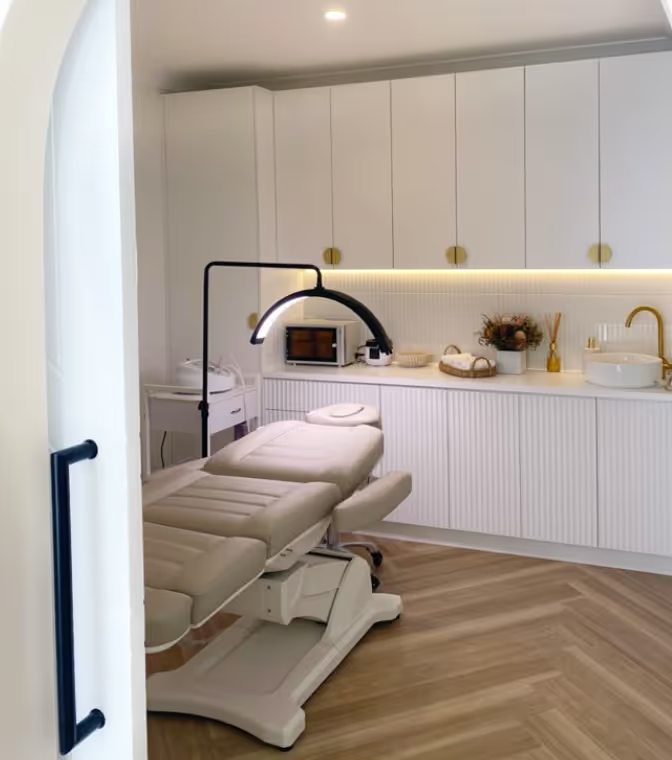
Flooring is one of the hardest-working surfaces in your space. It needs to look beautiful, hold up under constant foot traffic, and meet hygiene requirements.
In clinical zones, go for sealed concrete, large-format tile, or natural stone. These materials are also easy to disinfect and hold their shape over time. In reception, a low-pile rug or mat adds contrast, just make sure it’s washable and won’t catch under chairs.
Tip: Avoid high-shine finishes or anything with too much texture as they’re harder to clean and show wear quickly.
Image: Eye Envie Lash & Co.
8. Make your retail feel helpful
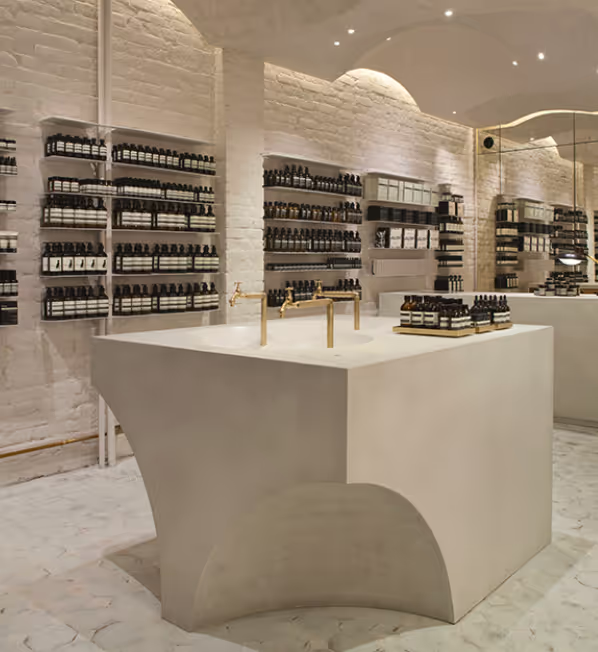
Retail can feel like an afterthought in many med spas, or worse, a hard sell that ends up gathering dust.
However, when done right, it adds value and enhances the client experience.
Use backlit shelving that matches the rest of your design. Keep your displays minimal, products spaced out, and signage clear. Patients will actually want to browse through your products if they are displayed nicely.
Tip: Position your products for sale near your counter or next to where clients sit and wait. Always keep overstock hidden to keep a clean, organized look.
Image: Arch Daily
9. Plan for technology, and conceal it well

Tech is part of every med spa, from check-in tablets, booking software, and EMR stations. '
Patients want your clinic to be using the latest tech, but it shouldn’t dominate the space.
Bulky monitors, visible cables, or mismatched devices can quickly ruin an otherwise polished look. Choose hardware that suits your aesthetic, and work with cabinetry that can tuck away cords, printers, and modems.
Tip: Consider wall-mounted tablets at reception or consultation areas, as they are sleek, functional, and space-saving.
Image: Place Ideal
Key considerations for standing out
A well-designed med spa stands out because it feels intentional, not overdone. Start by defining your brand and building around that. Ask yourself, will your med spa be sleek and clinical, or soft and nurturing? How you want to define your brand should guide every detail, from the color of your walls to the shape of your reception desk.
Create a layout that flows. Avoid cramming too many chairs into reception or having clients pass storage bins on the way to the treatment rooms. Use a mix of wall lights, ceiling spots, and hidden strips, and avoid anything too harsh or blue-toned in the reception and bathrooms. Clients should feel flattered by the lighting, not exposed by it.
Add discreet signage and staff uniforms that match your palette. It’s less about each individual touch, but more about how they all come together.
Your med spa doesn’t need to be the trendiest spot in town. It just needs to feel calm, polished, and comfortable. When your layout flows, your lighting works, and nothing feels out of place, clients notice.
If you’re thinking about starting a med spa, Fresh Clinics can help. We’ll match you with a medical director, support you with HIPAA-compliant tech, and help keep everything running smoothly from day one.
Ready to create a med spa that feels as good as it looks? Contact Fresh today!
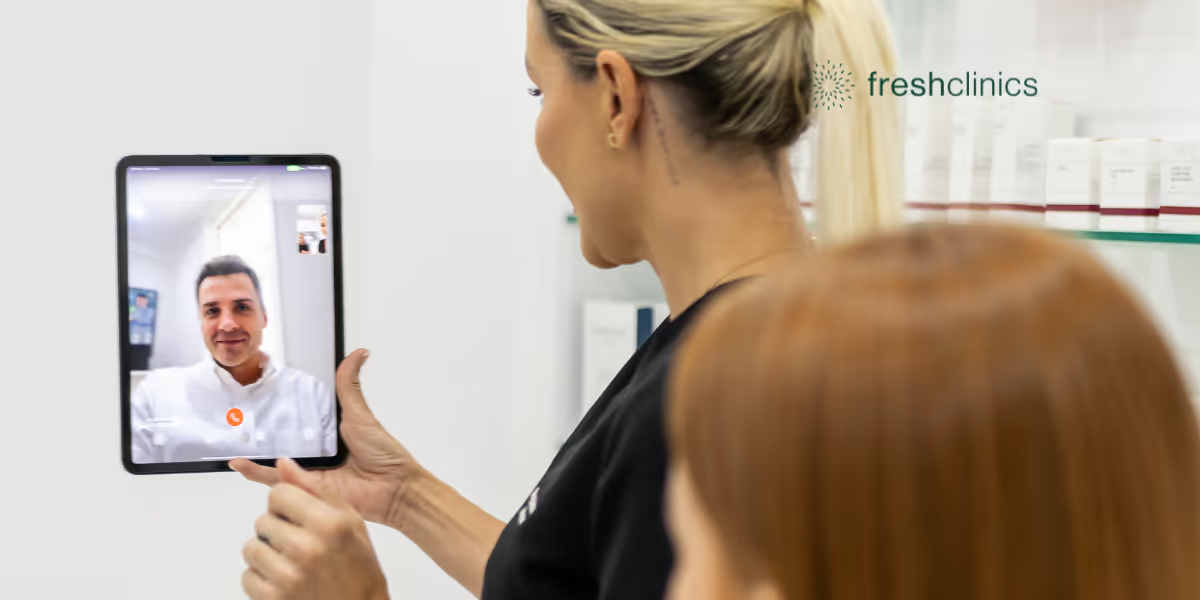
What is a Good Faith Exam? (GFE)
Running a successful med spa, whether you're in Texas, Pennsylvania, or anywhere else, means balancing safety, compliance, and building a loyal patient base.
So before you perform an aesthetic treatment like Botox, fillers, or laser therapy, there’s one fundamental step that needs to happen to make sure it’s done safely and legally.
We’re talking, of course, about the Good Faith Exam (GFE). In this article, we’ll cover what it is, when it’s required, and why it matters for safe and compliant care.
Why good faith exams matter
Before any medical treatment, it’s standard practice to assess a patient’s health and make sure they understand the risks. That’s what a Good Faith Exam does. It protects patient safety and ensures they can give proper consent.
Here’s a closer look at the three key reasons GFEs are a legal requirement.
1. Risk reduction
A GFE helps you understand your patient’s health before treatment begins. It gives your team the chance to review their medical history, spot any red flags, and decide if they’re a safe candidate for the procedure. This step is key to reducing the risk of complications, especially if the patient has conditions or medications that could affect the outcome or cause them harm.
2. Consent
GFEs give patients the chance to ask questions, understand their options, and get clear on what results they can expect or side effects.
This process ensures they can give informed consent, meaning they fully understand the treatment and what it involves before agreeing to proceed.
3. Compliance
Med spas are legally required to conduct GFEs before performing medical treatments. Keeping clear documentation of each exam helps ensure compliance, protects your patients, and reduces legal risk for your business.
Who conducts a good faith exam?
A GFE must be performed by a qualified medical professional. This can be done directly by a physician, or by a nurse practitioner or physician assistant working under physician supervision. While the exact requirements vary by state, in Texas and Pennsylvania, supervision by a licensed physician is mandatory. These licensed healthcare providers are trained to spot red flags and recommend safe options based on your medical history and current health.
At Fresh Clinics, your GFEs are made simple and efficient, with medical oversight from the top aesthetic professionals in the USA. Learn more.
What happens during a GFE?
If you're opening a med spa or simply want to know what a proper Good Faith Exam should include ahead of your next appointment, here's an overview of the process.
1. Medical history review
Providers typically begin their GFEs by reviewing the patient’s medical history, including allergies, medications, past procedures, and any existing health conditions. This step is essential to identify any potential risks before treatment begins.
2. Physical or virtual exam
Depending on your state laws, the GFE may be done in person or via telehealth. In both Texas and Pennsylvania, either can be carried out.
During an in-person exam, the provider may check vital signs, assess skin condition, or physically examine the treatment area to make sure it's safe to proceed. In a virtual exam, the provider will visually inspect the patient over video, ask targeted health questions, and look for any visible concerns, such as skin issues, signs of infection, or anything that may affect the outcome of the treatment. The goal is to confirm the patient is in good health and a suitable candidate for the procedure.
3. Personalized treatment planning
Based on the results of the GFE, you’ll receive treatment recommendations that are tailored to your specific circumstances. This step helps to ensure that your customized treatment plan will be safe and effective.
In-person vs virtual GFEs
Depending on your state, Good Faith Exams can be done either in person or through telehealth. In places like Texas and Pennsylvania, both are permitted, but the process still needs to meet clinical standards. Choosing between the two often comes down to your setup, the treatment type, and what works best for your team and patients.
Here’s how they compare:
In-person GFE: The provider can check vital signs, assess skin and treatment areas, and ask questions face-to-face.
Virtual GFE: Done via video call, the provider visually assesses the patient, asks targeted health questions, and looks for any red flags that could impact treatment.
In both cases, you’ll want to record the assessment, treatment decision, and provider details clearly to show you’ve met medical and legal requirements. This protects your business and ensures patient care is fully traceable.
What are the benefits of a good faith exam?
Good Faith Exams (GFEs) offer a wide range of benefits, and they don’t just apply to patients. They can also be advantageous to providers and med spa owners. At their core, a GFE helps to create a safer, more transparent, and compliant environment for these medical aesthetic treatments to take place.
Here’s how they do that:
1. Enhanced patient safety
The number one priority in any medical spa should be patient safety. A GFE helps providers identify potential contraindications, underlying medical conditions, or medications that could interfere with treatment. By thoroughly assessing a patient’s medical history and current health status, providers can recommend effective and safe treatments to reduce the risk of complications or adverse reactions.
2. Improved patient trust and satisfaction
When patients know that a licensed medical professional is reviewing their case before treatment, it helps to build their trust. The GFE gives patients a chance to ask questions, receive honest feedback, and feel confident about their decision. This transparency often leads to a higher level of satisfaction and can build stronger provider-patient relationships.
3. Better treatment planning
A GFE lays the groundwork to create a customized treatment plan specifically for the individual’s unique needs and health profile.
It helps to ensure the treatment is appropriate for the patient’s goals and physical condition. This, in turn, leads to better outcomes and more consistent results.
4. Regulatory compliance
In many states, including Texas and Pennsylvania, a Good Faith Exam is legally required before you can perform certain procedures.
Having a clear GFE process in place and following it consistently helps ensure your med spa stays compliant with state medical board regulations and accepted standards of care.
5. Potential prevention of board investigations
By completing and documenting a proper GFE, providers can demonstrate that they have taken the necessary steps to evaluate and protect their patients.
All of these steps reduce the risk of complaints or investigations from state medical boards, and most importantly, they help keep your patients safe.

Good Faith Exam (GFE) requirements vary across the U.S., so it’s important to understand the laws in your state. Here are some examples of how the law can vary based on the state you're operating in:
- Texas: GFEs are mandatory before any medical treatment. They can be done in person or via telehealth and must be performed by a licensed professional or supervised by a physician.
- Pennsylvania: Similar to Texas, GFEs must be conducted under physician oversight before medical treatments are performed.
- Illinois: Requires in-person GFEs for certain treatments, particularly injectables and laser services.
- Florida: A physician, nurse practitioner, or physician assistant can do the GFE.
- New York: GFEs are required as part of safe, compliant care. However, the physicians need to own their medical practice.
No matter the state, proper documentation is a non-negotiable for compliance and patient safety.
When is a good faith exam required?
Establishing initial contact with a new patient? Proposing a new treatment plan or significant changes? Noticing a significant time lapse since the last treatment or change in health status? These are scenarios where a GFE becomes non-negotiable. To ensure continuous safety, follow-up GFEs are recommended at least annually for every patient.
Ensuring patient safety in your med spa involves adhering to regulatory requirements that establish a framework for safeguarding patient well-being. Following these guidelines not only creates a secure treatment setting but also ensures med spas comply with healthcare standards designed to uphold ethical and safe practices.
What treatments require a good faith exam?
Any aesthetic procedure in Texas and Pennsylvania (as well as many other states in the USA) that’s considered medical usually requires a GFE. That includes:
- Injectables like Botox or dermal fillers
- IV hydration or vitamin therapy
- Hormone therapy
- Laser treatments and other medical aesthetics services
Essentially, if your prospective treatment involves a needle, prescription drug, or regulated device, you’ll likely need a GFE first.
How Fresh Clinics supports the GFE process
Fresh Clinics was started by industry professionals, so we understand what it’s really like to run a med spa. Finding the right physicians while staying compliant, efficient, and focused on patient care isn’t always easy.
That’s why we make the GFE process easier, with:
- Access to experienced medical directors
- Support from trained providers and clinicians
- Seamless virtual or in-person GFEs
- Documentation that keeps you audit-ready
- A smoother, safer experience for both patients and providers
Whether you're starting out or looking to grow an established med spa, we’ll help you stay compliant so you can focus on what matters most: your patients.
In summary
Overall, a Good Faith Exam should be seen as the foundation on which safe, ethical, and legally sound care is provided in the world of medical aesthetics. As med spas grow in popularity, GFEs ensure that patients receive proper medical evaluations. At the same time, it also helps providers stay within the boundaries of legislated practice. For any provider who wants to deliver high-quality care to their patients, GFEs are a vital part of the process.
Ready to simplify your GFE process?
Fresh Clinics offers the tools and clinical support you need to stay compliant, deliver better care, and grow your med spa with confidence.
Reach out to our team today to learn more about how our spa compliance solutions can help you. Contact Fresh today!
FAQs
Is a Good Faith Exam the same as a regular consultation?
No. While both may involve discussing your goals, a Good Faith Exam is a formal medical evaluation performed by a licensed healthcare provider. It involves reviewing your medical history, assessing your current health, and determining your eligibility for specific aesthetic treatments.
Do I need a GFE before every medical procedure at a med spa?
Yes, in most cases. GFEs are required before treatments like injectables, hormone therapy, and IV therapy to ensure safe and effective care based on your current health status.
Can a GFE be done virtually?
In many states in the USA, including Texas and Pennsylvania, where we operate, virtual good faith exams are allowed. However, these remote assessments still require a review of patient evaluations and a visual medical assessment conducted by a licensed medical provider.
What’s reviewed during the GFE?
The provider looks at your medical conditions, current medications, allergies, and any potential risks related to your requested treatment. They will then offer treatment recommendations tailored to your health and goals.
Why is it important for providers to follow the GFE process?
Following the GFE process helps to ensure patient safety and avoid legal issues. In addition, it supports ethical care standards that are being met, especially in exams in medical spas where oversight is crucial.
How to Find a Medical Director for Your Med Spa
Imagine having an outstanding off-site medical director who provides on-demand clinical oversight while you focus on running your med spa. We’ve made that a reality for countless clinics, and we can do it for you, too.
Finding a medical director for your med spa
For compliance reasons, your med spa must have a medical director. They’re heavily involved as you set up your clinic and provide vital clinical oversight and support in your day-to-day operations.
But a skilled medical director can be expensive and hard to find. Once you’re established, there isn’t always enough work to keep an in-house medical director fully occupied. Perhaps that’s why they can tend to go beyond the boundaries of their role, causing headaches for your business.
At Fresh Clinics, we understand those frustrations. And we’ve found the right balance of oversight, without overreaching, to support your med spa.
How does it work?
1. Initial call
Tell us about your clinic and needs.
2. Match with a medical director
We match you with a skilled medical director who is experienced in the types of procedures you offer. Each director covers up to 10 clinics, and because their role is off-site, they won’t get in your hair!
3. On-call support
Your medical director is on-call whenever you need clinical advice or support using our HIPAA-compliant (and free!) EMR.
4. Experience the benefits
Enjoy the confidence that your med spa is compliant with swift access to quick, HIPAA-compliant good-faith exams (GFEs). You’ll also have the freedom to run your business your way, with consistent clinical oversight from a highly capable and dependable medical director who wants your business to thrive.
What does it cost?
If you hire your own in-house medical director, you’ll probably pay them at least $3,000 a month. If you try other companies, they may ask for an ongoing share of your revenue. That might not sound much initially, but it could cost you a fortune as you grow. The Fresh way is better.
You simply pay a monthly subscription fee based on your med spa needs. That’s it. It’s refreshingly easy.
Medical director credentials
Our medical directors are all board-certified and bring many years of clinical experience. Each director has been chosen for their expertise in cosmetic medicine, their understanding of compliance, and their ability to support independent clinics. They stay up to date with regulations and best practice, so you can feel confident knowing you’re in safe hands.
From our community
Trusted by thousands of cosmetic professionals.
Keep your med spa compliant without the stress.
Access cutting-edge tools that make securing and working with a medical director simple and frustration-free.
Ready to take the first step? Contact Fresh today!
FAQs
What do med spa medical directors do?
You need a medical director to legally offer medical treatments. They are responsible for overseeing all medical procedures provided at your med spa, performing good-faith exams, supervising your medical staff, offering clinical guidance, and signing any required documents. They also play a key role in ensuring compliance, maintaining policies and procedures, and supporting patient safety at all times.
How do I find the legal requirements for med spas in Texas?
To ensure your clinic is following all the regulatory requirements in Texas for a medical spa, you’ll need to consult a lawyer. Generally speaking, there are laws that make medical oversight mandatory, and specific licenses you’ll need to operate. This is overseen by three medical associations: the Texas Medical Board (TMB), the Texas Department of Licensing and Regulation (TDLR), and the Texas Department of State Health Services (DSHS). Many spa owners partner with medical director companies or a recruitment agency to stay ahead of changing rules and stay compliant.
What counts as the “practice of medicine” in a med spa setting?
Any treatment that affects the structure of your patient’s body is considered the practice of medicine. This includes anti-wrinkle treatments, Botox, fillers, laser treatments, microneedling, PRP, or IV hydration treatment. It’s important to know what is considered the practice of medicine, as it must always be overseen by a qualified medical professional with a clear medical direction.
Can any doctor be a director at a med spa?
No, not any doctor can be a medical director. You’ll need someone with an active, unrestricted medical license in the state who is qualified to oversee the specific treatments your spa offers. The best experienced medical directors have a proven track record, strong soft skills, and solid leadership skills that align with the needs of aesthetic medicine clinics.
Can a nurse open a med spa without a medical director?
In most states, including Texas, a medical director is required to legally operate a medical spa. So no, a nurse cannot open a med spa without a medical director.
You can, however, partner with Fresh Clinics to find a suitable medical director to open your med spa. We help connect you with directors for your med business who understand regulatory compliance and have worked in medical aesthetics.
What is a good faith exam (GFE)?
A GFE is a quick check-up done before treatments like anti-wrinkle injections, Botox, fillers, or IV drips to make sure the patient is a good fit for the procedure.
It’s done by a doctor or nurse practitioner to ensure the treatment is safe for the person receiving it. It generally covers the patient’s health history, allergies, and specific questions depending on the treatment. It’s also a legal requirement in many states, including Texas.
Do all states require medical oversight for aesthetic treatments?
Most states do, but the exact rules vary. In many states, medical treatments like anti-wrinkle injections, Botox, fillers, and laser need to be overseen by a licensed medical doctor. Some states allow nurse practitioners or collaborative physicians to take the lead under certain conditions, depending on their scope of practice. Always check your state’s board regulations before you explore offering a new service, or work with management service organizations that specialize in providing medical oversight and helping healthcare organizations stay compliant.
What will happen if my clinic doesn’t have a medical director?
If you're offering medical treatments without a medical director, you're putting yourself, your business, and your patients at serious risk. You could face fines, lose your license, and be forced to shut down. In states like Texas, it’s considered medical practice without proper oversight, which is illegal and can have severe consequences. It can also jeopardize your malpractice insurance, damage your reputation, and limit your ability to deliver high-quality care.

How to Start a Med Spa Business
As more people seek subtle, non-invasive ways to enhance their appearance, the med spa industry is projected to soar from its $74 billion in 2025 to over $100 billion by 2029.
While opening a med spa can be enriching, given the industry's rapid growth, it requires careful planning, industry knowledge, and compliance with medical regulations.
If you're considering starting a med spa, this article covers everything you need to know to get started, with practical tips to help you plan, launch, and attract patients.
Step 1: Build a plan and research the market
Before you dive into the logistics, it's important to have a clear vision of what you want your med spa to be. Defining your niche will help you create a strong brand identity and attract the right patients.
Here are three elements you’ll want to have clearly defined before you get started:
- Target audience: Try to get into the mind of your ideal patient and what they’re looking for. Are you focused on injectables, skin treatments, or advanced devices? Are you offering a no-frills, affordable service, or a luxurious experience for busy patients who want to unwind? Your services, pricing, and setup should all match the persona of the people you want to walk through the door.
- Competitive analysis: Search online for other med spas in your area. What services do they offer? What isn’t offered? Pinpoint gaps in the market you can fill or ways to differentiate your brand. For example, if there are plenty of clinics offering a wide range of services, your clinic could niche down on being the best place for injectables or hair removal.
- Business planning: Once you’ve determined the direction you want to take your spa, you can create your business plan. This should include your market research, a competitor analysis, and financial projections (more on financial projections soon). A well-thought-out business plan will help guide your decisions and secure financing if needed. Once you have your plan, you’ll need to ensure that everything you intend to do is legally compliant.
Step 2: Understand licensing, compliance, and medical oversight
Before you open your doors, your med spa must be fully compliant, both legally and operationally.
Here are the five basics you’ll need to understand to navigate this:
- Business structure: You’ll need to choose a way to structure your business in a way that suits your needs. Two common choices are an LLC or an S Corp. You’ll also want to keep in mind that most states follow CPOM rules, which means that non-physicians can’t directly profit from medical treatments. This doesn’t mean you can’t start your med spa; it just means you’ll need to connect with a Management Services Organization (MSO). An MSO handles the non-clinical side of your business, so that the medical side stays under the supervision of a licensed professional, while you focus on running the business.
- Licenses and permits: Every state has different legal requirements, so you’ll need to check your local laws. This will affect which licenses are required and who, and with what accreditations, can legally perform the treatments at your med spa. Working with a provider like Fresh Clinics helps you get the paperwork right from the start, taking a huge weight off your shoulders.
- Medical oversight: A Good Faith Exam (GFE) is something your med spa needs to do for patient safety. It’s a medical consultation done before treatment, and only qualified professionals like physicians, PAs, or nurse practitioners can perform them.
- HIPAA and OSHA compliance: The Health Insurance Portability and Accountability Act, better known as HIPAA, protects patient information from being shared without consent. Managing this data securely isn’t optional; it’s a legal requirement. You'll also need to meet OSHA standards to ensure a safe, professional working environment for your staff.
- Insurance: It’s important to protect your business with the right insurance. At minimum, you’ll need to have professional liability, general liability, and workers’ compensation insurance. Most insurance providers will have plans specifically designed for aesthetic services. Now that you’ve covered your legal bases, you can develop a plan for funding, budgeting, and maintaining the financial health of your med spa.
Step 3: Build a plan for long-term profitability
You’ve got the vision, the compliance, and the groundwork. Next, you need to ensure your plan will be profitable.
- Startup costs: Setting up a new business, especially a med spa, comes with significant upfront costs. This is your initial investment, which will return dividends in the years to come. To start, you’ll need treatment equipment, an interior build-out, rent, medical supplies, software, staff training, insurance, and marketing. This can add up quickly, so defining your budget at the start will help you feel confident about what you can and can’t invest in initially.
- Funding options: There are a few ways to fund your med spa. You could use personal savings, a business loan, or outside investment. Each one comes with trade-offs. If you’re planning to borrow money or pitch to investors, you’ll need to show them exactly how your business will work and why it’s worth backing. It’s a good idea to speak to a financial advisor to figure out what funding suits your situation best.
- Profitability: Med spas can be hugely profitable, but the level of profitability and how long it takes to get there won’t be the same for every business. Your profit will depend on things like location, costs, pricing, and how well you bring in and keep patients. Services like injectables, laser treatments, body contouring, and skin-tightening packages tend to offer the best margins, especially when they’re booked as part of a treatment plan.
- Patient retention: Getting patients through the door is one thing, but getting them to come back is what builds your business. Patients are more likely to return when they trust your care, feel good about their results, and have a consistent experience. They’re also more likely to refer friends, which is a free and effective form of marketing. A strong financial plan isn’t only about the initial launch, it’s about long-term sustainability. Now, let’s look at the practical logistics of opening your med spa.
Step 4: Location, setup, and equipment
Where you open and the equipment you use will shape both your client experience and daily operations.
Here are some decisions you’ll need to make before you open your med spa:
- Choosing a location: Look for a space that’s within your price range, accessible, and close to your ideal patients. Consider parking, surrounding businesses, and whether the area fits your brand. If you're targeting suburban areas, you’ll want plenty of parking and a quieter setting. If you’re aiming for professionals, choose a spot near office buildings so they can pop in after work or during their lunch break.
- Med spa design: Your layout should feel calm and professional. Chaotic or overly playful spaces can make clients feel uneasy, especially in a medical setting where it’s all about trust. Your space should feel comfortable, meet health and safety standards, and support a smooth workflow for your team. Consider providing comfortable seating in the waiting room, low-volume calming music, a designated area for returning medical forms to your staff, or light reading options.
- Equipment and supplies: Choose quality equipment you can trust. Cheap devices might cut it short-term, but they’re more likely to fail or give your patients inconsistent results. This will ultimately cost you money, as patients will seek better results elsewhere. Stick with suppliers that are well-known and recommended in the industry.
- Software and systems: In addition to treatment equipment, consider the software you’ll use to manage your business. From medical directorship to electronic medical records (EMR), having the right technology in place will streamline operations and help you stay organized. On top of having the right equipment, you’ll want to hire the best people. Let’s discuss how you can hire and develop staff.
Step 5: Hiring and training staff
Your team plays a huge role in the success of your med spa, both in delivering safe treatments and building trust with patients. Here are some tips for hiring the right staff and developing them.
- Hiring qualified staff: Everyone on your team must be properly licensed and experienced in the treatments they deliver. That includes nurses, doctors, or other medical professionals who are legally allowed to perform or supervise services like injectables and laser treatments. You can’t have someone unqualified even holding the equipment while your nurse steps out. Which is why it is so important to make sure you and your team know exactly what’s required in your state to avoid legal trouble.
- Comprehensive training: Even experienced staff still need a proper onboarding to work in your space. Every member of your team should feel confident using your equipment, following your protocols, and knowing exactly how you want things done. The clinical side is only half the equation. It’s also about how patients are welcomed, how questions are addressed, and the consistency of care you provide. Patients will come back for great results, but just as often, they return because they felt understood and looked after. Once your team is in place and trained, the next step is to attract patients and build your brand. Let’s explore how to get started with marketing your med spa.
Step 6: Marketing and acquisition
Once you’re set up and ready to receive patients, you’ll need a plan to get them in the door. Here are three of the most common ways med spa businesses attract and retain patients. clients.
- Brand identity: You want to have a strong, consistent brand. Your logo, website, and social media should all reflect the look and feel of your space. A professional, polished image builds trust even before patients walk in. Having an active social media also signals to potential patients that you’re still in business, even if you don’t get a huge amount of engagement.
- Digital marketing: There are a million places you could start with digital marketing. It's best to put your budget towards bringing patients to the place you’ve already invested time in. If you already have a curated social media profile, consider paying for social ads. If it’s your new, beautiful website, try Google Ads. On these platforms, you can share the results you’ve achieved, testimonials, behind-the-scenes content, and special offers. When you have a customer's attention, be clear about what their next step should be, such as directing them to book a consultation.
- Patient relationships: The best marketing is word of mouth. Great service, thoughtful touches, and consistent care can turn first-time visitors into loyal advocates. Especially for more intensive procedures, make sure to follow up with a friendly email or text to check in. These little details go a long way to make your patients feel appreciated and keep you top of mind when they are looking to book their next appointment. Once your med spa is up and running, you can start to look at best practices to ensure you get the best results from your business.
Best practices for running a safe, successful med spa
Starting a med spa takes time, focus, and a serious level of responsibility. Once you’re operational, these are the practices that will keep things running smoothly and your patients safe.
Keep your medical director involved: They’re not just there for the paperwork. Your medical director should be actively involved, reviewing protocols, supporting your team, and being available when issues come up.
Commit to ongoing training: This industry moves quickly. Ongoing training keeps your team confident, up to date, and ready to deliver the kind of care patients trust.
Put safety first, always: Every decision should start here. Shortcuts, unclear steps, or staff who aren’t properly trained can do real damage to your patients and your reputation.
Stay in control of your schedule: Packed days don’t mean productive ones. Build in buffer time for consults, cleaning, and follow-ups so your team isn’t rushed and your patients feel looked after.
Starting a med spa is a big step, but with the right planning and support, it can be a rewarding and sustainable business. Remember, you don't have to navigate this journey alone. Fresh Clinics has helped med spas get up and running across the U.S., with particular expertise in Texas and Pennsylvania.
Ready to take the first step? Contact Fresh today!
FAQs
What is a med spa?
A med spa is a mix between a medical clinic and a day spa. They offer treatments like injectables (anti-wrinkle treatments, fillers), laser services, body sculpting, skin therapies like Hydrafacials, and more. All these procedures are performed under the supervision of a medical professional. It’s where the power of modern medicine meets the beauty industry.
Do I need a medical license to own a med spa?
Not necessarily, ownership requirements vary by state. In many cases, non-physicians can’t own the medical side of the business but can operate through a Management Service Organization (MSO).
What is the American Med Spa Association (AMSA)?
The AMSA offers industry updates, compliance support, and business consulting services to medical spa owners and practice managers. They’re a helpful resource when you’re new to navigating the rules and regulations.
Is it possible to lease the equipment instead of buying it?
Yes. Leasing equipment is an option to help lower your startup costs, but buying the equipment may offer better value in the long term. Either way, work with reputable suppliers and check what’s included in the contract.

Embracing AI in Marketing for Cosmetic Clinics
It’s no secret that artificial intelligence is becoming a part of everyday business. From writing captions to planning your content calendar, AI can help make marketing easier, faster, and more efficient.
But let’s be clear: AI isn’t here to replace you or your clinic’s unique brand voice. What it can do is help you save time and stay consistent, so you can focus more on patient care and outcomes.
AI = Your new marketing assistant
The most successful clinics are using AI to write better emails, shape messaging for patients’ needs, and automate repetitive admin tasks. It’s not about losing the human touch, it’s about using tools that give you more time to be present for your patients.
You’re still the expert. AI just helps with the heavy lifting behind the scenes.
Your 90-day AI refresh plan for your business
Treat your marketing like you treat skin—it needs regular TLC to stay glowing. Here’s your every-90-days marketing check-in. Every quarter, take a moment to reflect on:
- Your mission: What change are you helping your patients make?
- Your ideal patient: Who are they, and what are they looking for?
- Your point of difference: Why would someone choose you over another clinic?
- Your strengths: Where can AI support you, and where is your personal touch essential?
Think of it like a quarterly skin check-up, but for your marketing.
No matter how good AI gets, patients will always want a real human connection. They want to feel safe, heard, and understood, and that’s something that can’t be automated. Use AI to draft your email, but you add the warmth. Use it to auto-send birthday messages, but follow up with a personal message or check-in.
And remember: behind every open rate, every click, and every conversion... is a human being who trusts you with their face. Marketing isn’t optional - it’s a core part of growing a successful business. And learning how to do it well is one of the most valuable skills you can build.
Fresh Clinics Members get exclusive access to The Clever Bunch, a 12-week marketing mentoring program run by international marketing experts at Basic Bananas.

Why Thrive is the Future of Aesthetics
In a rapidly shifting industry where new competitors, products, and regulatory changes are rewriting the rules, growth alone isn’t enough. You can’t control change. But you can build a business that’s ready for it.
As we approach The Fresh Life 2025, the theme 'Thrive' invites us to explore the depths of resilience, smart growth, differentiation, and longevity. It’s about strategic, intentional success that stands the test of time, even when the rules keep changing.
This year, we're done with just surviving. It’s time to think bigger. To build stronger. To thrive.
What it means to Thrive
Thriving is growth with purpose. It's about creating businesses that are not only successful today, but are also designed to lead the future of aesthetics tomorrow.
At The Fresh Life 2025, we’ll be diving into what it takes to thrive:
- Resilience by design
True resilience is about strong foundations, smart decision-making, and having a clear direction so your business can adapt and evolve without losing its way. - Strategic growth
At The Fresh Life, you’ll learn how to grow intentionally, making the right moves at the right time, with a clear vision for where you want your business to go. - Differentiation that matters
Positioning is not just about being different; it's about being relevant. You also need to communicate that difference in a way that your patients can feel. - Retention that works
Real success isn’t just about attracting new patients - it’s also about keeping them. We’ll be exploring loyalty strategies that turn first visits into lifelong relationships and satisfaction for your patients, without relying on endless promotions or discounting your value. - Real local impact
Forget big ad budgets. Thriving businesses are those that understand their communities, tap into local insights, and build strong reputations that no amount of advertising can buy.
Why ‘Thrive?’
Think of a palm tree. It doesn’t just survive in harsh conditions; it thrives in them. Flexible under pressure. Rooted deep for strength. Designed to grow exactly where others struggle.
At The Fresh Life 2025, we’re building businesses that embody that same philosophy: Strong, strategic, adaptable, and flourishing.
This year’s Fresh Life will be filled with masterclasses, expert panels, and real-world strategies that will help you build a business that’s not just bigger — it’s better, smarter, and stronger than ever before.
Don't miss your chance to THRIVE. Tickets to The Fresh Life 2025 are now on sale - secure your spot here!
Why Clinics are Adopting Exosomes
Are you searching for the next groundbreaking innovation in skincare to offer to your patients?
Welcome to the world of exosomes, the tiny yet mighty cellular communicators revolutionising skin quality.
During a recent Fresh Clinics webinar, expert trainer Rajdi Gemeri, a registered nurse and owner of Pause Mediclinic explored the science behind exosomes, their clinical applications, and how practitioners can integrate them into their clinics.
What are Exosomes?
Exosomes are tiny extracellular vesicles that play a crucial role in cell communication. They carry proteins, lipids, and nucleic acids as molecular messengers that promote skin regeneration, collagen production, and overall tissue repair.
"I like to explain exosomes to my patients as ‘text messages for your skin,’ sending signals to behave optimally," explained Rajdi.
Unlike traditional growth factors used in skincare, exosomes offer a more advanced, targeted approach by delivering bioactive materials directly to skin cells, resulting in stronger, healthier, and more resilient skin.
Bringing exosomes to your practice
The versatility of exosome therapy allows it to be seamlessly incorporated into existing treatments. Exosomes are most effective when combined with procedures that create microchannels in the skin, allowing deeper penetration:
- Micro-needling: When combined with micro-needling, exosomes penetrate the skin more effectively, enhancing their regenerative effects. The micro-needling process creates tiny channels that allow exosomes to deliver deeper into the skin layers, resulting in improved texture, reduced pore size, and a reduction in pigmentation.
- Energy-Based Devices: Exosomes can be applied post-treatment for those with access to lasers or radiofrequency devices. They accelerate healing, reduce downtime, and act as an anti-inflammatory.
One of the greatest advantages of exosomes is their simplicity of use. Clinicians can add exosome therapy to existing treatments without extending session times.
"If you're already offering micro-needling or laser treatments, adding exosomes is a natural next step. It enhances results, improves patient satisfaction, and increases your service value,” Rajdi shared.
Patients are becoming more educated and are actively seeking non-invasive, regenerative treatments. Clinics that offer exosome therapy set themselves apart in an increasingly competitive market.
Rajdi’s advice is clear: "Don't overthink it. Just go with it and watch the magic happen."
The future of skincare is here. Want to incorporate exosomes into your clinic? Reach out to our team today, call us, or schedule a time to chat below.
Retail in Cosmetic Clinics: A Natural Approach to Selling
Retail isn't just reserved for department stores or beauty boutiques. In fact, integrating retail products in your aesthetic clinic can significantly enhance patient outcomes, add to your revenue, and offer a competitive advantage.
A tailored approach to treatments not only enhances patient outcomes but also creates opportunities to introduce complementary products and services. By personalising recommendations based on individual needs, clinics can build trust and improve patient satisfaction, making them more likely to explore additional offerings. Patients are already investing in their skin; guiding them toward the right products ensures they achieve the best possible results.
Patient Outcomes
Patients come to your clinic seeking solutions for their skin concerns, and the products they use at home play an important role in maintaining results. 80% of a patient's outcomes come from their at-home routine. By offering retail products tailored to skin concerns, you empower patients to extend the benefits of your treatments, and encourage them to come back.
Overcoming the Hesitation to Sell
Many practitioners feel uncomfortable selling retail products, fearing it will seem pushy or take time away from treatments. However, retailing should be seen as an extension of patient care rather than a sales pitch.
Strategies to make retail feel natural:
- Position retail as part of treatment plan: Frame product recommendations as essential for post-treatment care and long-term results
- Use the right language: Features are the factual aspects of a product - ingredients, clinical data, etc. Benefits, on the other hand, answer the question, "What's in it for me?" For instance, instead of just stating that a serum contains Vitamin C, highlight that it will brighten their skin, reduce pigmentation, and give them a radiant glow
- Integrate retail into the consultation: Introduce products early in the conversation rather than at checkout, making them feel like a natural part of the process
- Leverage trust: Unlike a walk-in at a department store, your patients have invested time and trust in your expertise. Recommending products that align with their treatments will reinforce this trust
Retail as a Revenue Stream
Retail offers a profitable revenue stream with minimal effort. Unlike aesthetic treatments, retail sales generate income even when you’re not in the clinic. Successful clinics integrate e-commerce, allowing patients to repurchase products online, which in return creates a passive income.
Start thinking beyond treatments and embrace retail as a powerful tool for growth.
At Fresh Clinics, we support our members in building successful businesses, including strategies for seamless retail integration. If you're ready to take your clinic to the next level, reach out to our team today, call us, or schedule a time to chat below.
Consultative Mastery in Aesthetics
In the fast-paced world of aesthetics, a secret weapon separates the good from the great - consultative mastery.
With nearly two decades of industry expertise, Suzie Hoitink, business coach and industry leader, recently shed light on the power of effective consultation and treatment planning with Fresh Members.
Suzie ventured into the cosmetic industry with Clear Complexions Clinics, the first initiative of its kind in Australia. "We started with very humble beginnings, a 60 square meter clinic," Susie recalled. The initial focus was treating conditions like acne, rosacea, and melasma. However, as the industry evolved, so did the clinic's services, expanding to include treatments for patients seeking anti-aging solutions.
Clear Complexions grew exponentially, boasting six clinics by 2017, with over 70 staff members, mostly nurses and doctors. This success story proves the significance of structured consultation processes and effective treatment plans. It isn’t just about having the best technology or the fanciest treatments; it's about understanding your customer’s needs and using systematic processes to ensure every patient leaves satisfied.
"The difference between a good clinician and a great clinician is actually their consultative skill," Suzie asserts. She highlighted that while clinical skills are essential, the ability to connect with patients and understand their needs is the true differentiator among competitors.
Understanding Your Patients
Suzie identified two primary patient groups in the aesthetic industry: needs-based patients and wants-based patients.
- Needs-Based: These are individuals with problematic skin conditions, seeking control over their skin health. They are educated about their conditions and expect you to be equally knowledgeable
- Wants-Based: This group is focused on anti-aging and can be further divided into three subgroups:
Preventers: Typically younger patients wanting to get ahead of the aging curve
Preservers: Often perimenopausal women noticing significant changes in their skin and wanting to maintain their appearance
Reversers: Usually older patients aiming to restore aspects of their youth
Understanding these demographics allows you to tailor your consultation and treatment plans more effectively.
Consistency is key to creating a loyal patient base and achieving positive clinical outcomes. Suzie introduced the concept of the "prescriptive cycle," a systematic approach to treatment planning that ensures every patient receives consistent care.
The Prescriptive Cycle Breakdown
- Seeding the Need: During consultations, it's important to mention potential treatments subtly. "Seeding the need is about saying... well if we are treating around that crow's feet area... I think you should start using a vitamin B3 or a vitamin A eye cream as well," Suzie explained
- Comprehensive Assessment: Suzie's method of assessing a patient involves the 6-4-2 rule: six areas of wrinkles, four areas of volume, and two areas of skin. This thorough assessment ensures no aspect of the patient's skin condition is overlooked. "If you see it, say it.”
- Treatment Phase: "Full prescriptions every client, every time" is Suzie's mantra. She believes in providing detailed treatment and skincare plans. "Our duty of care is to provide results safely... but also to give our expert advice.”
- Five-Minute Reviews: Regular reviews can help maintain the efficacy of treatment plans. Suzie highlighted the importance of accountability, stating, “See patients every three months... to assess the treatment and skincare ensuring that I'm accountable for those results."
- Review and Replan: At the end of the three months, conduct a thorough review and create a new treatment plan
To achieve this approach, certain tools and processes are important to consider:
- Standard Operating Procedures (SOPs): Detailed guidelines for every treatment ensuring every clinician performs procedures uniformly
- Clinical Pathways: Specific treatment and skincare prescriptions for various conditions, aligned with a three-month treatment plan
- Treatment and Skincare Plans: Personalised plans detailing the treatments and products for each patient
Overcoming Common Challenges
One of the toughest challenges in this industry is handling patient objections, whether about time, cost, or skepticism. Suzie provided a simple yet effective strategy: the open-ended question. When a patient voices an objection, respond with empathy and an open-ended question, such as, "I understand. What can you do?" which opens the door for patients to express their limitations and find workable solutions.
Tactics to Increase Conversion
- Stress Accountability: Emphasise that you will be assessing results and are accountable for their success
- Risk Reversal: Ensure patients know they can come back if they are not 100% happy with the treatment or skincare products
- Utilise "I" Statements: Position yourself as the expert by using statements like, "I need you to use this product for the best results."
Metrics such as consultation conversion rates, average appointment values, and patient retention rates should be monitored to gauge success. Clinics that have adopted these strategies have seen significant improvements in these areas, demonstrating the efficacy of a well-implemented consultation and treatment planning process.
By mastering the art of consultation, implementing systematic processes, and effectively managing objections, clinics can improve patient outcomes and drive business success. As Suzie’ insights revealed, it all starts with a conversation - a conversation that can turn a one-time visitor into a lifelong patient.
Unearthing the Secrets of Collagen Supplements
“Collagen - it’s the glue that holds everything together.” - Rachael Finch, Founder of Kissed Earth.
This simple metaphor, spoken during a webinar hosted for Fresh Members, encapsulates collagen's role in our bodies.
As the most abundant protein, collagen is found in every part of our anatomy, from our skin, hair, and nails to bones, joints, ligaments, and even our digestive tract.
Rachael Finch and her husband Michael didn’t set out to create a wellness or collagen brand. Far from it - years ago, they were partners on the dance floor of “Dancing With the Stars.” Little did they know that their chemistry would lead to love and marriage and a business venture that would change their lives.
"We went on this quest,” Rachael shared, “and we had worked in the wellness and health industry for 10-12 years. We were very fortunate to have really good relationships with some of the best health experts across the country.” This ultimately led to the creation of Kissed Earth in 2019. The range has rapidly expanded from collagen supplements to protein powders to meet various health needs.
The Collagen Craze: Bovine vs. Marine
The natural production of collagen slows down as we age, making supplementation a beneficial option. However, not all collagen is created equal. A key distinction exists between bovine (cow) and marine (fish) collagen:
- Bovine Collagen: Contains types 1 and 3 collagen, which support the skin, hair, nails, bones, joints, ligaments, and more. It's the preferred choice for comprehensive benefits
- Marine Collagen: Contains only type 1 collagen, which is primarily beneficial for skin, hair, and nails. It's an excellent option for those who prefer non-cow-derived products due to ethical, religious, or personal reasons
Hydrolysed vs. Non-Hydrolysed Collagen
Another aspect of collagen supplementation is understanding the difference between hydrolysed and non-hydrolysed collagen. Hydrolysed collagen peptides are the purest form, broken down into small amino acids that the body can easily absorb. The processing and sourcing of collagen significantly affect its quality, potency, and effectiveness.
Rachael emphasised the importance of ethically sourcing their products. For instance, their flagship product, bovine collagen, is derived from the German company Gelita, known for its pure, premium-grade peptides.
Real Case Studies
From clearing adult acne and reducing the appearance of scars to substantial hair regrowth in a young girl suffering from alopecia, the case studies shared were impactful. As Rachael put it, "It's not just about the clear skin, it's about the confidence that this evokes and the self-belief and that self-worth that just comes with clear skin and better results overall."
- Elle: Over 12 weeks, Elle saw remarkable improvements in her adult acne and acne-scarring, regaining her confidence
- Chloe: In just four weeks, Chloe's red facial dots significantly diminished, enhancing her self-esteem
- Summer: A 10-year-old with Alopecia experienced hair regrowth within 11 weeks, thanks to Brilliance collagen, transforming her school life and personal confidence
- Nikki: Planned for a surgical eye lift, Nikki instead saw dramatic improvements in her skin tone and texture from using Kissed Earth products
Making Informed Choices
Rachael’s advice for consumers is simple: do your research. “It's really important to do your research on where you're purchasing your collagen from. It doesn't have to be from us, but just making sure that when you are having a look you're really paying attention to the finer details."
If you’re considering introducing collagen into your clinic, here are some takeaways:
- Choose High-Quality Collagen: Look for hydrolysed collagen peptides from reputable sources
- Understand Your Needs: Determine whether bovine or marine collagen is more suitable for your patient's specific health goals
- Trial the Products: Experiment with different types and forms of collagen to see what works best
- Consistency is Key: Regular use is essential for seeing the best results
As they continue to expand their product range and reach, the impact of Kissed Earth’s approach to wellness is set to grow even further. They maintain their presence in department stores and independent boutiques while consciously avoiding discount pharmacies to preserve the premium value of their products.
Interested in introducing collagen supplements to your practice?
Reach out to our team today, call us, or schedule a time to chat below.

Skin Education Insights with Iola
At Fresh Clinics, skin is always in!
In our recent education session led by Iola, Director, and Founder of REVEAL, with over 30 years in the industry, our Members experienced a deep-dive into the science of skin.
The webinar empowered our Nurses to understand skin types, common skin conditions, key ingredients, and the essential role of skin care in aesthetic medicine.
The Canvas: Skin Types and Conditions
Our skin, the body's largest organ, plays many roles from offering protection and regulating temperature to providing sensory perception. Skin care in cosmetic medicine begins with acknowledging these roles and considering the skin as the canvas for any aesthetic procedure.
According to Iola, differentiating between skin types and conditions is vital. While skin types remain fairly constant throughout our lives, conditions can vary based on various circumstances, like environmental stress and diet.
Aging, hyperpigmentation, wrinkles, and acne are common conditions treated in cosmetic clinics, bringing our focus toward achieving balanced, healthy skin, characterised by a balanced microbiome and efficient cell turnover.

During the session, Iola reiterated: "The skin is the canvas. It is the most important thing we need to address in addressing the client's overall aesthetic."
Key Ingredients: The Power-Players
Ingredients are the heroes that drive skin care products' efficacy. Revealing the power players in skin care, Iola reminded us that "Vitamin A is the gold standard when it comes to treating photo-aging, improving wrinkles, and also helping to loosen any congestion in the skin." Notably, Vitamin A works best when used at night and exhibits improved effectiveness when coupled with retinol.
Emphasising the importance of a well-rounded skin care routine, Iola also highlighted the equally important roles of vitamins B and C. While vitamin C primarily acts as an antioxidant protecting the skin from free radical damage, vitamin B, particularly niacinamide, plays multiple roles in skin care.
The Role of Skin care in Aesthetic Medicine
A lesson to be remembered from the webinar is that skin care is not just about cosmetics; it's about holistic skin health. As Iola outlined, using skin care along with other treatments can substantially improve outcomes, especially concerning pigment inhibitors, and aging.
Consistency, patient preferences, initial responses, and even considering dopamine receptors' impact are important factors when recommending skin care.
"We are looking at a reduction in wrinkles and pigment in the skin," stated Iola, underscoring the most desired outcomes in aesthetic medicine.
Understanding skin and its complexities is an ongoing learning process. As cosmetic professionals, staying updated gives us the chance to empower our patients with incredible consultations and treatments.
Together, we will continue to explore trends, technologies, and knowledge in the ever-evolving world of skin care.
Thinking of joining Fresh?
Reach out to our team today, call us, or schedule a time to chat below.
Getting Your Med Spa Christmas-Ready in 4 Simple Steps
The festive season is almost here, and it’s one of the busiest - and most exciting - times of the year for aesthetics. Patients rush to get their treatments done before holidays, family gatherings, and end-of-year celebrations.
To ensure your clinic thrives during this bustling period, we’ve got some tips on getting ‘Christmas-ready.’
Step 1: Develop Your Festive Plan
What does a successful holiday season look like for your business? Maybe it’s full appointment books, gift voucher sales, or a busy yet stress-free team. Take some time to map out a strategy for your clinic that keeps your goals on track.
Think back to what worked well last year - and what didn’t. Repeat the winning strategies and learn from anything that missed the mark - small tweaks to previous initiatives could turn them into successes this year.
Your plan should also include steps to achieve your goals. Want to sell more gift sets? Book more appointments? Consider offering Christmas discounts or extending your opening hours for a short period to accommodate patients. They will appreciate that you’re going the extra mile to accommodate them.
Step 2: Stock Up and Stay Ahead
Imagine the holiday rush in full swing, and you’re running low on your most popular products or consumables. Avoid this by reviewing your stock levels now and placing orders early, focusing on high-demand items.
Not only will this prevent disruptions, but having extra stock ensures you can accommodate last-minute bookings.
Step 3: Encourage Advance Bookings
The key to managing the holiday rush? Encourage patients to book their appointments early. Start promoting pre-holiday bookings now to avoid disappointment. This will help you manage your calendar, ensuring your patients secure their preferred times without the stress of last-minute bookings.
It’s also the perfect time to rebook your customers for their next 2-3 appointments. Remind them of the importance of maintaining their results post-holiday season, and help fill your books through the quieter months of the year.
Step 4: Deck the Halls (and Your Clinic)
Don’t be afraid to get into the holiday spirit! Think decorations and scented candles or holiday music. These cozy touches can make your space feel more inviting and encourage patients to share their experiences on social media.
Consider combining popular treatments or offering pre-packaged skincare sets that make the perfect last-minute gifts and introduce new patients to your business. Better yet? Theme each one with a touch of Christmas.
You could also reward your regulars with tokens of appreciation, like a small discount or complimentary samples, to get them through your shutdown period.
Finish the Year on a High
By getting organised early and focusing on patient and staff satisfaction, you’ll set the stage for a successful festive period - and a great start to the new year.
So pull out the decorations and prepare to make this holiday season your most successful yet!

Why Medical Directors are Essential
As the med spa industry continues to grow, maintaining compliance and ensuring safe, high-quality care has never been more important. A crucial part of this framework is a medical director.
But what exactly does a medical director do? Why are they indispensable for med spas? And how do you find a good one?
What is a Medical Director?
A medical director is a licensed physician who oversees and ensures the clinical aspects of a med spa operate within regulatory standards.
Their responsibilities often include:
- Reviewing and approving treatment protocols
- Supervising or delegating clinical staff
- Ensuring compliance with state and federal regulations
- Addressing adverse events and complications when they arise
Why are Medical Directors required for med spas?
Though your med spa creates a refreshing, pampering experience for clients, the cosmetic procedures you deliver require medical oversight.
Your medical director provides the necessary clinical supervision, training, and protocols to ensure patient safety and compliance.
Regulations and Compliance
Each state has specific regulations that govern med spas. In many states, these laws dictate that certain aesthetic treatments must be performed by or under the supervision of a licensed medical professional.
Failure to comply with these requirements can lead to serious legal consequences, including fines, suspension of operations, or even criminal charges. For med spa owners, having a medical director is not just a compliance checkbox – it’s the backbone of a safe and ethical practice.
Patient Safety and Trust
Patients trust you to deliver quality care that enhances their appearance and confidence. Proper medical oversight adds a layer of accountability, helping to establish and maintain this trust.
Your medical director’s role includes creating and monitoring treatment protocols to enhance outcomes and minimize risks.
Eventually though, one of your patients may experience a complication as a result of their cosmetic treatment. It could be a burn, scar, discoloration, product problem, bruising, or something else…
When that happens, you need prompt access to a skilled, calm, and responsive medical director to support your patient.
Standardization and Training
You want your patients to experience outstanding service from your med spa. Your medical director plays a key role in this by setting treatment guidelines and training staff to ensure everyone is equipped with the skills and knowledge to provide high-quality care. This standardization improves consistency and helps create a strong, reputable brand.
What goes wrong with Medical Directors?
If a medical director provides such essential service, why do so many med spa owners struggle with theirs? Common difficulties include:
- Not being able to find a capable medical director in the first place – someone who understands the unique demands of this sector
- Needing intensive support from a medical director in the set-up stage but then struggling to find enough ongoing work to justify their salary
- A medical director ‘interfering’ in other aspects of their business or just not being a good ‘fit’ for the business
The Fresh Clinics Approach
At Fresh Clinics, we understand how challenging it can be to navigate medical director requirements, especially for busy med spa owners. That’s why we’ve created a streamlined solution to connect med spas with experienced medical directors.
Here’s how we can help:
- Save Time: We handle the complex process of finding, vetting, and matching you with the ideal medical director for your spa
- Save Money: Our cost-effective approach reduces the financial burden of hiring a full-time medical director by connecting you with experienced professionals who are there when you need them – all for only a small monthly subscription
- Save Stress: Our team provides continuous support to ensure that your med spa remains compliant as regulations evolve
Partner With Fresh Clinics
Navigating med spa compliance and ensuring safe, effective care can sometimes feel overwhelming – but it doesn’t have to. With the right medical director, you can elevate your med spa while meeting all necessary regulations. Fresh Clinics makes finding and working with a medical director easier than ever.
Book a call with our Customer Success Team today to learn more about how we can connect you with a trusted medical director and set your med spa up for success.
Top Aesthetic Trends to Watch in 2025
As we enter 2025, the aesthetics industry embraces several transformative trends that blend innovation, natural beauty, and holistic well-being.
Drawing insights from industry experts and recent discussions by Fresh Clinics co-founders, Dr John Holbrook and Dr John Delaney, here are the top aesthetic trends to watch this year.
1. Non-Surgical Lower Face and Jawline Enhancements
Interest in non-surgical treatments targeting the lower face, neck, and jawline is rising. These advancements offer minimally invasive procedures with natural-looking results and shorter downtime, appealing to those seeking subtle changes.
2. Regenerative Medicine
There's a growing interest in treatments that work harmoniously with the body's natural processes. Regenerative aesthetics, including therapies that stimulate collagen production and tissue regeneration, are gaining popularity. This trend aligns with the broader movement towards longevity and focuses on enhancing the body's regenerative capabilities.
3. Personalised, Science-Backed Skincare
Consumers are increasingly seeking skincare solutions backed by scientific research. Personalised skincare regimens tailored to individual needs are becoming mainstream, reflecting a shift towards evidence-based products that deliver real results.
4. Less is More
The trend of overfilled and exaggerated features is declining. A more natural aesthetic is now favoured, with treatments enhancing individual beauty rather than altering it drastically. This 'less is more' philosophy emphasises subtlety and authenticity in aesthetic procedures.
5. Treatment Stacking
Combining multiple non-surgical treatments, known as 'treatment stacking,' is set to take over 2025. This approach allows practitioners to address various aesthetic concerns simultaneously, providing comprehensive and customised results for patients.
Diversification and Data: Tips from ‘The Johns’

A recent session hosted for Fresh Members with ‘The Johns,’ was an eye-opening opportunity to learn about the importance of diversification, and leveraging data to enhance business performance.
'"Recognising that the days when you can just rely on toxin and filler to fill your book, they’re not over, but it is becoming apparent that the stronger and more resilient businesses are going to be the ones that have a suite of offerings." - Dr John Holbrook.
Patients are already spending significant amounts on their broader beauty and wellness regimes. Why shouldn't they spend a portion of that with you?
As Dr Holbrook put it, "They're buying skincare from retailers, but maybe they could be buying it from you."
Adding services like retail skincare, energy-based devices, and wellness programs not only boosts revenue but also strengthens patient loyalty. Patients are looking for a one-stop shop, and your clinic could be that space.
Dr John Delaney highlighted the power of using data to make informed business decisions in 2025: “As healthcare practitioners, we’re trained to use data to guide clinical decisions. It’s time to apply the same principle to our businesses.”
Consider following these data trends for your business in 2025:
- Client Purchase Behaviour: Understanding who is buying what and in what combination
- Revenue Analysis: Identifying which services drive the most income and where there are opportunities for upsell
- Operational Efficiency: Using data to streamline operations and improve client retention rates
As the session progressed, the conversation turned to preparing for the year ahead. Dr Delaney shared, “We’re constantly innovating to make your lives easier, from new training initiatives to advanced software systems.” One exciting development is the upcoming revamp of Fresh Clinics’ training infrastructure, designed to provide Members with even more educational tools and resources.
Ongoing Learning for Experienced Injectors
Dr Holbrook closed the session with a powerful reminder: “Your success is our success. We’re here to move mountains for you.”
With Fresh Clinics by your side, you can confidently navigate the aesthetic industry and set your clinic up for sustained growth and success in 2025.
Reach out to our team today, call us, or schedule a time to chat below.
So, You Want to Start a Med Spa?
The information in this article is for educational purposes only and does not constitute legal advice. Regulations for aesthetic treatments and medical spas vary by state and may change.
Opening a med spa, or medical spa, can be enriching, given the industry's rapid growth and the increasing demand for minimally invasive cosmetic procedures. The aesthetics industry is projected to soar from its $35 billion worth in 2023 to $100 billion+ by 2035.
But while the potential is huge, setting up a med spa requires careful planning, industry knowledge, and compliance with medical regulations.
If you're considering starting a med spa, we’ve got some tips to help you navigate the process and set yourself up for success.
What Is a Med Spa?
A med spa blends the luxury and relaxation of a traditional day spa with advanced medical treatments. Services can range from non-surgical anti-aging procedures like Botox and dermal fillers to laser treatments, hair removal, and skin rejuvenation.
Unlike traditional spas, med spas often require a licensed physician as the owner or medical director, depending on state regulations. This ensures that all medical treatments meet strict safety and compliance standards.
Understanding the Med Spa Market
Before you dive into the logistics, it's important to have a clear vision of what you want your med spa to be. Consider your goals, target market, and the services you want to offer. Are you focusing on beauty, injectables, or device-based treatments? Defining your niche will help you create a strong brand identity and attract the right clientele.
Once your vision is clear, put together a comprehensive business plan. This should include market research, a competitor analysis, and financial projections. A well-thought-out business plan will help guide your decisions and secure financing if needed.
State Regulations
Each state has its own set of rules regarding who can own and operate a med spa, what procedures can be performed, and what type of licensing is required. In many states, med spas must be physician-owned or have a medical director who oversees operations. Partnering with experts such as Fresh Clinics can make this process seamless. We can help you navigate these requirements and ensure compliance every step of the way.
Medical Directorship and GFE’s
A Good Faith Exam (GFE) is a comprehensive consultation carried out by an authorized medical professional before any treatments are performed, and they play an important role in your med spa's safety.
Qualified medical professionals including physicians, physician assistants (PA), and advanced practice nurses (APN) are trusted with the responsibility of conducting these exams. At Fresh Clinics, your GFEs are made simple and efficient, with medical oversight from the top aesthetic professionals in the USA.
Invest in Technology and Equipment
Technology and devices are important to a successful med spa. Invest in high-quality equipment that is safe, effective, and reliable.
In addition to treatment equipment, consider the software you’ll use to manage your business. From medical directorship to electronic medical records (EMR), having the right technology in place will streamline operations and help you stay organized.
Legal Requirements and Insurance
The Health Insurance Portability and Accountability Act, better known as HIPAA, protects patient information from being disclosed without the patient's consent, and managing this data securely is non-negotiable. Use HIPAA-compliant software to protect sensitive information and keep your practice compliant.
The medical spa industry has specific insurance needs to cover the range of advanced aesthetic treatments and potential legal issues. Insurance is the best way to protect yourself and your team.
Invest in insurance tailored to the med spa industry, like:
- Professional Liability Insurance: Covers issues related to medical treatments
- Workers’ Compensation Insurance: Protects employees injured on the job
- General Liability Insurance: Covers risks and fall incidents
In many states, med spas face strict rules about the corporate practice of medicine (CPOM). These regulations often prevent non-physicians from owning or profiting directly from medical services. That’s where MSOs step in.
An MSO is a separate business entity that manages all non-medical aspects of your med spa. This allows the clinical side to be handled by a licensed medical professional while you, the entrepreneur, oversee business operations.
Start Your Med Spa with Confidence with Fresh Clinics
Remember, you don't have to navigate this journey alone. Fresh Clinics is here to support you from launching to scaling your business.
Simple Strategies for Retail Success
Imagine stepping into a med spa not just for a treatment, but also to walk away with a product that can sustain and amplify your results.
Iola Ciavarra, Director of REVEAL and industry veteran with over 30 years of experience shared some easy yet effective strategies for retail success with Fresh Members.
Why Retail Matters
"Retail products are there to improve client outcomes," Iola explained. She has seen firsthand how retail can boost a clinic's financial health and significantly influence patient satisfaction and loyalty.
Here’s why retail should be an integral part of any med spa:
- Client Outcomes - One of the primary motivations for integrating retail into your business is the potential to improve patient results. By offering products that complement treatments, you ensure they continue to see benefits long after they leave your clinic
- Generating Passive Income - Retail is a perfect addition for businesses looking to augment their revenue streams, and income generated from retail sales can also ease financial pressures
- Boosting Word-of-Mouth Recommendations - Products that your patients love and use daily become talking points. Iola noted, “Some of your clients are mini influencers, and they're there, talking about a product that they've got from you to their friends.”
Keys to Successful Retail
- Education - Education is not just for patients, but for staff as well. Iola advised, "If we're educated when we speak to our clients about products, it just rolls off the tongue." She suggested leveraging the educational resources provided by Fresh Clinics, such as webinars, and tutorials. Staff should also be well-versed in explaining how products can benefit their clients, with a focus on the "what’s in it for me" aspect
- Preparation - Preparation is equally important. This could mean having a well-organised display, ensuring that all staff are comfortable talking about products, and even having themed promotions every month
Practical Tips for Integration
- Features and Benefits: Make sure to explain what each product does (features) and why the client would benefit from it (benefits)
- Touch, Feel, Pause: Let clients physically handle the product while you explain it. This tactile interaction allows clients to ask questions and engage more deeply
- Never Assume: Don't assume a client's financial situation or interest level. Clients may express interest discreetly, and recognising these cues can lead to successful transactions
- The Natural Close: Develop a natural script for closing the sale without seeming pushy. Something as simple as "Would you like to take it with you today?" can be effective
- Personal Analogies: Share personal success stories with the products. Clients appreciate hearing about real-life results and experiences
The Financial Benefits
Iola laid out a simple profitability scenario to highlight the financial perks of retail, using a case study of a popular lash serum.
If a med spa sells just three serums a day, four days a week, it could generate an annual revenue of $52,000. The potential profit after cost is a compelling $25,000. "That's the power of a little lash serum," Iola emphasised.
If you're aiming to provide comprehensive solutions to your clients while boosting your clinic's financial health, it's time to rethink the role of retail in your practice.

Elevate Your Clinic with High Impact Marketing
As a Clinic Owner, driving growth and revenue is crucial, yet challenging, particularly in an increasingly competitive and regulated market.
Recently, Fresh Members attended a session focused on high-impact marketing for the aesthetics industry, featuring insights from Kendall, founder of Aesthetics Marketing Group.

Kendall kicked off the session by speaking about the importance of thinking outside the box. "Think outside the aesthetics market to really draw inspiration and ideas from similar industries." Kendall encouraged tapping into the creative realms of fashion and wellness to inspire innovative marketing ideas. This approach helps clinics break the monotony and stand out.
Understanding Your Unique Selling Point (USP)
An essential step often overlooked by clinic owners is conducting a thorough audit of their business concerning marketing. "You have to remember you are in your business day in, day out and often we need to take a little step back and view it from a different lens," Kendall noted. This involves evaluating your brand, identifying your unique selling point (USP), and understanding your target audience.
Case Study: The Skin Bar
One example Kendall shared was about The Skin Bar, a clinic that exclusively focuses on skin needling. "They've positioned themselves as Australia's skin needling experts and their messaging is consistently around skin needling, skin health, skin quality," Kendall explained. By honing in on their USP and maintaining brand consistency, they've expanded to nine clinics along Australia's east coast in just a few years.
Understanding the Customer Journey
Mapping out your customer journey from start to finish can greatly enhance their overall experience. Kendall shared, "Your foundation is the key to your success. You don't want to put time, effort, and money into your marketing bringing all these leads to your clinic to then have a really poor experience." She suggested considering every touchpoint, right from the awareness stage to post-treatment engagement.
Another standout idea is adding personalised touches. Kendall pointed out a creative example: When one of her patients walked into her treatment room, there was a touch of personalisation. It said, 'Welcome back Natasha. This is your ritual space prepared with love.' Small gestures like these can make a significant impact on client retention.
A Simple Yet Effective Framework
Kendall introduced a straightforward framework for developing your marketing strategy:
- Identify Your Business Goals: Take 30 minutes - an hour a day to understand what your goals are or what are the metrics within your business that you are trying to improve on
- Choose Focuses for the Quarter: Pick two focuses, one to two maximum for every quarter
- Promotional Offers: Always distinguish between always-on offers and seasonal promotions
- Creative Implementation: Think of unique ways of carrying out activities that are engaging, effective, and different
Local Area Marketing and Referrals
"Local area marketing is one of my favorite strategies to implement because you can really see the results," Kendall said. Partnering with local businesses like gyms or real estate agents for mutual promotions can bring in significant leads.
Regarding referrals, Kendall highlighted, "Every clinic that I've ever worked with, the number one referral... most of them are referred from a family or friend." So why not capitalise on it with creative and enticing refer-a-friend programs?
The Power of Feedback
Client feedback is a great insight into your business that many clinics fail to utilise effectively. Kendall suggested a simple yet powerful approach: "Create a really simple basic short survey where you ask a handful of your loyal customers or patients to complete it." This feedback can highlight areas of improvement and amplify what’s already working.
Consistency in brand messaging, client experience, and promotional strategies ties all these elements together, creating a coherent and engaging brand presence. As Kendall concluded, "It’s about making marketing less scary and a lot more accessible to business owners who want to implement it themselves."
Ready to take your clinic’s marketing to the next level? Chat with our team today!
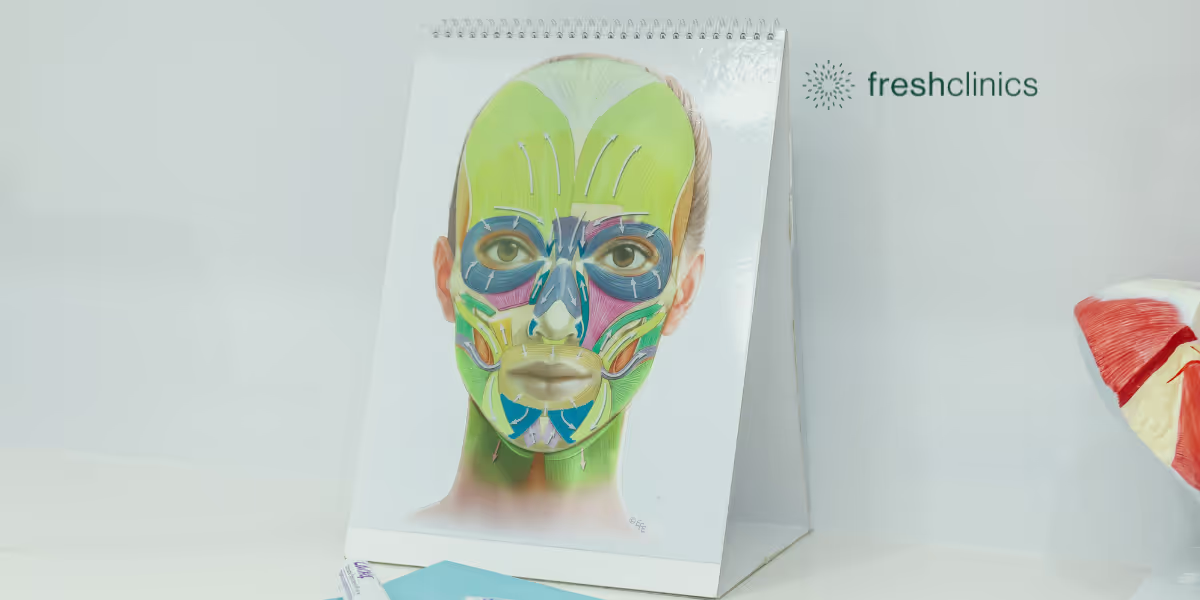
Injecting Innovation into the Cosmetic Industry
The content of this blog is designed and intended for the education of medical professionals
Welcome to a new era of aesthetic enhancements.
In an exciting training session exclusive to our Fresh members, we witnessed the thrilling launch of an exciting new product in the world of aesthetics, e.p.t.q.®, (Efficacy, Purity, Technology, and Quality) - a range of dermal fillers with an undeniable potential to revolutionize the treatment landscape, nurtured to perfection by the globally acclaimed Xytide.
We heard firsthand from Troy Guthrie, the Managing Director of Xytide, and Dr Jenny Kimmons, a renowned cosmetic doctor with nearly two decades of experience, who provided invaluable insights into the product.
The industry-shifting filler was born in South Korea, home to some of the most advanced aesthetic medical treatments. Today, South Korea is recognised as a world leader in both injectable treatments and innovative devices, and e.p.t.q® fits seamlessly into this narrative.
What makes e.p.t.q® stand out?
e.p.t.q® uses a unique technology that sets it apart from conventional HA fillers. It caters to an increasing number of clients seeking treatments for high-risk areas like the forehead, nose, and tear troughs – areas often considered tougher to treat.
What separates this technology from other fillers is its patented nine-step manufacturing process, and its CM technology, which guarantees a secure and pure environment. This technology gives an edge to e.pt.q in terms of resilience to tissue, the ability to remain cohesive after injection, and a robust safety profile - an aspect that has been boosted by considerable overseas experience and several clinical papers.
Case Studies
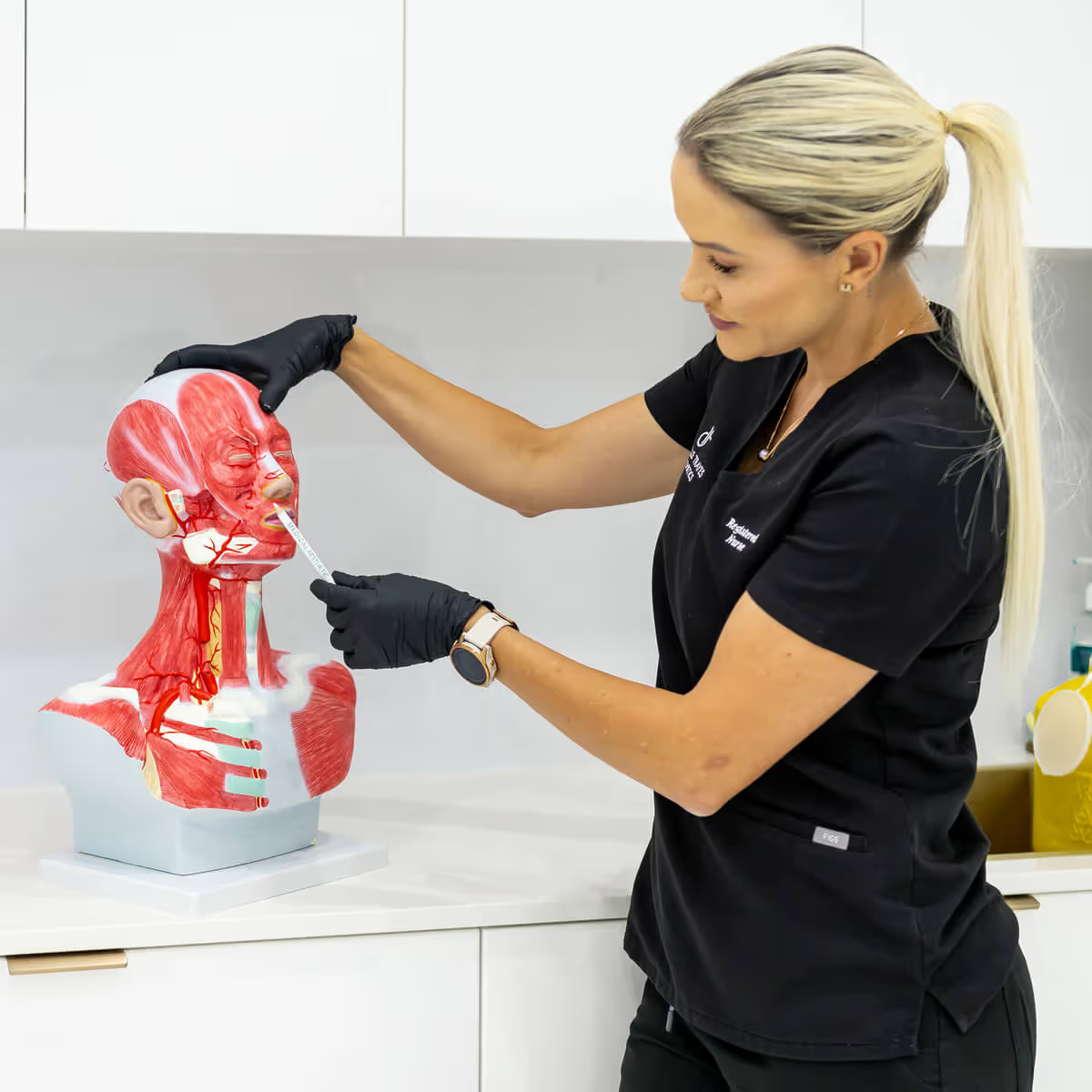
Drawing on Dr Jenny’s training session, some of the outcomes achieved using e.p.t.q so far are:
Patient one: A mature patient with lip lines and less volume was treated with S 100. The fillers were used to improve the volume in her lips and enhance the peri-oral area evenly.
Patient two: A younger patient had asymmetry in her lips corrected by injecting S 300. The patient retained her youthful look with balanced lips.
Patient three: A woman with a dramatic loss of cheek volume received a combination of S 500 and S 300 to lift her facial structure and enhance her appearance.
e.p.t.q® fillers offer strong projection using less product, which yes, means you get more bang for your buck! The incorporation of hyaluronic acid in the e.p.t.q® range enhances longevity, lasting up to 12 months in some patients, the benefit of which is explored in: Emerging Trends in Cosmetic Treatments: Longer-Lasting Hyaluronic Acid Products.
It is an excellent choice not just for lips and cheeks, but also for injecting into high-risk areas due to its improved safety profile and reversibility using Hyaluronidase.
e.p.t.q® represents a significant evolution in the field of cosmetic medicine, offering aesthetic practitioners versatility in their treatment options that deliver top-notch results.
The decision to launch e.p.t.q® exclusively with Fresh Clinics highlights our commitment to delivering high-quality, exclusive products to our Fresh Members. At Fresh Clinics, we pride ourselves on providing our strong community of Nurses with access to the best education and upskilling in the industry.
Not a Fresh Clinics member yet? Reach out to our team today, call us, or schedule a time to chat below to discuss how to become a Fresh Clinics member and take advantage of Fresh initiatives today.

Regenerative Medicine in Aesthetics
You may have heard about the latest advancement in the cosmetic industry: regenerative medicine. These new treatment offerings are bigger than ever - and they’re taking the industry by storm.
Regenerative medicine is an innovative approach that taps into the body's natural healing abilities to actively repair tissues and rejuvenate human cells.
Subtle aesthetic enhancements, also known as ‘tweakments,’ are becoming more and more popular in today’s cosmetic industry, and many patients are on the lookout for practitioners & treatments that offer a natural result.
Regenerative medicine is a great option for practitioners who are looking to provide alternative approaches to holistic facial harmonisation, that are adjacent to more traditional treatment options.
So, should I offer it to my patients?
Consider diving into the world of regenerative medicine if:
- You want to offer your patients a unique, non-surgical treatment that aims to improve wrinkles, sun damage, hyperpigmentation, acne scars, sagging skin, and fine lines
- Your clientele is interested in alternative treatments, and want to enhance their natural features
- You are looking to expand your treatment offerings in med spa to assist in growing your business
The future of regenerative medicine is bright, and at Fresh Clinics, we are committed to empowering you with the knowledge, expertize, and tools to offer new treatments to your patients. We educate our training team on new products & developments in technology at our Sydney Head Office regularly, to ensure we are always at the forefront of what is available to you.

Our Head of Training attended the Launch Symposium event hosted by K Bridge Medical, for their new Polynucleotide product, and was “so excited, because these products and technology are unlike anything we have on the market”.
She was also one of twenty nurses invited to attend an exclusive hands on training of the product following the event.
What is a Polynucleotide?
Unlike most skin boosters, this product is made from a polynucleotide DNA extracted from Salmon, which has the closest DNA base composition to the human body – making it the first of its kind in the market.
The product’s bio-active DNA assists in stimulating regeneration and repair, in return reducing inflammation and increasing the number of fibroblast cells.
There are many different products and devices you can introduce to your med spa to meet the ever-growing market need. The best way to decide what is suited to your med spa's specific patient demographic is by attending exclusive supplier-hosted training through Fresh Clinics and speaking to your account manager.
Not a Fresh Clinics member yet? Reach out to our team today, call us, or schedule a time to chat below to discuss how to become a Fresh Clinics member and take advantage of Fresh Training initiatives today.

Fresh Insights Dashboards: Unleash Growth
Welcome to the Future of Clinic Management
At Fresh Clinics, we're excited to unveil our latest innovation: the Fresh Insights Dashboards. Designed to revolutionise the way you manage your med spa, these powerful tools provide unparalleled visibility and actionable insights to propel your practice to new heights. Whether you're an established med spa owner or a seasoned practitioner, Fresh Insights Dashboards are your secret weapon for success in today's competitive market.

Gain Unprecedented Visibility into Your Med Spa's Performance
With the Fresh Insights Dashboards, you'll have access to a wealth of data-driven insights that empower you to make informed decisions and optimise every aspect of your med spa's operations. From patient demographics to product usage trends, these dashboards offer a comprehensive overview of your med spa's performance, allowing you to identify growth opportunities, streamline workflows, and drive continuous improvement.

Transform Your Decision-Making Process
Say goodbye to guesswork and hello to data-driven decision-making. With the Clinic Insights Dashboard, you can track key metrics such as patient demographics, product purchases, and appointment trends, giving you the insights you need to make strategic decisions that drive growth and profitability. And with the Nurse Insights Dashboard, your staff can access personalised metrics tailored to their performance, empowering them to deliver exceptional care and optimise their workflows.
Unlock Growth Opportunities and Stay Ahead of the Curve
Fresh Insights Dashboards aren't just about tracking performance—they're about unlocking growth opportunities and staying ahead of the competition. Benchmark your med spa against high-volume peers, identify trends in product usage and patient demographics, and leverage personalised recommendations to optimise every aspect of your practice. With Fresh Insights Dashboards, the possibilities are endless.
Seamless Integration, Maximum Impact
Integrating seamlessly with your existing workflows, Fresh Insights Dashboards make it easy to incorporate actionable insights into your daily operations. Whether you're tracking product dosage trends in your inventory feature or accessing personalised recommendations based on your med spa's unique data, Fresh Insights Dashboards are designed to optimise every aspect of your practice, ensuring maximum impact and efficiency.

Empower Your Practice and Elevate Your Success
Don't settle for average when you can achieve greatness with Fresh Insights Dashboards. Empower your practice, elevate your success, and join the ranks of industry leaders who are redefining the future of aesthetics. Your journey to success starts here—get started with Fresh Insights Dashboards and unlock the full potential of your med spa today!
Transform Your Med Spa Management with Fresh Insights
With Fresh Insights Dashboards, identifying growth opportunities has never been easier. Track product purchases and spending breakdowns to optimise inventory management. Gain insights into patient demographics and appointment trends to tailor your services and enhance patient satisfaction. And benchmark your med spa against high-volume peers to stay ahead of industry trends and drive continuous improvement.
Get a sneak peak in to the Fresh Clinics' Insights Dashboard
Empower Your Practice Today
Ready to take your med spa to the next level? Get started with Fresh Insights Dashboards and unleash the full potential of your practice. Whether you're an owner-operator, business partner, or manager, Fresh Insights Dashboards are your secret weapon for success. Don't settle for average—embrace the power of data-driven decision-making and join the ranks of industry leaders who are redefining the future of aesthetics. Your journey to success starts here!
Reach out to our team today or schedule a time to chat below to discuss how to become a Fresh Clinics member and take advantage of your business insights with Fresh!
Mastering Techniques of The Lip Matrix
The content of this blog is designed and intended for the education of Healthcare Professionals
Explore the intricacies of advanced lip augmentation techniques as we delve into a recent webinar with highly experienced cosmetic nurse, Sarah Bannon. Sharing her in-depth knowledge of facial anatomy from a comprehensive background in plastic surgery, Sarah outlines an array of sophisticated techniques to optimize the outcomes of lip augmentation procedures.
The Art and Science of Lip Augmentation
During the session, Sarah stated, "With a comprehensive understanding of anatomy and mastering injection precision and product selection, injectors can wield the knowledge and confidence necessary to deliver exceptional results to their patients." Emphasizing the importance of the consultation process, she breaks it down into key aspects: listening, interpreting expectations, planning procedures, devising aftercare plans, ensuring that you are ascertaining exactly what your patients want, and explaining that back to them.
Guiding patient expectations is a crucial element in delivering satisfactory results. Sarah points out the influence of social media and celebrity inspiration on clients' desired results. Stay open and honest about their aesthetic goals and always under-promise, and over-deliver – this builds trust and a long-lasting relationship with your patients.
Unlocking The Lip Matrix Mapping Tool
Understanding the desired look your patients want – whether they seek natural lip therapy, lip hydration, or enhanced lip volume - is crucial for determining the proper treatment protocol. Sarah introduced the 'Lip Matrix Mapping Tool', which considers demographics, anatomical considerations, product selection, and tools and techniques to help guide the treatment process and deliver results tailored to each client’s unique needs and desires.
Natural vs. Enhanced Augmentation
There's a fine line between "Natural" and "Enhanced" lip augmentation. While the former focuses on outlining and hydrating particular anatomical features, the latter aims for an intentional increase in size and shape. Both approaches should consider the client's original lip shape and size. With experience and understanding of the anatomical considerations, the right product and technique selection can provide noticeable but natural-looking results.
The Importance of Tools and Techniques
Techniques and tools significantly contribute to the outcome of lip augmentation. Preferred tools range from the 25-gauge cannula to BD syringes and surgical needles, all of which can be selected according to the desired outcome. Sarah emphasised, "I encourage people when I'm training them, to play around with their tools. I think it does help solidify your anatomy when you can change up your tools and techniques.”
Approaching Challenges in Lip Augmentation
Sarah shed light on the many factors that could pose potential challenges during lip augmentation procedures. "Asymmetry with muscle contraction is also something that we all would be dealing with quite a lot." Every aspect of facial anatomy is taken into consideration during the procedures to address possible asymmetries and irregularities to provide personalised treatments for the patient's unique anatomy.
Sarah's insights from the latest webinar at Fresh Clinics provided a comprehensive understanding of achieving mastery in lip augmentation procedures. This customer-centric approach, coupled with a keen understanding of anatomy, the right products, tools, and techniques breeds success in the field of lip augmentation.
"Practice makes perfect", Sarah concluded, encouraging budding injectors to refine their techniques and skills continuously
Not a Fresh Member?
Want to master The Lip Matrix? Your solution is just a call away!
Unlocking the Potential of Microneedling
In the cosmetic and aesthetic industry, constant innovations help us push boundaries to empower clinics to achieve remarkable results. One of the most exciting advancements is microneedling, particularly with devices like SkinPen®. At Fresh Clinics, we’re dedicated to empowering your clinic with the latest tools and insights to stay ahead.
The SkinPen, a medical-grade microneedling device, has the potential to alter the landscape of aesthetic treatments drastically. Specifically designed for cosmetic professionals, this device aligns perfectly with our call for compliance, empowering "clinics to future-proof their practices for whatever lies ahead." - Rochelle Akhavan, Advanced Skin Technology.
The Device
This potent clinical solution caters to various skin types and can be used throughout the year. Contrary to popular belief, microneedling does not exacerbate acne. In fact, it helps in alleviating acne vulgaris and refining the texture of acne scars. Wrinkles, enlarged pores, pigmentation, surgical and stretch marks, fine lines - you name it, and the SkinPen is equipped to tackle it.
Unlike other aesthetic treatments, microneedling with SkinPen is easy to implement with no significant downtime and short-lived side effects such as temporary discomfort and redness. Additionally, a post-treatment protocol usually entails using a singular repair cream for three to four days followed by a regular skincare regimen.
The SkinPen addresses a pressing issue in cosmetics, offering a cost-effective yet efficient solution. This prospect of not just solving but also profitably offers a higher revenue per patient, with the ability to provide more treatments and generate increased revenue.
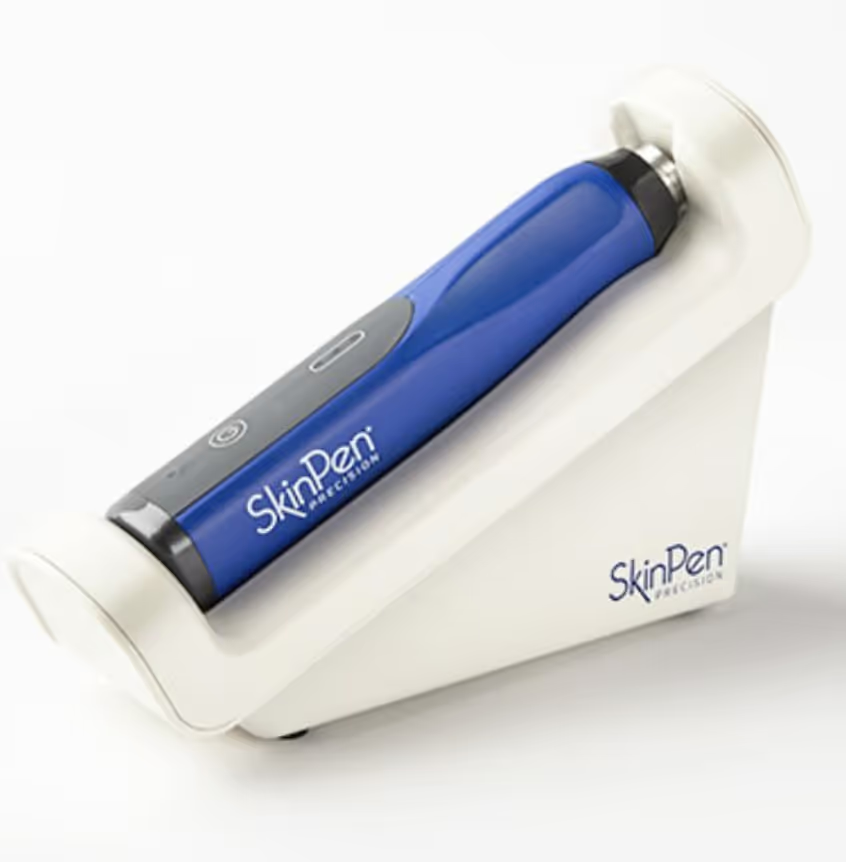
Packed with innovation and backed by solid clinical data, SkinPen is not just a device; it’s an innovative tool, uniquely designed with features like intuitive speed control and continuous power, making it a low-risk, high-reward venture.
At Fresh Clinics, we’re committed to providing our members with the best training and opportunities. Want to get your hands on the SkinPen® at exclusive prices?
Reach out to our team today, call us, or schedule a time to chat below!
The Importance of Ultrasound in Aesthetics
The demand for non-surgical cosmetic procedures is on the rise globally, which is why we strive to stay at the forefront of medical technology, equipping our community with the necessary tools for safety and adverse event management.
In aesthetic medicine, ultrasound technology plays a crucial role in mapping previous fillers on the face and body, guiding injections in high-risk areas to avoid arteries, botulinum toxin in the desired muscle, and guiding hyaluronidase when necessary.
Ultrasound technology ensures accuracy in the administration of cosmetic injectables and allows for detailed monitoring. With the help of ultrasound guidance, a cosmetic nurse can easily view facial anatomy, particularly in high-risk areas, leading to a more precise injection and reducing the risk of adverse events. It also reduces the guesswork accompanying such treatments, bringing a newfound level of effectiveness and patient safety.
Despite complications being reported, the presence of an accurate diagnostic instrument for identifying cutaneous filler deposits could potentially explain the link between the procedure and any adverse events. It's in this context that our pursuit of innovation empowers cosmetic professionals with precise diagnostic tools, and the ability to resolve uncertainties, and ensures our commitment to compliance and regulation within the industry.
A Fresh Perspective on Ultrasound
For those seeking a fresh perspective on how ultrasound can enhance their practice, a compelling case comes from Cathy Wood, founder of Meraki Cosmetics. She recently integrated ultrasound technology into her clinic and has achieved remarkable success in implementing this technique for safer, more effective aesthetic procedures.
In terms of adverse events, Cathy candidly shared an occurrence where she was called to assist in a vascular occlusion during a colleague's filler treatment. The ultrasound technology on hand equipped her to identify and swiftly treat the blockage. Cathy attests that having the ability to dissolve fillers using ultrasound guidance ‘significantly reduces medical complications.’
For Cathy and many other cosmetic nurses, ultrasound has become an indispensable tool in their practice, enhancing precision, granting satisfaction of better patient outcomes, and most importantly, making aesthetic procedures safer.
Patients who know that their aesthetic procedures are guided by ultrasound, find comfort and assurance and are more likely to attend clinics that use this technology. Our very own co-founder, Dr. John Holbrook, “firmly believes that every clinic should have Ultrasound technology, and within the next five years, it will become an essential part of every Nurse’s toolkit.”
At Fresh Clinics, we always prioritise safety and stay on top of clinical education for our members, which is why we use our very own ultrasound technology on-site in our training facilities. Cathy recommends embracing the learning curve and mentioned, "I think it {ultrasound} is a hundred percent necessary because you've got experts in the field and top doctors who use it every day as well and have been using it for years."
Simply search "Ultrasound" in the Fresh Shop to explore your purchasing options, or learn more by watching our range of ultrasound webinars in the Fresh Resource Hub, or talk to your Account Manager for further advice.
Not a Fresh Clinics member yet? Reach out to our team today, call us, or schedule a time to chat below to discuss how to become a Fresh Clinics member and take advantage of Fresh Training initiatives today.

Top Aesthetic Trends to Watch Out For
The latest trends in cosmetics signal shifts in the beauty and wellness industry, focusing on things like personalization, natural results, and skincare incorporation.
We’ve put together a guide of the biggest trends to watch out for, to help you offer your patients the best, and gain a deeper understanding of the needs and wants of your consumers.
1. Natural-Looking Results
One of the biggest trends in today’s aesthetics market is the desire and need for natural enhancements. This shift represents the focus on individual beauty rather than completely altering it - and we are all for it!
2. Prevention, Not Repair
You may have noticed that some of your patients are getting younger. More individuals, particularly those in their 20s and 30s, are opting for non-surgical cosmetic treatments as a proactive strategy to slow the formation of fine lines and wrinkles.
3. Personalized Skincare
More and more patients are seeking skincare regimes and procedures that are tailored to their specific skin types, and that can be paired with aesthetic treatments. This demonstrates the importance of developing individualized skincare solutions for your patients.
4. Longer Lasting
It’s no secret that patients want their treatments to last for a long time. The demand for longer-lasting products is increasing, and we’re excited to offer these options to our Members!
5. Non-Invasive Procedures
Innovations in non-invasive technologies such as laser treatments, PRF, radio-frequency therapies, and ultrasound-based interventions offer effective alternatives to cosmetic treatments. These procedures provide significant results with minimal downtime and lower risk and are becoming more and more popular in the industry.
6. Diverse Demographics
No longer a female-only industry, more men are pursuing aesthetic treatments aimed at natural enhancement.
These trends show an exciting future in the aesthetic industry that is more inclusive, natural and personalized. By staying informed about these and emerging trends, cosmetic professionals can make better-informed decisions about their business and treatment offerings.
Not a Fresh Member? Join us today.
Managing Aesthetic Patient Expectations
Patient satisfaction relies on more than just the treatment outcome—it results from clear communication, education, and realistic expectations the practitioner sets. Whether you're using anti-wrinkle injections, dermal fillers, or collagen-stimulating treatments, managing expectations is key to ensuring a positive experience for both the patient and the practitioner.
Thorough Consultations
The consultation allows you to build rapport and educate your patient about the procedure. Understanding their aesthetic goals and assessing their medical history and skin condition is crucial. This initial conversation sets the tone for the entire treatment journey, allowing you to explain what can be realistically achieved and addressing any misconceptions they might have.
During this time, leverage your visual aids such as before-and-after photos, diagrams, or even digital simulations to illustrate potential results. This can help bridge the gap between the patient’s expectations and what’s achievable based on their unique facial anatomy and skin condition. Make sure to discuss any limitations of the chosen treatment, whether it's due to skin elasticity, facial structure, or the nature of the product itself.
Setting Realistic Goals
One of the most common reasons for patient dissatisfaction is unrealistic expectations. While some patients may have a clear idea of their desired outcome, others may be influenced by filtered social media photos or celebrity looks. As a practitioner, it’s important to guide patients toward achievable goals that complement their natural features. This may involve being honest about what the product can and cannot do.
Doing so not only protects your professional reputation but also establishes trust and respect in your patient-nurse relationship.
The Post-Treatment Timeline
Many patients expect instant results, especially with aesthetic treatments. However, it’s important to emphasise that immediate results may not reflect the final outcome. Temporary side effects such as swelling and bruising are common and can obscure the true effect of the treatment. Make sure your patients understand that it may take a few days or even weeks for the full results to settle in.
For example, after dermal filler treatment, swelling can make the lips appear fuller than expected initially, but this is not indicative of the final look. Similarly, with tear trough fillers, swelling and dark circles may persist for up to a week before the final results become visible.
Setting this timeline early on helps manage their expectations and reduces the likelihood of premature dissatisfaction.
Managing Social Media Expectations
With the use of social media and photo-editing apps, many patients come in with expectations based on highly edited or unrealistic images. This can lead to a disconnect between what they desire and what is achievable. As their cosmetic nurse, it’s essential to have open conversations about the influence of social media on beauty standards.
Educate them about the importance of maintaining facial harmony and how subtle adjustments can enhance their features without looking overdone. By aligning expectations with achievable results, you help patients feel more satisfied with the outcome.
Creating a Treatment Plan
Every patient is unique, and so should their treatment plan. During the consultation, create a treatment roadmap that outlines all the steps required to achieve and maintain their desired look over time. This plan can include information on the frequency of follow-up treatments, and maintenance sessions.
Aftercare
Educating patients about post-treatment care is important for achieving long-lasting results. Provide them with detailed instructions on how to care for their skin post-treatment, and monitoring for any adverse reactions. Clear aftercare guidance minimises complications and ensures that patients are proactive in their recovery.
Managing patient expectations is an art that goes beyond the technical skill of cosmetic injectable treatments. At the end of the day, happy patients are those who understand and appreciate the subtle, natural enhancements that these products can provide. With clear communication and trust, you can ensure they leave your clinic feeling confident and satisfied with their experience.

Attract, Engage, Retain: Recruitment in Aesthetics
Recruitment in the aesthetic industry is anything but straightforward. The stakes are high; every new hire impacts not only the clinic’s culture but also patient satisfaction and, ultimately, the bottom line. So, how can clinics navigate this complex process successfully?
Fresh Members recently heard insights from top professionals in the field, to bring some strategies for mastering recruitment in the rapidly shifting employment landscape.
Why Recruitment Matters
Did you know that a bad hire could cost your clinic up to 30% of an employee’s first-year earnings? The ripple effect on team morale and patient trust can also be long-lasting. Australia’s job market is tighter than ever, with unemployment rates remaining low, giving job seekers a competitive edge.
For clinic owners, this means the traditional approaches to recruitment may no longer suffice. To stand out, you need to be agile, strategic, and willing to adapt to new ways of attracting and engaging potential employees.
Marita Hambesis, Principal Consultant with Aesthetics Recruitment Australia, emphasised to Fresh Members, “Recruitment in and of itself can be really challenging, especially within this industry.”
The Aesthetic Industry Recruitment Process
Before going right into job postings, lay the groundwork:
- Identify your immediate and long-term staffing needs
- Determine the specific skills required for each role
- Ensure the recruitment process is candidate-friendly
- Use multiple channels to reach potential candidates, including job boards, industry contacts, and employee referrals
Competitive Compensation
Evaluate your pay structure to make sure it’s competitive in the current market. Competitive pay isn’t just about attracting talent; it’s important for retention too. Ensure you’re offering attractive non-financial benefits, such as professional development opportunities, performance rewards, and flexible work options. Michelle Mexted, founder of Aesthetics Recruitment Australia explains, “The standard is usually about 10% commission for cosmetic injectors, sometimes up to 15%. Higher hourly rates with no commission are also common.”
Flexible Work Environment
A recent survey by Seek found that a significant 65% of workers have reassessed their workplace priorities since the pandemic. Many are seeking better work-life balance, and some are even willing to take a pay cut to achieve it.
In the aesthetics industry, where treatments often require practitioners to be physically present, creating flexibility can be challenging - but it’s not impossible. While offering remote work might not be feasible, consider introducing other flexible options like shorter shifts, staggered working hours, or additional leave benefits.
Making Your Recruitment Stand Out
Creating compelling ads and leveraging multiple channels is essential. Marita suggests, “Speak to fellow business owners, speak to the employees that are currently working with you, see if they know anybody else that would like to come on board.”
It’s also critical to act quickly once applications start rolling in. Michelle highlighted the importance of speed, “If you are not moving quickly on contacting those candidates... you might find that you’ve lost them before you’ve even been able to make contact.”
Conducting Effective Interviews
How you conduct interviews can make or break your recruitment success. "Review resumes beforehand," Marita recommends. “From a cultural perspective, identify what their key values are, and how those values align with your business.”
The way you treat candidates throughout the hiring process also shapes their perception of your clinic. Providing clear communication, timely feedback, and a welcoming interview experience reflects well on your brand and can turn interviewees into advocates - even if they don’t join your team.
Prepare for interviews thoroughly and ensure that the questions you ask are designed to assess not only the candidate’s skills but also their alignment with your clinic’s culture and values. A positive interview experience sets the stage for a successful relationship right from the start.
Retention Strategies
Retaining talent in the aesthetics industry involves more than just attractive pay. It’s about creating a positive work environment, offering career development, and encouraging psychological safety. Marita says, “Having a strong development program in place is crucial. Ask your current employees for feedback... frequent check-ins allow you to tailor development opportunities.”
Recruitment in the aesthetics industry requires both strategic planning and an understanding of market dynamics. To excel, focus on creating efficient recruitment processes, building strong retention strategies, and staying competitive with compensation packages. Following these insights will help you not only find but also keep the top talent in the field, ensuring your clinic's success and reputation.
A New Approach to Treating Pigmentation
It's an exciting time in the aesthetic industry. Groundbreaking development has given us innovative tools to treat prominent skin concerns, such as pigmentation. Pigmentation disorders are one of the most common dermatological problems that hinder many from showcasing their natural skin.
Dr. Tina Meder, a leading figure in skincare science, recently hosted a webinar for Fresh Members, introducing Meder’s latest product and breakthrough in pigmentation.
The Problem With Traditional Treatments
Traditional methods of treating pigmentation, up until now, have often come with their unique set of challenges. These solutions often have a detrimental impact on melanin, the skin's natural protector.
The traditional approach involves destroying melanin to "whiten" the skin which makes it vulnerable to damage. It creates an unpleasant cycle in which the treatments meant to help, inadvertently damage the skin due to this elimination of melanin. Long-term exposure can lead to persistent inflammation, the primary culprit behind increased melanin production, thus worsening the pigmentation.
As Dr. Meder noted, "If you control the inflammation, you control pigmentation." Therefore, it is necessary to calibrate our treatment methods to ensure they do not stimulate inflammation, further propagating pigmentation.
A New Approach
Medar’s latest collection, Lumino-Derm, is revolutionizing pigmentation treatment. Comprising a mask and a cream, it aims to treat dark spots and pigmentation in a novel, safe, and effective manner. "It's probably the first product in the world that helps to protect your skin while it brightens," Dr. Medar explained.
Instead of removing melanin, the Lumino-Derm Collection works to restore and maintain the healthy production of melanin. It aims to strike a balance in shades of melanin - for skin types across the spectrum.
At the core of Lumino-Derm’s success is an ingredient known as 'Cysteamine.' Cysteamine is a revolutionary ingredient in skincare, known to convert melanin to a lighter hue, promises a brightening effect on the skin, and has been shown to reduce melasma and dark spots in around 80% of users within eight weeks.
The Lumino-Derm Collection includes a skin-brightening mask packed with peptides, antioxidants, and healthy bacteria to promote brightening, skin health, and maintaining a healthy microbiome. Designed for use once a week, it aids in maintaining results and preventing new pigmentation. On the other hand, the Lumino-Derm cream offers an active treatment plan for existing pigmentation issues. Both these products together present a comprehensive plan for promoting healthy skin.
Thanks to Meder, the approach to pigmentation treatment is changing. Emphasising the importance of maintaining healthy skin, Dr. Meder added, "That's our motto - skin should be healthy and healthy skin means active longevity for the skin." This refreshing perspective is a harbinger of truly innovative skincare options that are safe, effective, and gentle to the skin.
At Fresh Clinics, we remain committed to sharing the latest trends and treatments that empower our Members and spark inspirational discussions about the future of skincare.
Want access to Meder’s Lumino-Derm at competitive pricing? Reach out to our team today, call us, or schedule a time to chat below!

Business Growth with Fresh
We believe in empowering our community to achieve incredible growth and success. That’s why we have launched our latest initiative: Business Growth with Fresh; a curated source of training, tools, and tips and tricks that will empower you to set the stage for a successful 2024 and beyond…
From access to industry and business leaders through live webinars, and exclusive training opportunities with suppliers and new products, to connection with key business providers in our expert hub, your business is sure to grow with Fresh.
Kicking off the launch of the initiative in the first of 12 webinars of our Business Growth Webinar Series, we have the ‘Secret CEO’ herself, Suzie Hoitink, CEO of HTNK Advisory. As the pioneer of Clear Complexions and the ‘Secret CEO’ business coach, Suzie knows the importance of truly understanding your business (as explored in this podcast "Startup, Support and Scaling, the Key Ingredients You Need for a Successful Business"). Our first webinar with Suzie will help you uncover skills in interpreting your financial data and metrics and understanding what this data means for the success and growth of your business.
Whether you’re aspiring to create your own business, an established cosmetic nurse, or a med spa owner looking to optimise your operations and stay ahead of the game, our new Business Growth Webinar Series has been designed with you in mind.
These sessions offer a unique opportunity to learn new skills, network with like-minded professionals, and stay ahead of the curve.
You can expect:
- To learn from industry experts, hand-picked by us - just for you.
- 30-minute, knowledge-packed sessions
- Insightful topics like setting strategic plans, marketing your business, and finance fundamentals.
- A fun, interactive way to network and learn new skills
Whatever your goals may be, our Business Growth Webinar Series will provide you with the knowledge and tools to achieve them. With regular sessions and a new speaker every month, we have you covered. Growth, expansion, and being our best selves are at the heart of Fresh Clinics, so join us and discover why our Business Growth with Fresh is the solution you have been searching for.
As a Fresh Clinics member, you have exclusive access! You do NOT want to miss this webinar. Register now via your workspace!
Not a Fresh Clinics member yet? You can still learn how to help grow your business with the Business Growth with Fresh Masterclass. Take a peak here!
Worried your business isn't succeeding at it's full potential? Reach out to our team today or schedule a time to chat below to discuss how to become a Fresh Clinics member and take advantage of our Business Growth with Fresh initiatives today.

Mastering Laser and IPL Devices
Aesthetic treatments constantly evolve, and staying ahead with the latest technology and techniques is important for business growth.
This month's Business Growth Webinar Series by Fresh Clinics, hosted by skin expert Steph Yalda, focused on the differences and applications of laser and IPL (Intense Pulsed Light) devices, and how they can boost the revenue and profitability of cosmetic clinics.
Meet Steph: Your Guide to Advanced Skin Treatments
Business Development Manager and Dermal Therapist, Steph, with over two decades of experience in the aesthetics industry, has been transforming skin and sharing valuable knowledge for years. "I started as a humble beauty therapist at seventeen, and my career has progressed ever since," she shared. Now, she works with our Members to demystify laser and IPL treatments, guiding them through these powerful devices.
Why Choose Laser or IPL?
One of the key takeaways from the Business Growth session was understanding when and why to opt for laser or IPL treatments.
Laser: Precision and Power
Laser stands for Light Amplification by Stimulated Emission of Radiation. It's a single-focused wavelength of light. "With laser, you have a very high level of precision," Steph explained. This makes laser devices ideal for treatments like:
- Hair removal
- Vascular lesion treatment
- Tattoo removal
IPL: Versatility and Broad Coverage
IPL, on the other hand, uses a broad spectrum of light, making it versatile for treating various skin concerns simultaneously. "What's great about IPL is you can address many concerns in one session," Steph said. IPL can effectively treat:
- Pigmented Lesions
- Vascular Conditions
- Skin Rejuvenation
- Acne
Steph highlighted the importance of both technologies, noting that "you can have just an IPL device in your clinic because it will cover such a range of different treatments."
Key Considerations for Implementing Laser and IPL
Introducing these devices into your clinic requires careful planning and understanding of the technology. Steph emphasised a few critical points:
Safety First
Understanding the physics behind these devices and having proper training can prevent adverse events and ensure effective treatments.
For most devices, Steph recommends attending in-person training. "Go to the in-person training sessions, because you will be so much better and have a better understanding of how the device works."
Treatment Planning
A clear treatment plan tailored to each patient's needs is crucial. "Understanding the treatment journey of your patient and what you are trying to treat and why is how you make this a success," Steph advised.
Real Results & Revenue Potential
Steph shared impressive before-and-after photos demonstrating the effectiveness of these treatments. From reducing pigmentation and vascular lesions to significantly improving acne scars, the results speak volumes about the potential these devices hold.
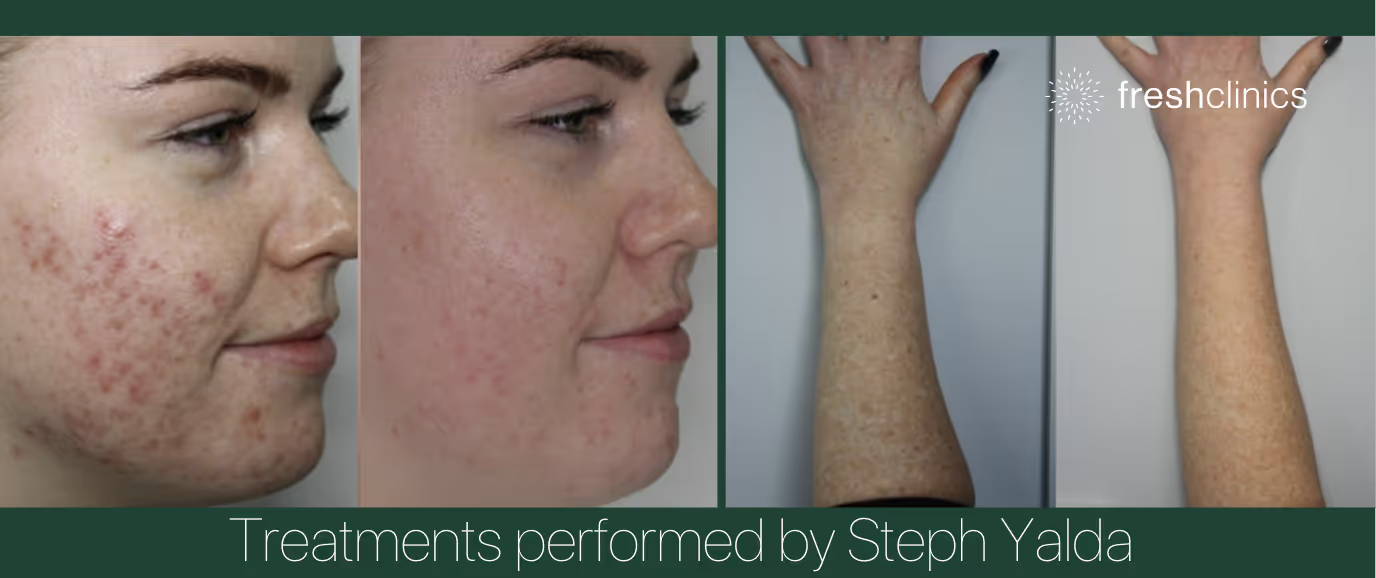
Investing in these technologies not only improves patient outcomes but also boosts revenue. An LED device, priced modestly at $69 per treatment, can bring in an annual estimate of around $35,000 with just two treatments a day.
Laser and IPL devices are transformative tools in the aesthetics industry, offering precise and versatile treatment options. With proper training, understanding, and a strategic approach to treatment plans, these technologies can significantly enhance the services offered at your clinic.
To discuss device options or explore what training is on offer for these devices, talk to your Account Manager, or speak with our Customer Success Team on becoming a Fresh Member.
The Future of Medical Aesthetics: What to Know
The content of this blog is designed and intended for the education of Healthcare Professionals
McKinsey’s recent paper, ‘Here to Stay: An Attractive Future for Medical Aesthetics’ has highlighted some key trends shaping the industry. We’ve put together the key points for you, to offer valuable insights for your business.
The aesthetics industry is on track to maintain near-double-digit growth throughout 2025. Looking ahead, several emerging trends are set to redefine cosmetic clinics, providing exciting opportunities for practitioners and business owners.
Number of injectables procedures and market size annually, USA & Canada:
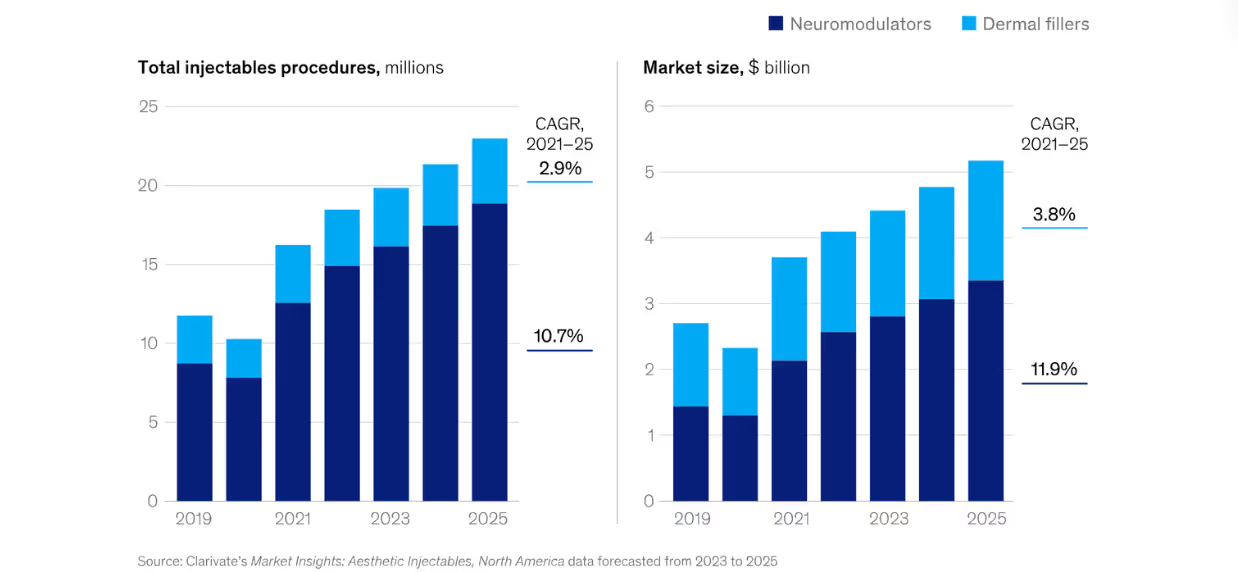
Thriving Despite Challenges
Even during the depths of the COVID-19 pandemic, the aesthetic industry quickly rebounded, driven by a growing and diverse patient base, increased awareness, and the rapid adoption of new technologies. Projections indicate that the market will continue to grow annually by up to 14% through to 2026.
This growth is supported by a few key factors:
- Expanding Consumer Base: Social media's influence has made aesthetic treatments more mainstream and acceptable. Recent studies show that 81% of consumers are now more accepting of aesthetic procedures compared to five years ago
- Brand Loyalty: While economic uncertainty has led some consumers to seek cost-effective treatments, many remain loyal to their preferred brands and providers, especially in the neuromodulator segment (think Botox and Dysport)
The shift in attitude has opened doors for a more diverse clientele, including men, who are increasingly seeking aesthetic procedures. Between 2000 and 2018, the number of males undergoing cosmetic procedures grew by 29%, with a notable 72% increase in minimally invasive treatments. This expanding demographic presents a significant growth opportunity for med spas and clinics looking to cater to a broader audience.
Key Trends to Watch
- Products and Services: From next-generation dermal fillers to advanced laser treatments for acne, the industry is evolving rapidly
- Proliferation of Service Channels: Cosmetic clinics are popping up everywhere, offering consumers more options than ever before. While this growth provides opportunities for business owners, it also means that customer loyalty can be tough. Providers who can offer a personalised, trusted experience will be best positioned to retain their clients
- Untapped Potential: McKinsey's surveys reveal that many consumers are on the verge of trying medical-aesthetic products within the next five years, signalling opportunities for expansion for business owners
Opportunities
For those looking to start or expand their clinic, the future is bright. Here are a few strategies to consider:
- Products and Services: From next-generation dermal fillers to advanced laser treatments for acne, the industry is evolving rapidly
- Proliferation of Service Channels: Medical spas and clinics are popping up everywhere, offering consumers more options than ever before. While this growth provides opportunities for business owners, it also means that customer loyalty can be tough. Providers who can offer a personalised, trusted experience will be best positioned to retain their clients
- Untapped Potential: McKinsey's surveys reveal that many consumers are on the verge of trying medical-aesthetic products within the next five years, signalling opportunities for expansion for med spa owners
For practitioners and business owners, the key to success will be staying adaptable, embracing new opportunities, and focusing on delivering exceptional patient experiences.
So, if you're contemplating whether or not to dive into aesthetics, remember – this industry is here to stay.
Not a Fresh Member?

Careers: Working at Fresh Clinics
At Fresh Clinics, we believe the key to providing exceptional support and services to our Members starts with an inspiring, talented, and supportive environment for our team. Our vibrant culture is alive with values that guide our work and success, and we live by principles such as being kind, staying humble, and waiting for the second marshmallow.
Within 5 years, we've transformed an idea into a high-performing team of 100+ staff, and we rank among the top in the industry for growth. Here’s a glimpse of what it’s like to be part of the Fresh Clinics team:
Work-Life Balance
We understand that a healthy work-life balance is essential for overall well-being at work.
The Fresh Clinics team predominantly operates remotely across the globe, offering flexible working arrangements to help our employees maintain a balance between their professional and personal lives. This principle is built on high trust, high output, and staying humble. We credit this to our unique organisational design and strategic approaches covering all of our talented staff.
There is still a large presence at our HQ in Sydney, to ensure we all connect face-to-face and focus on building relationships.

We are all a little pet-obsessed, which is why our staff are encouraged to bring their furry friends into work. This unique aspect of our culture makes our office a warm, welcoming, and joyful place to be.
Innovation
Our team is encouraged to think outside the box, stir things up, and explore new ways to improve our services and products. This commitment to excellence ensures that we remain industry leaders and continuously deliver exceptional value to our Members.

Collaboration
The best ideas come from diverse perspectives and open communication. Our team members work closely across departments, sharing knowledge and expertise to achieve common goals. This collaborative environment is one where everyone’s contributions are valued and recognised.

Inclusivity
We celebrate the unique backgrounds, experiences, and perspectives that each team member brings to the table. We’re all about creating a workplace where everyone feels valued, respected, and empowered to succeed.
Growth and Development
We are deeply invested in our employees’ growth and development, ensuring that everyone has the resources and encouragement they need to stay ahead in their careers. Our commitment to employee growth not only benefits our team but also ensures that we deliver the highest standards to our Members.
Well-Being
We prioritise the well-being of our employees and offer support at all levels. Our nurturing culture is reflected in our policies that encourage respect, trust, empathy, and support for one another. This caring and supportive atmosphere makes Fresh Clinics a place where employees can thrive.

Community
We regularly host social events that help our team bond and unwind. From team-building days to office celebrations, these events are all about building supportive, respectful relationships at work.
Join the Fresh Clinics Team
Working at Fresh Clinics is more than just a job - it’s an opportunity to be part of a dynamic, innovative, and supportive team that is transforming the med-tech & aesthetic industry. If you are passionate about making a difference and ready to collaborate with the brightest minds in the field, make sure you stay up to date with our regular job openings.
A Deep Dive into PRF (Platelet-Rich Fibrin)
The content of this blog is designed and intended for the education of Healthcare Professionals
Harnessing the power of a technique known as Platelet-Rich Fibrin (PRF), a revolutionary treatment that uses the patient's blood to facilitate healing and rejuvenation, is transforming aesthetics. Unlike traditional methods, we now have a solution that offers longer-lasting results and numerous applications in the cosmetic field, from under-eye filling to treating acne scars.
Understanding PRF
This revolutionary treatment opens doors for us to explore the tremendous therapeutic potential residing within our own bodies.
PRF, an advanced form of blood biostimulation therapy, has been making waves in areas like dental procedures, wound healing, and notably, cosmetic treatments. But what separates it from the familiar, yet slightly outdated, PRP (Platelet-Rich Plasma) therapies?
Dr. Gordon Ku recently joined Fresh Members for an insightful webinar to shed light on PRF's pronounced distinction and benefits.
Dr. Gordon emphasised PRF as a comprehensive regenerative tool that contains increased platelet and fibrin concentration compared to PRP (Platelet-Rich Plasma). This makes PRF a potent medium for healing and regeneration, and its unique release mechanisms “slowly release growth factors over time,” whereas PRP releases them quickly.
It is because of this slow release that PRF has proven its worth in regenerating fat pads and treating common aesthetic concerns. This also means that PRF has longer-lasting effects.
The Treatment
A major selling point of PRF is its ease of injection into the subcutaneous fat layer using a cannula.
One of the commonly asked question throughout the session was, “Is it okay to inject with a cannula, for areas that aren't hollow and just for rejuvenation?”
The answer is yes. Depth of injection plays a crucial role in the success of the procedure. Dr. Gordon explained, "The comfort level of the patient will tell you if you're in the right layer or not."
.avif)
The Benefits
The primary advantage of PRF is that it uses your body's cells to enhance your skin's health. Since the treatment is derived from your blood, it is extremely safe. It’s also a great choice for those seeking a natural approach to skin rejuvenation:
- Collagen Production: The growth factors in PRF stimulate collagen production, which helps reduce fine lines and wrinkles, and improves skin elasticity
- Natural Healing: Because PRF uses your own blood, there’s no risk of allergic reactions or adverse side effects. This makes it a safe and natural option
- Minimal Downtime: Unlike more invasive procedures, PRF treatments involve minimal downtime, offering a less intrusive alternative to traditional fillers
- Versatile Applications: PRF can be used to treat various skin concerns, including acne scars, dark circles under the eyes, fine lines, and overall skin rejuvenation
Even skin conditions like Rosacea, an aggravating red rash across the face, can potentially find relief with PRF treatments.
But the impact of PRF doesn't stop at skin rejuvenation and healing; it has opened up new possibilities in the realm of neurology as well. Dr. Gordon even proposed the potential use of PRF as an anti-inflammatory treatment for seizures.
But like any non-surgical cosmetic procedure, PRF should be implemented with caution. Though vascular occlusion from PRF is extremely rare, it's crucial to have protocols in place. With continued research and recent advancements in applicable techniques, the power of our own platelets holds promising potential for more treatments in the future.
Offering this innovative treatment can open up new avenues for Nurses and Doctors in the field of aesthetics. Given the rising interest in regenerative treatments, PRF sets a new standard for safe, efficient, and effective non-surgical cosmetic procedures. Undoubtedly, PRF is an exciting addition to the world of aesthetics.
Not a Fresh Member?
Want to learn more about PRF? Your solution is just a call away!

The Future of Wound Healing in Aesthetics
Imagine a world where skin rejuvenates faster and wounds heal with minimal scarring.
Introducing TR Pro+; a hydrogel formulation that is changing the game in tissue repair. This isn't just another skincare product; it’s a scientifically formulated to accelerate healing, enhance skin protection, and optimise cosmetic and medical procedure outcomes.
Tissue Repair, an Australian company founded in 2015, has been making waves in medical aesthetics with its product TR Pro+. The product’s key active ingredient is beta-glucan, derived from everyday baker’s yeast. Over two decades of rigorous scientific research has gone into its ability to modulate the immune response, therefore promoting faster and healthier skin healing.

The Science: Beta-Glucan
Beta-glucan is a polysaccharide found in the cell walls of yeast, algae, bacteria, and certain grains like oats and barley. The beta-glucan used in TR Pro Plus is extracted from baker’s yeast and formulated into a hydrogel. It's a large molecule beta-glucan that penetrates the skin's epidermis and reaches the dermis, where it activates immune cells known as macrophages.
Macrophages are essentially the body’s guard cells. These immune cells recognise the beta-glucan and become activated, producing growth factors and cytokines which aid in skin healing. Unlike smaller beta-glucans, TR Pro Plus maintains its large structure, ensuring effective activation of the product.
"The cooling sensation the hydrogel gives really takes the edge off the pain during treatments like needling. It’s incredibly soothing." - Nurse Charlotte, Tissue Repair.
Beta-glucan has shown promise in closing venous leg ulcers, as evidenced by two phase-two FDA studies. These studies highlighted the gel’s ability to close chronic wounds more effectively than placebo treatments. Currently, the product is undergoing phase-three clinical trials in both Australia and the U.S., aiming to treat 600 patients across these regions.
"We received TGA approval about a month ago, and this endorsement allows us to now reach out broadly to consumers.” - Dr Daryl Reed, Tissue Repair.
Real Results
The product has been a lifesaver for patients dealing with conditions like eczema and post-surgical wounds. For instance, in skin cancer excision cases, patients reported accelerated healing with minimal inflammation when TR Pro+ was applied immediately post-procedure.
Aesthetic Procedures
TR Pro+ is designed not only for wounds but also for aesthetic procedures. Think laser resurfacing, biopsies, injectables and skin needling. “TR Pro Plus is increasingly becoming the go-to post-procedure solution. Charlotte shares, “You can use TR Pro Plus anywhere there is trauma to the skin via heat lasers, needles, or resurfacing chemicals. It’s incredibly versatile.” - Nurse Charlotte, Tissue Repair.
With its powerful combination of real-world efficacy and clinical versatility, TR Pro+ stands as a landmark product in the realm of skin care. Whether dealing with aesthetic treatments or medical procedures, TR Pro+ promises accelerated healing, reduced discomfort, and superior skin quality.
“We know so much about the active ingredient in this aftercare product — probably more than any other on the market at the moment. This isn’t just a claim; it's backed by years of research and real patient results.” - Dr Daryl Reed, Tissue Repair.