Featured Articles
Nationwide: the FDA's GLP-1 telehealth crackdown and the prescriber-network gap
The FDA's warning letters on compounded GLP-1 marketing exposed how telehealth platforms and prescribing networks split responsibility. What med spas should check.
Key facts:
- The FDA issued 30 warning letters to telehealth companies over compounded GLP-1 marketing.
- One named company, MEDVi, was cited in a February 20, 2026 letter.
- Many platforms don't prescribe themselves. Affiliated medical groups do, which can create accountability gaps.
- Intake-form-only evaluations may not meet state prescribing standards.
What did the FDA flag?
The FDA issued 30 warning letters to telehealth companies marketing compounded GLP-1 drugs with claims it called false or misleading. In a February 20, 2026 letter to MEDVi, the FDA cited claims like "same active ingredient as Wegovy and Ozempic," which are misleading because compounded drugs are not FDA-approved. See the FDA warning letter.
What is the prescriber-network issue?
A March 2026 analysis found that many of these platforms don't actually prescribe. They rely on clinicians in affiliated medical groups to evaluate patients and write prescriptions. That split between the marketing platform and the prescribing group can leave gaps in who's accountable for patient evaluation, prescribing, and follow-up. Asynchronous, intake-form-only evaluations may not meet state requirements for prescribing injectables.
What it means for your med spa
If you work with any telehealth or prescribing partner, get clear on who owns each step. Vet partners for compliance with state prescribing laws and scope of practice, make sure evaluations meet your state's Good Faith Exam standard, and confirm your marketing matches how care is actually delivered.
FAQs
Are intake-form-only evaluations enough to prescribe GLP-1s?
Often not. Many states require a real evaluation that an intake form alone may not satisfy.
Why does the platform-versus-prescriber split matter?
It can blur accountability for evaluation, prescribing, and follow-up, which is exactly where enforcement looks.
Fresh Clinics helps med spa owners vet partners and meet Good Faith Exam standards. Learn more about Fresh Clinics membership.
Nationwide: Amazon's One Medical GLP-1 program and what it signals for med spas
Amazon launched a GLP-1 program through One Medical, bundling telehealth, prescribing, and pharmacy. Here's the signal for how med spas should structure GLP-1 care.
Key facts:
- On April 21, 2026, Amazon launched a GLP-1 Management Program through One Medical, nationwide.
- It bundles screening, provider consults, prescribing, follow-up, and pharmacy fulfillment.
- On-demand telehealth handles renewals only, not new prescriptions.
- This is a commercial launch, not a regulatory action.
What did Amazon launch?
On April 21, 2026, Amazon introduced a GLP-1 Management Program through its One Medical platform, available nationwide. It runs a single care pathway: pre-visit screening, a structured consultation with a licensed provider, prescribing, follow-up visits, and clinical monitoring. Prescriptions can be filled at the patient's pharmacy of choice. See Amazon's announcement.
Is this a regulation?
No. It's a commercial program, not a government action. But it matters because it sets a market benchmark for what doing GLP-1 properly looks like: provider-led evaluation, real follow-up, and documentation, with on-demand telehealth limited to renewals rather than new prescribing.
What it means for your med spa
If you offer GLP-1 services, this is the bar patients will start comparing you to. Build a care pathway with genuine assessment, prescribing by a licensed provider, follow-up, and monitoring. Align provider involvement with your state's requirements, and document how prescriptions are issued and filled, especially when a third-party or integrated pharmacy is involved.
FAQs
Can patients get a new GLP-1 prescription through Amazon's on-demand telehealth?
No. That channel handles renewals only. New prescriptions go through the structured consultation.
Does this change any law for med spas?
No. It's a commercial program, but it signals the standard of care patients will expect.
Fresh Clinics helps med spa owners build compliant, well-documented GLP-1 care pathways. Learn more about Fresh Clinics membership.
Nationwide: the CMS-FDA RAPID device pathway, and why it likely won't touch your med spa
CMS and the FDA launched the RAPID pathway to speed Medicare coverage for Breakthrough Devices. Here's why most aesthetic devices fall outside it.
Key facts:
- On April 23, 2026, CMS and the FDA announced the RAPID coverage pathway.
- It aligns FDA authorization timing with Medicare coverage review for certain Breakthrough Devices.
- It applies only to eligible Class II and Class III devices for serious or life-threatening conditions.
- Elective cosmetic and aesthetic devices are not in scope.
What is RAPID?
On April 23, 2026, CMS and the FDA announced the RAPID (Regulatory Alignment for Predictable and Immediate Device) pathway. It coordinates the timing of FDA market authorization with Medicare's National Coverage Determination review, so eligible devices reach Medicare coverage faster. See the CMS announcement and the FDA announcement.
Does it apply to aesthetic devices?
Almost certainly not. RAPID applies only to certain FDA-designated Breakthrough Devices, which are for life-threatening or irreversibly debilitating conditions. The agencies did not identify elective cosmetic devices or routine med spa procedures as eligible. Energy-based systems, body contouring, and lasers stay under their existing FDA authorization pathways, such as 510(k), and state oversight.
What it means for your med spa
This one is mostly a good-to-know, not an action item. Still, it's a useful prompt to review how each of your device-based technologies is FDA-classified and authorized, and to make sure your marketing reflects the actual cleared indications. More detail is coming through a Federal Register notice and public comment.
FAQs
Will RAPID speed up coverage for my laser or body-contouring device?
No. Those are elective aesthetic devices and fall outside the Breakthrough Devices Program and RAPID.
What devices does RAPID cover?
Certain FDA-designated Breakthrough Devices for serious or life-threatening conditions.
Fresh Clinics helps med spa owners keep device marketing aligned with FDA-cleared indications. Learn more about Fresh Clinics membership.
Latest Articles
Nationwide: what the FDA's peptide review means for your med spa
Key facts:
- On February 27, 2026, HHS Secretary Robert F. Kennedy Jr. said the FDA may take new action on about 14 peptides then restricted in Category 2.
- The comments came in a podcast interview, not a formal FDA action.
- In 2023, 19 peptides were placed in Category 2, making them ineligible for compounding by 503A pharmacies.
- Peptides discussed include BPC-157, thymosin beta-4 (TB-500), AOD-9604, and CJC-1295.
- The FDA later removed 12 peptides from Category 2 on April 22, 2026, but removal is not approval (see below).
What did RFK Jr. say about the FDA peptide restrictions?
On February 27, 2026, HHS Secretary Robert F. Kennedy Jr. said in a podcast interview that the FDA was looking at new action on about 14 of the peptides then sitting in Category 2 of the agency's 503A bulk drug substances list. He argued the original designations went through without the safety signal the FDA normally requires. Those were remarks in an interview, not a rule change.
What is Category 2 of the FDA's 503A list?
In 2023, the FDA moved a group of peptide substances into Category 2, the group it reserves for ingredients that raise a significant safety or regulatory concern. Category 2 substances are not eligible for compounding, which means licensed 503A pharmacies cannot legally formulate them for patient-specific prescriptions. You can read the FDA's explanation of these bulk drug substances that may present significant safety risks, and the underlying list in 21 CFR 216.23.
Which peptides are affected?
The peptides discussed include ones some practices know well, such as BPC-157, thymosin beta-4 (TB-500), AOD-9604, and CJC-1295. For a med spa, Category 2 status is the difference between being able to source an ingredient from a licensed compounding pharmacy and not.
Has anything actually changed for med spas?
At the time of the interview, no. Since then, on April 22, 2026, the FDA did remove 12 peptides from Category 2, but because their nominations were withdrawn, not because they were cleared for compounding. Removal is not approval, and the existing Section 503A requirements remain in effect. The safest position is to treat the current rules as the rules and watch for formal FDA action. (We cover the April 22 removal in a separate post.)
What should med spas do now?
- Confirm every peptide in your treatment protocols is currently eligible for compounding under FDA bulk substance guidance.
- Review prescriber documentation so patient evaluations and medical necessity are recorded properly.
- Check that the compounding pharmacies you work with are licensed and supplying under Section 503A.
- Keep your marketing language tied to prescriber authority, and steer clear of therapeutic claims you can't support.
FAQs
Did the FDA remove peptides from Category 2?
When this story broke in February 2026, no. The FDA later removed 12 peptides from Category 2 on April 22, 2026, but that was due to withdrawn nominations, not approval for compounding.
Can my med spa source BPC-157 or CJC-1295 right now?
Not on the basis of these developments. Removal from Category 2 is not approval, and eligibility under Section 503A still has to be confirmed before sourcing.
What is a 503A compounding pharmacy?
A pharmacy that compounds medications for individual patient-specific prescriptions under Section 503A of the Federal Food, Drug, and Cosmetic Act.
Fresh Clinics gives med spa owners the clinical oversight and compliance infrastructure to stay ahead of changes like this one. Learn more about Fresh Clinics membership.

What marketing strategies actually grow a med spa
Most med spa owners spend more on marketing every year and watch the return shrink. Paid acquisition costs keep climbing. Platform algorithms change before any one strategy gets a chance to compound. New patient counts go up, then down, then sideways. The numbers don't add up to growth.
The mistake isn't the spend. It's the assumption that marketing means advertising. The med spas growing right now have figured out that the biggest growth lever isn't at the top of the funnel. It's everywhere else.
The marketing most med spas underinvest in
On our recent Member webinar, The Profit Treasure Map, Jade Spehr from Jade Start (a consulting firm Fresh works with) walked through the performance numbers she sees across hundreds of aesthetics practices. Rebooking rates. Average patient value. Retail mix. The cost to deliver a single treatment. Most practices sit well below the benchmarks she'd consider healthy.
The gap isn't effort. It's where the effort goes. A practice spending heavily on ads while leaving rebooking systems, retention metrics, and patient experience untouched is paying full price for new patients and letting half of them walk out the door for good. Marketing spend can't out-run an operational leak.
Jade also raised something most owners haven't thought about: not posting is still creating a brand. Her background is in insolvency, and she's watched what happens when businesses go quiet on public channels. Patients scroll past an empty feed and assume the practice has closed. The algorithm makes it worse. Once you stop posting, your reach drops, and rebuilding takes longer than starting fresh.
Megs Reid, Fresh Member Lead, added what she sees across the member base. The practices that pulled back during tough stretches didn't come back stronger. They came back to a colder audience and a harder rebuild.
Three growth levers that aren't paid ads
The practices growing right now aren't spending more on acquisition. They're investing in the parts of the business that compound.
Rebooking is a marketing strategy. A patient who rebooks before they leave has already made their next buying decision. That's not just operational efficiency. It's the cheapest, most predictable patient acquisition channel in the business, because it isn't acquisition at all. It's retention done well. Practices with structured rebooking systems (point-of-care booking, recall intervals, tracked retention metrics) consistently outperform practices relying on ad spend to keep the funnel filled.
Word-of-mouth is a marketing strategy. Patient referrals don't show up in your ad reporting, but they're often the highest-converting channel in the practice. They're also the channel most owners do nothing to engineer. Kerry Johnson of Joy by Nature shared something on a recent Fresh webinar that surprised the room. Alongside her aesthetic work, she'd started offering women's health consults, and the word-of-mouth from those consults grew faster than her injecting business ever did at the beginning. The reason wasn't the new service. It was the depth of the conversation. Patients who feel heard about their sleep, their energy, their hormonal health refer differently. They send friends. They mention you by name. Expanding what you offer isn't just a revenue decision. It builds the kind of patient relationships that generate referrals as a byproduct.
Patient experience is a marketing strategy. The consultation is where most of the conversion work actually happens. On the same webinar, Megs raised the concept of a "what's possible" gallery, used inside the consultation room with patients. Instead of leading with side-by-side before-and-after shots, you walk patients through what's achievable for someone in their situation. The shift is from "look what we did" to "here's what's possible when you work with a practitioner who knows what they're doing." It's a small change in how you run a consultation, and it changes what patients walk out believing about your practice.
What this changes for your marketing
The strongest move isn't to spend more on ads. It's to audit the parts of the business where money is already leaving the door.
Look at your rebooking rate. If you don't know it, that's the first finding. If you do know it and it sits below 50%, the marketing problem is downstream of an operational one. No amount of paid acquisition fixes a leaky bucket.
Look at your service mix. The practices building referral pipelines aren't doing it through cleverer Instagram captions. They're doing it through deeper patient relationships, which come from offering more reasons for patients to come back and more time spent with them when they do.
Look at how your team handles consultations. The consultation is the highest-leverage moment in the patient relationship. Most practices treat it as a transactional step on the way to a treatment, when it's the most powerful marketing asset in the building.
Fresh Clinics supports med spa owners and clinicians with the operational infrastructure to build a practice that grows on its own terms, not the algorithm's. Learn more about Fresh Clinics membership.

Why your rebook rate matters more than your pricing (and how one Fresh Member built 88% retention)
If you've been in aesthetics for a few years and your med spa is past the survival phase, you've probably hit the same question every growth-focussed clinician hits eventually. How do I keep the patients I've already got, instead of constantly chasing new ones?
The answer almost always lives in the consult. Not the technique. Not the pricing. The conversation that happens before the needle comes out.
This is the topic of the latest episode of Fresh Pod with one of our experienced AU clinicians. She sat down with our team and pulled her real numbers live on the recording. Over the last 12 months, her practice is holding 88% rebook rate and 90% retention. She surprised herself when she saw the figures.
What's interesting is that none of what she's done is complicated.
The shift she made
Most practices treat the rebook conversation as the last thing that happens before a patient walks out the door. Treatment is finished, the patient is putting their bag on, and someone says 'would you like to book your next appointment?' It feels awkward because it is awkward. The conversation has nothing to anchor it to.
She flipped this. Every patient gets a treatment plan at the very first consult, before anything is treated. The plan covers what's possible, what's recommended, and the timeline that makes clinical sense. The rebook is written into the plan from day one.
In her words on the episode: 'If you try to bolt it on at the end it feels awkward. Front-load it and it just becomes part of the experience.'
By the time the next appointment needs booking, the conversation has already happened. The patient knows it's coming. There's no pressure, no salesy energy, no awkward upsell. It's just the next step in a plan they've already agreed to.
Why this works clinically as well as commercially
There's a reason this approach is showing up in the practices with the strongest patient retention. It's not just good for business. It's better medicine.
When a patient understands what they're trying to achieve, what's realistic, and how the work happens over time, they make better decisions. They're less likely to ask for things that aren't right for them. They're less likely to walk in with unrealistic expectations. They're more likely to follow the aftercare. And when something does go sideways (a bruise, an asymmetry, a slow result), they're more likely to call you instead of disappearing.
For clinicians in the growing phase of building a practice, this is the part that often gets overlooked. The pressure to scale makes it tempting to focus on getting new patients in the door. But your existing patients are the highest-trust, lowest-cost source of growth you have. Every patient you retain is one you don't have to acquire.
The other shifts worth noting
The treatment plan is the headline move, but it's not the only one. A few other things she mentioned on the episode.
She doesn't treat new patients differently to long-term ones. Every patient gets a full facial assessment, every patient gets a treatment plan. Consistency is what builds the trust that turns first-visit patients into ten-year patients.
Her two-week follow-up is automated and booked by default, not opt-in. Patients can cancel if they don't need it. Most don't.
She doesn't get drawn into pricing conversations. Her line on the episode: 'If you want it cheaper, you can go there.' She's confident in the service she provides, and patients respond to that confidence.
She built her practice's four core values into the way she consults. Hers are authenticity, advocacy, care, and excellence. Every decision, every patient interaction, every plan ladders back to those four. It's worth the time to write your own.
What this looks like for a growing practice
If you're early in building and the idea of writing a treatment plan for every single patient feels like a lot, start smaller. Pick one new patient this week. Sit down for fifteen minutes after the consult and write out what you'd recommend over the next 6, 12, and 18 months, based on what they told you. Send it to them.
You'll be surprised how often patients respond. Most have never had a healthcare practitioner take them seriously enough to plan ahead with them. It's the part of the experience that turns a one-off treatment into a relationship.
Once you've done it for a handful of patients, you'll start to see the patterns. The plan becomes faster to build. The conversation becomes natural. Within a few months, it's just how you consult.
Want to hear the full conversation?
The full Fresh Pod episode is worth a listen on the way to work. She gets into the systems she uses, how she trains her team to consult the same way she does, and the one automated text message she set up two years ago that meaningfully shifted her rebook rate.
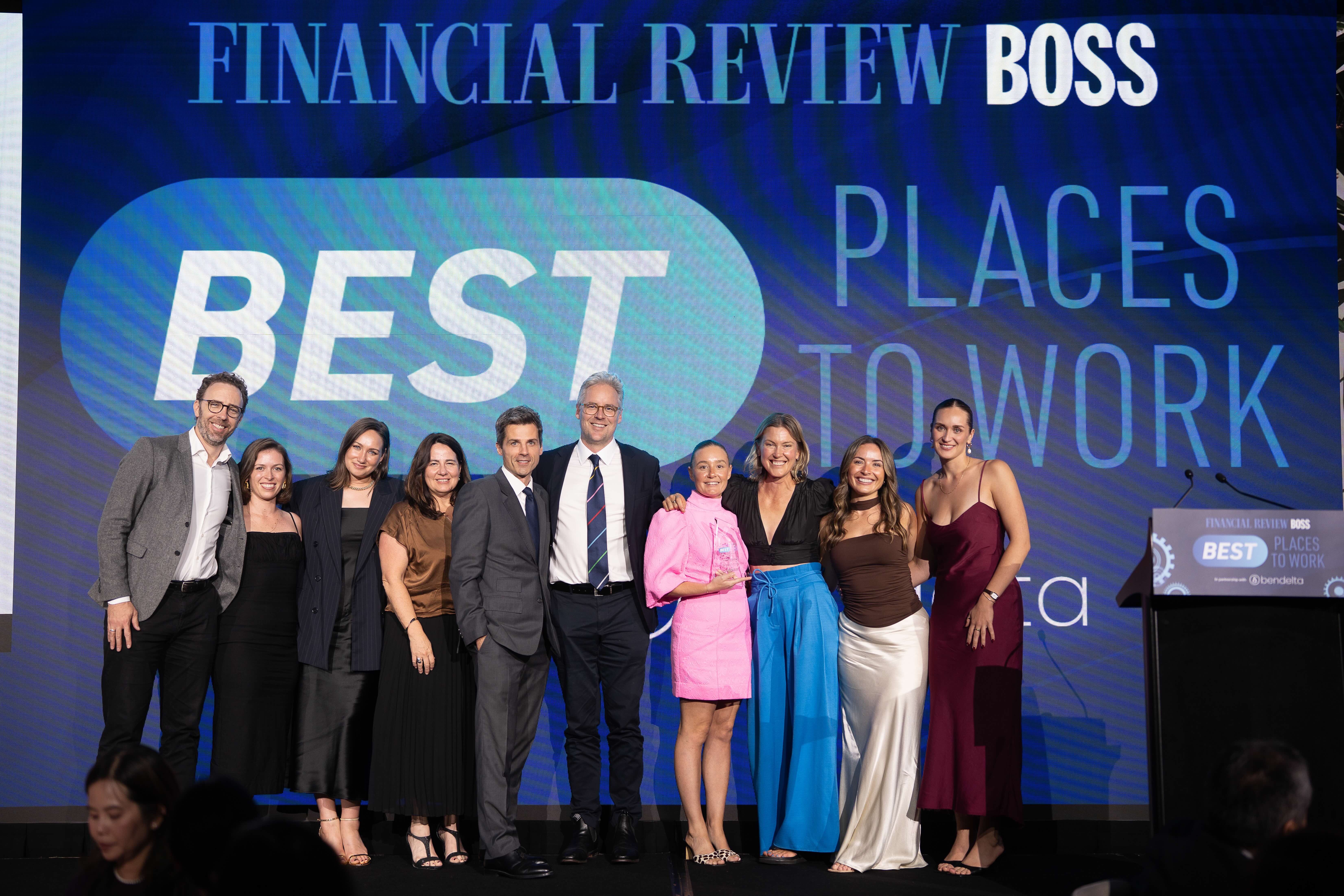
Fresh Clinics awarded at AFR BOSS Best Places to Work 2026
We’re incredibly proud to announce that Fresh Clinics has been named one of the AFR BOSS Best Places to Work for 2026. Not only did we make the prestigious list, but we were also honoured with the special award for ‘Energising’ – a recognition given to the business that best demonstrates a culture that motivates, inspires and brings out the absolute best in its people.
The Australian Financial Review recently shared insights into what makes a workplace truly exceptional, and it is a topic that hits home for us. As our Chief People Officer, Ally Atkins, puts it, "This award is evidence that you don't need to follow the masses with post-work drinks or ping-pong tables to make a difference in your people's lives." Instead, it is about creating an environment where you don't just show up, but where you actually get to be your best.
For those of us in the aesthetics industry, this is particularly relevant. Whether you are running your own clinic or working within a team, the atmosphere you cultivate directly impacts the care you provide to your patients.
Read the full article in the Australian Financial Review here.

The #1 Way Med Spas Grow Their Business
In today’s booming aesthetics industry, med spas are popping up on every corner. Many chase growth with ads, discounts, and quick-win marketing tactics. But the truth is: the fastest-growing med spas aren’t the ones spending the most on ads — they’re the ones delivering the best patient outcomes.
At Fresh, we’ve supported more than 2,000 nurses and doctors in building thriving practices. The data is clear: clinical excellence is the #1 driver of med spa growth.Why? Because excellence fuels patient trust, and trust fuels referrals.
In this article, we’ll share:
- Proprietary insights from Fresh’s network of clinics
- Why referrals, not ads, are the ultimate growth engine
- The Fresh 4-Pillar Growth Model for sustainable med spa success
The Problem with “Quick-Fix” Med Spa Growth
The aesthetics industry is often framed around leads, discounts, and fast revenue. Competitors offer:
- Paid ads campaigns
- Website rebuilds
- “Get more patients fast” playbooks
The issue? Patients notice the difference.

Poor consultation processes, unprepared injectors, and inconsistent results lead to disappointment — and in some cases, safety risks.
Even major media outlets have highlighted the danger. In his HBO segment, John Oliver exposed the growing trend of under-qualified injectors chasing quick profits. This isn’t just bad press — it’s a warning signal for patients.
Med spas built on short-term marketing tactics struggle to retain patients and eventually burn out.
Fresh Data: Referrals Are the Growth Engine
Fresh’s work with thousands of injectors has revealed a simple truth: **referrals account for the majority of sustainable growth in med spas.
- Practices that focus on complication management training see up to 2x more referrals within 6 months.
- Practitioners who adopt Fresh’s consultation mastery framework report a 35% increase in repeat patient bookings.
- Med spas that deliver consistently superior outcomes see organic referral growth surpass paid acquisition by Year 2.
This is the compounding power of excellence. Each happy patient tells a friend, leaves a glowing review, and builds the practitioner’s reputation.
The Fresh 4-Pillar Growth Model
We’ve codified what works into the Fresh 4-Pillar Growth Model — a framework built on what we’ve seen across 2,000+ aesthetic clinics.
1. Consultation Mastery
- Patients don’t just buy treatments — they buy confidence.
- A structured consultation builds trust and ensures tailored outcomes.
2. Complication Confidence
- When practitioners are trained to handle complications, confidence radiates.
- Patients sense this security — leading to stronger loyalty and referrals.
3. Patient Experience
- Every touchpoint matters: from the first consult to follow-ups.
- A superior patient journey drives love, loyalty, and advocacy.
4. Business Growth through Referrals
- Delivering excellence creates a flywheel: Great outcomes → Referrals → More patients → Sustainable revenue.
Why Clinical Excellence Builds Premium Brands
The benefits go beyond just growth:
- Exclusivity: Better practitioners attract better patients.
- Pricing Power: Superior outcomes justify premium pricing.
- Future-Proofing: As competition intensifies, only practices with clinical excellence will stand out.
- Industry Stewardship: Putting patients first sets Fresh and its members apart from negative industry trends.
In short, excellence isn’t just a growth strategy — it’s a brand strategy.
Key Questions Answered
What is the #1 way med spas grow?
Referrals. And referrals come from delivering excellent patient outcomes.
Why are referrals better than ads?
Ads can buy attention. But only excellence earns trust — and trust is what fuels long-term patient advocacy.
What role does complication management play in growth?
Confidence in handling complications radiates to patients. It builds safety, trust, and loyalty — all drivers of referrals.
What is the Fresh 4-Pillar Growth Model?
A framework for sustainable med spa success: Consultation Mastery, Complication Confidence, Patient Experience, and Business Growth via Referrals.
Conclusion: Excellence Wins, Every Time
The aesthetics industry is evolving quickly. In the short-term, anyone can buy ads. In the long-term, only those who build their practices on clinical excellence will thrive. At Fresh, we’ve helped over 2,000 nurses and doctors achieve their dreams — by putting patients first, building confidence, and creating practices that grow on referrals, not hype.
The future of aesthetics is clear: Excellence drives growth.

Day 2 at The Fresh Life 2025
-2.png)
The content of this blog is designed and intended for the education of Healthcare Professionals.
Day 2 at The Fresh Life began on the Rivershed Deck with breathwork, a grounding ritual to set intention and focus for the day ahead. Meanwhile, Allergan Aesthetics hosted an intimate, invite-only breakfast with Dr Cara McDonald, exploring Distinct Definition and the artistry of advanced facial aesthetics.
Over on the main stage, Dr Kim Booysen opened with The Collagen Economy, mapping the profitable and clinical pathways to long-term skin quality. She was followed by the session everyone was buzzing about - Map. Measure. Master. Full Face Toxin with global sensation, The Injector Bunny, who brought her trademark precision and energy in a Fresh Clinics exclusive, all the way from the USA.
Momentum kept building as entrepreneur Franziska Iseli inspired the crowd with The Courage Equation, sharing practical tools to thrive in a fast-changing world.

Breakouts and group training then offered delegates a chance to deep dive into focused clinical sessions:
- Dr Michael Zoran showcased advanced full-face techniques in Rejuran DOT™ Revolution.
- Dr Jake Sloane sparked debate in Are Hyaluronic Acid Fillers Finished?, challenging assumptions about the future of HA.
Over lunch, Hugel hosted a private sponsor session with Dr Jimmy Wang, presenting his 24-month review of Letybo.
The afternoon returned to the main stage with a burst of energy from Evolus in Be Fearless, Be Unapologetic, Be You - a powerful panel with Agnes Dube, Jamal Ammar, Sharna Hill, and Elly Seymour. From there, Molly Brown took a closer look at Hugel’s Byryzn Opuluxe V, sharing results that build both clinical confidence and patient satisfaction. Dr Georgia Rigas then introduced A Fresh Change: Obesity and Weight Management, highlighting the expanding role of aesthetic clinics in tackling one of Australia’s most pressing health challenges.
Over in the Fresh Lounge, conversations turned practical and collaborative. Rogen Eulatic (Laseraid) and Róisín McGee (Venus Concept) shared Technology Integration strategies to drive clinic success, while a powerhouse panel - Dr Kristy Kostalas (The Skincare Company), Charlotte Clarke (Murad), Selina Mithen (AST), and Rajdi Gemeri (Raan Medical) - unpacked Hormones and Their Influence on the Skin, with a focus on supporting patients through menopause.

As day 2 came to a close, delegates gathered at Fiume Rooftop for Aperitivo Hour, hosted by Dermalogica PRO - a relaxed evening of city views and connection. Later, Merz hosted an invite-only dinner, where Dr Kim Booysen led an exclusive discussion on Skin in the Game: Navigating the New Aesthetic Landscape.
Day 2 delivered a dynamic mix of inspiration, science, and strategy, reminding us that The Fresh Life is as much about professional growth as it is about building a community that supports one another.
The second day of The Fresh Life 2025 was certainly one to remember, and we can't wait for a final epic day!
.avif)

Day 1 at The Fresh Life 2025
The content of this blog is designed and intended for the education of Healthcare Professionals.
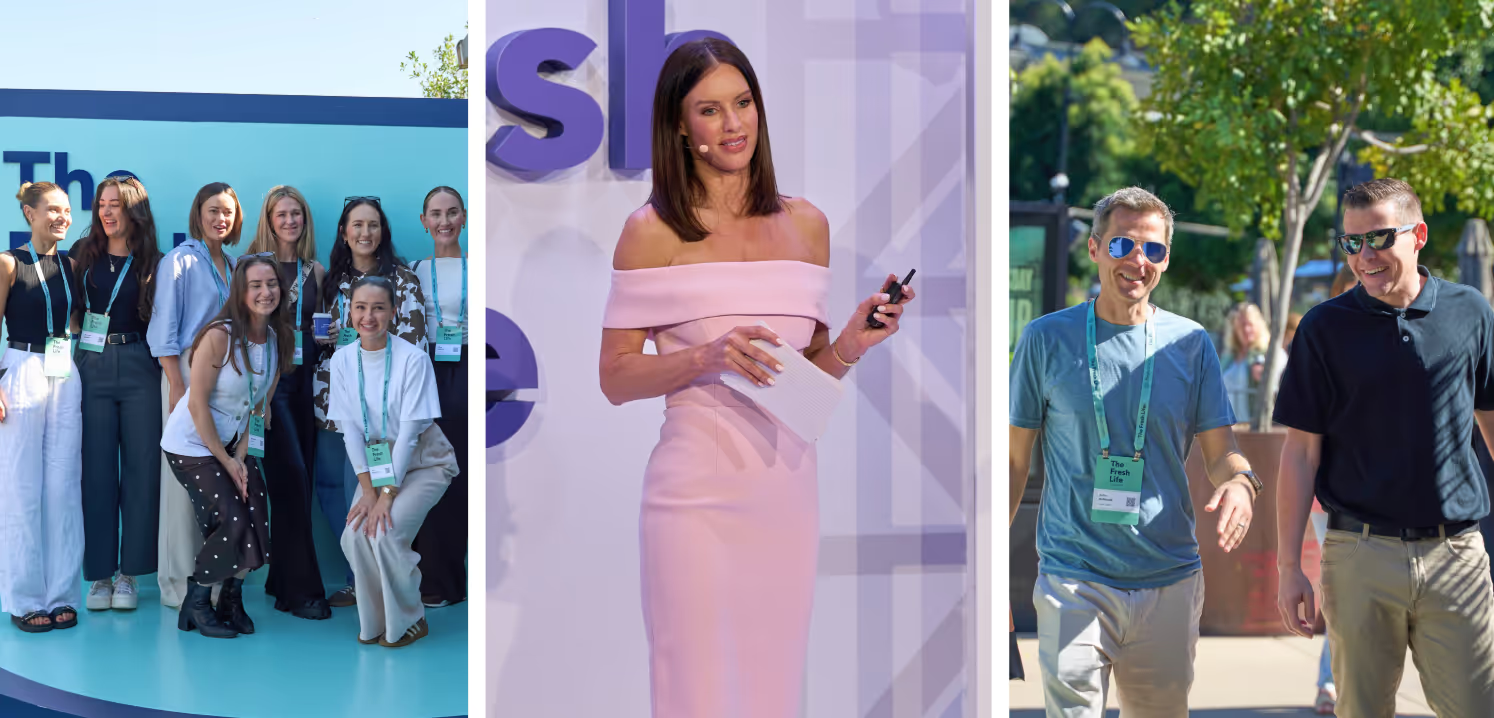
The Fresh Life 2025 opened at the iconic Howard Smith Wharves in Brisbane today, with energy, insight, and a clear reminder of why this community comes together each year: to share, to learn, and to grow stronger as an industry.
The morning began bright and early with our official pre-conference ritual: The Fresh Run Club. Attendees laced up for a light run (or walk) along the Brisbane riverfront, setting intentions and energising together for the days ahead.
The day then kicked off with a dose of mindset mastery, as Chelsea Pottenger, Director & Founder of EQ Minds, set the tone in her keynote, The Mindful High Performer. Chelsea equipped the room with practical tools to avoid burnout and thrive under pressure - showing how emotional flexibility, resilience, and creativity can transform not just performance, but wellbeing too.
From there, Dr Dan Kennedy, Specialist Plastic Surgeon, returned to the stage with Relfydess in Real Life, sharing six-month outcomes from this next-generation biostimulator. His candid insights gave delegates a realistic view of what can be achieved in practice.
Next up, we heard from Dr Konstantin Fran in Beyond Rheology, where he unpacked the science of G Prime, demonstrating how Croma’s Macro Technology is redefining precision in structural treatments. Meanwhile, Dr Kim Booysen’s session, Precision Matters, gave practitioners a masterclass in forehead toxin optimisation, covering dilution, dosage, anatomy, and product choice.
The spotlight then shifted to one of the most pressing health issues facing Australians: obesity. Dr Anita Sharma’s session, Mounjaro: Your Questions Answered, unpacked the science behind this new GLP-1/GIP medicine and its role in reshaping obesity and metabolic care.
Midday also saw an invite-only highlight: Evolus hosted a private lunch, Be Fearless: The Showcase, featuring Agnes Dube, Jamal Ammar, Sharna Hill, and Elly Seymour. Guests were treated to inspiring insights and bold conversations about the future of aesthetics.
The business and patient experience sessions were just as compelling. Kelly George led Results-Driven Practice, offering strategies to align innovation with sustainable clinic growth. Then Samantha Cox brought the luxury lens to From Guests to Clients, teaching how intentional client care can transform experiences and elevate retention.

The afternoon closed with two packed stage sessions. In The Unfiltered Filler Look, Alex Pike tackled the evolving aesthetic desires of patients influenced by TikTok and Instagram, exploring how practitioners can meet these shifting expectations without compromising artistry. Then, Wayne Griffiths and Helen Planting showcased a powerful live demonstration in Power Pairing: PRP + Radiesse, highlighting how regenerative medicine is reshaping skin quality and subdermal support.
As the sun set, delegates gathered for the Evolus Welcome Event on the river deck. With bubbles in hand and Brisbane’s skyline as the backdrop, conversations flowed as new connections were made and old ones rekindled.
The first day of The Fresh Life 2025 was a huge success! We can't wait to see what Day 2 has in store!

Marketing Mastery for Med Spas
Marketing your med spas isn’t just about aesthetic pictures or promotions; it's about building trust, authenticity, and connection.
That was the key message from our recent Marketing Mastery for Clinics workshop, part of the Fresh Clinics State of Medical Aesthetics (SoMA) series.
Joined by Ryan from Self Cosmetic Science and Grace from ANO Cosmetics & Skin, the session explored how leading clinics are navigating the challenges of compliance, standing out in a crowded market, and building sustainable brands that patients love.
Build from the inside out
Both Ryan and Grace emphasised that marketing success starts with clarity on your brand’s ethos. For Ryan, it’s all about patient safety, honesty, and authenticity.
“In a saturated market like injectables, patients only have mental space for a handful of brands. You need relentless consistency in your branding and messaging.”
Grace echoed this, sharing how ANO’s community-first approach and emphasis on team personality create meaningful patient connections, even before a booking happens.
Your team is your best content
Employee-generated content is leading the way. Patients want to know the people behind the treatments.
“If you're a solo operator, you are the face of your brand,” said Tealle, Fresh Clinics’ Community Insights & Content Manager.
The evolving regulatory environment (including the tighter rules on before-and-after images and S4 medication mentions) has pushed med spas to get more creative. Ryan decided to remove all non-compliant content early on, and it paid off.
“It was scary at first, but it forced us to build a personal brand, develop a voice, and focus on the people behind the brand.”
Grace shared how leaning into skin services, diversifying offerings, and spotlighting team members helped ANO remain visible and relevant while staying compliant.
According to the Fresh Clinics SoMA report, many practitioners believe that price is the primary reason for patient attrition. But both Ryan and Grace disagreed.
“The entire patient experience - from your DMs to your treatment room - should be high quality, " said Ryan.
Finding new patients is important, but keeping them matters just as much:
- Reward loyalty with email-only offers, exclusive invites, or referral programs.
- Keep your tone consistent, from social media to the treatment room.
- Ensure that the values you promote online are reflected in your real-life actions.
“Marketing is about creating stickiness,” said Grace. “Our patients come back not just because of the service, but because they trust our team.”
Think beyond socials
Digital is vital, but don’t ignore physical marketing. Mailbox drops, billboards, and community involvement can still drive awareness, especially in local areas.
“One clinic built their entire client base from zero using mailbox flyers,” Tealle noted. “It’s not outdated, it’s just underutilised.”
Even if ROI is small, physical marketing builds credibility and can also be repurposed for digital content.
One of the most revealing stats from the SoMA Report: only 18% of med spas have a formal marketing plan.
“You don’t need to be a professional marketer. Just print out a free plan template, jot down your goals, and stick it on the wall,” Tealle advised. “Marketing is about small, consistent deposits over time.”
Marketing today is about authenticity, consistency, and connection. Put your people front and centre. Align your online tone with your in-clinic experience. And most importantly, start with a plan.
To remain compliant with your marketing strategy, ensure you read and are familiar with the TGA & Ahpra guidelines.

How to Attract and Keep the Right People in Your Clinic
Watch the full session here.
When we asked clinic owners about their biggest growth challenges in the 2025 State of Medical Aesthetics Report, nearly a quarter said one thing stood out: finding and keeping the right staff. And it’s not surprising. Having the right people beside you can make or break your business.
That’s what we recently explored in our SoMA session, 'Building Your Dream Team: Attracting and Keeping Top Talent in Your Clinic.' Hosted by Aniella, Business Development & Key Account Manager, from Fresh Clinics, the discussion featured two inspiring clinic owners, Olivia from A&O Cosmetics and Skin in Shepparton, and Hannah from Self Cosmetic Science in Adelaide. Between them, they’ve grown thriving teams in very different markets, but share one philosophy: get the culture right, and the rest will follow.
Hiring in a regional vs. city market
For Olivia, building a team in regional Victoria brings both challenges and benefits. “The pool that you are employing from is significantly smaller,” she shared. “People just really aren’t floating around here, being cosmetic nurses.” But being in a small town also means connections run deep. “When you do interview people, I’ve always known of them somehow. It has its pros and cons, but it’s worked out well for us so far.”
Hannah agreed that hiring is rarely easy, even in Adelaide. “It has taken time; we haven’t always had our dream team. I always say hire on personality, not on skill, and hire slowly. Our last hire took nine months. Do not rush it.”
Why personality matters
Both speakers agreed that a candidate’s personality, values, and ethics matter far more than their resume. As Hannah explained, “I don’t really care what experience someone has… they just need to be a good person and have really good ethics. I’m more than happy to then train someone up; they just need to be the right fit for the team.”
Olivia added that passion is a major green flag in an interview. “Those that’ll just be like, ‘I’ll do anything to work for you’ - that’s the drive you want to see.”
On the flip side, there are red flags that are just as obvious. Hannah warned against candidates who speak negatively about previous employers: “It puts a question in my mind - am I then going to be the person they talk about at their next interview?”
Rethinking the interview process
Like most business owners, both Olivia and Hannah admitted their approach to interviewing has evolved over time. Olivia laughed, remembering how nervous she was in her first interview: “I felt like I was going to vomit before it. It just came very unnaturally.” Today, her interviews are more conversational, focusing on personality and goals rather than stock standard questions. “I just trust my gut a lot more now,” she said.
Hannah has also moved away from rigid Q&As. “We try and be a lot more conversational now. We peel the onion back, find out their motivations, and we’re much more direct. Before, we wanted our staff to like us, but now it’s about making sure it’s the right fit both ways.”
Retention through culture
Attracting staff is one thing, but keeping them is where the real work begins. For both Hannah and Olivia, the secret lies in culture.
Flexibility is non-negotiable. “Most of my staff are mums. I’m a mum to two kids, so I get the juggle,” said Olivia. “If they need time off or want to go on holiday, if you give me notice, it’s nearly always a yes.”
Hannah has taken the same approach: “We only work a four-day work week. We don’t work weekends, and we’re not open on Wednesdays. Our staff absolutely love it.”
Recognition also plays a huge role. Olivia is deliberate about making her staff feel valued: “I’m always thanking my staff and celebrating their achievements. Feeling valued and appreciated is something you don’t get in a lot of workplaces, but it’s so important.”
Beyond pay and perks, what keeps staff loyal is the sense of belonging. Hannah’s approach is to find out what motivates each individual. “For some, it’s discounted treatments. For others, it’s flexible working arrangements or more education opportunities. It’s not always the obvious things.”
Both Hannah and Olivia also invest in shared experiences. From team dinners and after-work drinks to attending conferences together, they emphasise the importance of connection. “We’ve all become quite good friends,” said Hannah. “We celebrate our wins together, and that makes a huge difference.”
Setting new hires up for success
The onboarding process can make or break a new hire’s success. For Olivia, that means shadowing from day one, no matter how much prior experience someone has. "Regardless if they have experience, we will be doing things differently. It’s also about introducing them to the team, my family, even my kids - it’s social as well as clinical.”
Hannah also emphasised shadowing, but with a focus on consulting skills and clinic culture. “It’s not just about teaching them clinical skills. It’s more about how to talk to clients, our policies, and our procedures. That really can’t be taught in a day.”
Building your dream team isn’t about luck. It’s about patience, leadership, and creating a culture where people feel valued. As Olivia summed it up, “This is an us thing, it’s never a me thing. As I grow, I want to bring my team up with me.” When you put people first, you don’t just attract talent, you keep it.
Want more industry insights and business tips you won't find anywhere else? Join Fresh now!