Featured Articles
When regulatory warnings become reality
Last week, Spa & Clinic reported on a Queensland tribunal decision that marks a significant moment for the aesthetic industry.
Last week, Spa & Clinic reported on a Queensland tribunal decision that marks a significant moment for the aesthetic industry.
A registered nurse has been banned from practice for two years after administering Schedule 4 medicines without a valid medical consultation or prescription, and for continuing to practise while suspended. The findings are confronting, but they’re also an opportunity to learn, reflect, and improve our own practices.
As Spa & Clinic noted, the decision sends “a clear signal that Ahpra and the National Boards are no longer tolerating breaches that have long concerned regulators.” That signal matters for every cosmetic injector in Australia.
According to the tribunal findings, the practitioner administered restricted medicines without authorisation, falsified clinical records, and continued treating patients despite regulatory restrictions. The tribunal determined this behaviour constituted professional misconduct and highlighted the importance of deterrence, both for the practitioner involved and for the wider industry.
Ahpra CEO, Justin Untersteiner, reinforced this shift:
“We will leave no stone unturned to investigate and take action against practitioners who do the wrong thing.”
For years, Australia’s aesthetic industry has operated in an environment where expectations have been tightening, but enforcement has been inconsistent. That era has now ended.
This case reinforces several non-negotiables:
- Patient Safety is paramount.
- Schedule 4 medicines must only be administered following an appropriate medical consultation, and all medications must have a valid prescription in place for the patient.
- Medicines must be supplied to the authorised practitioner, stored, and administered in accordance with state and territory regulations.
- Clinical records must be accurate, complete, and truthful.
- Any Aphra registration conditions and suspensions must be strictly followed.
When a medication is not supplied by the prescribing provider, the chain of custody is compromised, creating uncertainty regarding the medication's origin and accountability. In such instances, practitioners cannot assume clinical responsibility for the safety, integrity, or efficacy of products they did not procure or oversee.
In the event of an adverse clinical reaction, audit, or complaint, clear and accurate records are critical. They provide transparency around the supply, prescribing, and administration of the medication, and protect both patient safety and the practitioner/s involved.
These are not administrative details, but the professional standards expected of every healthcare practitioner. They are fundamental patient safety obligations, and failing to uphold them carries serious consequences.
At Fresh Clinics, our mission has always been to support nurses to build sustainable, compliant aesthetic practices — backed by education, systems, and clinical governance that stand up to scrutiny.
This moment matters for our industry. It’s an opportunity to raise standards, protect patients, and ensure aesthetic medicine remains a respected, trusted profession.
Read the full Spa & Clinic article here.
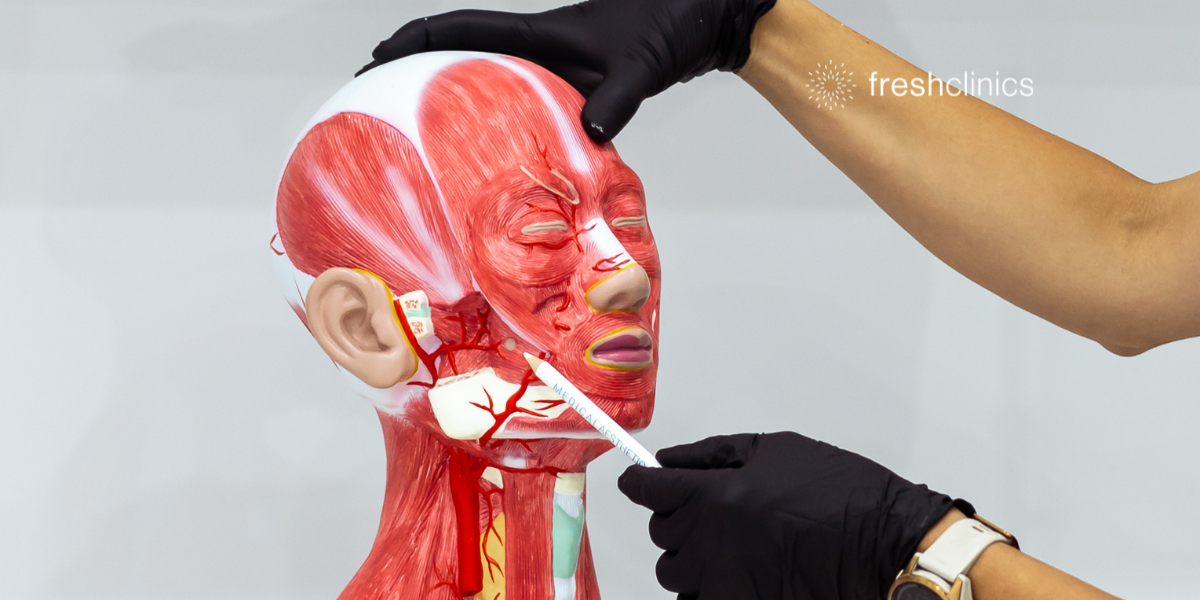
Menopause Awareness Month: What every cosmetic nurse should know
Menopause Awareness Month: Understand the impact of hormonal changes on skin. Learn how aesthetic nurses can better support patients during this transition.
This Menopause Awareness Month, we sat down with Dr Izzy Sillar to talk about something that affects every woman, but is still so often overlooked: menopause.
For women, menopause isn’t just a hormonal shift. It’s a whole-body transition that affects skin, mood, sleep, energy, and confidence. And for cosmetic nurses, it’s an opportunity to change how women experience this stage of life.
“Perimenopause and menopause… is a clinical diagnosis. We don’t actually rely on blood tests or serum markers… It’s based on the clinical picture.” - Dr Izzy.
That one shift in mindset can change how you consult, treat, and support patients who are 40+ in your aesthetic clinic.
Perimenopause vs. Menopause
“Menopause is diagnosed as being 12 months since their last menstrual period. And perimenopause is less than 12 months, where we’re seeing changes in the menstrual cycle.”
Dr Izzy outlined a typical trajectory:
- Mid–late 30s: testosterone trends down.
- Early 40s: progesterone declines.
- Mid-40s onward: estrogen drops.
As estrogen falls, cycles often space out or go missing. Skin can feel thinner, joints ache (hands, knees, lower back), and patients frequently report the “middle-aged spread.”

“When we lose estrogen… our fibroblasts become dysregulated… This can translate to skin becoming thinner, [and] joints… more sore. It’s really common… to gain weight around the tummy… even when eating well and exercising."
Why this matters in aesthetics
For too long, menopause has been underdiagnosed and undertreated.
“Currently, 85% of women are mismanaged for a condition that affects 100% of women by age 55.”
By adding women’s health pathways to your practice, you’re helping to close a major gap in medicine. You’re saying: we see you, and your experience matters.
"We have safe ways to manage this in conjunction with lifestyle… and it’s absolutely a woman’s right to have access to this.” - Dr Izzy.
Untreated symptoms aren’t just inconvenient.
“Heart attacks become the third biggest killer for women [not on appropriate therapy]. Fragility hip fractures… 75%… are in fact women… small falls shouldn’t be something that is going to take their life.”
Connecting patients to competent care is essential to preventive health.
Ready to support your patients holistically?
“Position yourself as more than an injector — become a guide.”
If you’re a Fresh Clinics member, you can access Fresh Health and start referring today. Not yet a member? Get in touch and we’ll show you how to integrate safe, modern women’s health support into your clinic.
Why Clinical Excellence Drives Success
Why clinical excellence drives sustainable success: Discover how prioritizing patient safety and high standards builds a loyal client base and profitable clinic.
In today’s booming aesthetics industry, clinics are popping up on every corner. Many chase growth with ads, discounts, and quick-win marketing tactics. But the truth is: the fastest-growing businesses aren’t the ones spending the most on ads — they’re the ones delivering the best patient outcomes.
At Fresh Clinics, we’ve supported more than 2,000 nurses and doctors in building thriving practices. The data is clear: clinical excellence is the #1 driver of clinic growth. Why? Because excellence fuels patient trust, and trust fuels referrals.
In this article, we’ll share:
- Proprietary insights from Fresh’s network of clinics
- Why referrals, not ads, are the ultimate growth engine
- The Fresh 4-Pillar Growth Model for sustainable success
The problem with “quick-fix” business growth
The aesthetics industry is often framed around leads, discounts, and fast revenue. Competitors offer:
- Paid ads campaigns
- Website rebuilds
- “Get more patients fast” playbooks

The issue? Patients notice the difference.
Poor consultation processes, unprepared practitioners, and inconsistent results lead to disappointment — and in some cases, safety risks.
Clinics built on short-term marketing tactics struggle to retain patients and eventually burn out.
Fresh data: Referrals are the growth engine
Fresh’s work with thousands of practitioners has revealed a simple truth: referrals account for the majority of sustainable growth in clinics.
- Practices that focus on complication management training see up to 2x more referrals within 6 months.
- Practitioners who adopt a consultation mastery framework report a 35% increase in repeat patient bookings.
- Clinics that deliver consistently superior outcomes see organic referral growth surpass paid acquisition by Year 2.
This is the compounding power of excellence. Each happy patient tells a friend, leaves a glowing review, and builds the practitioner’s reputation.
The Fresh 4-Pillar Growth Model
We’ve codified what works into the Fresh 4-Pillar Growth Model — a framework built on what we’ve seen across 2,000+ aesthetic clinics.
1. Consultation mastery
- A structured consultation builds trust and ensures tailored outcomes.
2. Complication confidence
- When practitioners are trained to handle complications, confidence radiates.
- Patients sense this security — leading to stronger loyalty and referrals.
3. Patient experience
- Every touchpoint matters: from the first consult to follow-ups.
- A superior patient journey drives love, loyalty, and advocacy.
4. Business growth through referrals
- Delivering excellence creates a flywheel: Great outcomes → Referrals → More patients → Sustainable revenue.
Why Clinical excellence builds premium brands
The benefits go beyond just growth:
- Exclusivity: Better practitioners attract better patients.
- Future-Proofing: As competition intensifies, only practices with clinical excellence will stand out.
- Industry Stewardship: Putting patients first sets Fresh and its members apart from negative industry trends.
In short, excellence isn’t just a growth strategy — it’s a brand strategy.
Key Questions Answered
What is the #1 way clinics grow?
Referrals. And referrals come from delivering excellent patient outcomes.
Why are referrals better than ads?
Ads can buy attention. But only excellence earns trust — and trust is what fuels long-term patient advocacy.
What role does complication management play in growth?
Confidence in handling complications radiates to patients. It builds safety, trust, and loyalty — all drivers of referrals.
What is the Fresh 4-Pillar Growth Model?
A framework for sustainable success: Consultation Mastery, Complication Confidence, Patient Experience, and Business Growth via Referrals.
Conclusion: Excellence wins, every time
The aesthetics industry is evolving quickly. In the short-term, anyone can buy ads. In the long-term, only those who build their practices on clinical excellence will thrive. At Fresh, we’ve helped over 2,000 nurses and doctors achieve their dreams — by putting patients first, building confidence, and creating practices that grow on referrals. The future of aesthetics is clear: Excellence drives growth.

Latest Articles

Ahpra Guidelines for Non-Surgical Cosmetic Procedures
The Australian Health Practitioner Regulation Agency (Ahpra) has released updated guidelines for registered health practitioners who perform non-surgical cosmetic procedures. These changes will come into effect in September 2025, and cover two key areas:
1. Advertising guidelines for higher-risk non-surgical cosmetic procedures
2. Clinical guidelines for performing non-surgical cosmetic procedures
The updated advertising standards clarify previously grey areas and bring existing obligations into sharper focus, helping practitioners to better meet their responsibilities. The good news for Fresh Clinics Members is that while the procedural guidelines have been updated, Fresh has long operated in line with these standards.
Whether you're a registered nurse, doctor, or other health professional offering cosmetic services, these updates apply to you. It’s essential to stay informed and ensure your practice remains compliant.
The below is a summary of the Clinical guidelines for performing non-surgical cosmetic procedures:
Purpose and scope
- These guidelines apply to non-medical registered health practitioners (e.g., nurses, dentists, pharmacists) who perform non-surgical cosmetic procedures.
- They aim to clarify professional responsibilities, ensure safe, ethical practice, and support informed patient decision-making.
- They do not expand the scope of practice or authorise practitioners to perform procedures outside their regulatory limits.
What counts as a non-surgical medical procedure
- Procedures that aim to change appearance (e.g., Botulinum toxin, dermal fillers, PRP, thread lifts, fat-dissolving injections, CO₂ laser resurfacing, and energy-based device treatments).
- They must not be confused with clinically justified treatments (e.g., removing skin cancers, treating severe acne).
Requirements and responsibilities
1. Scope of practice
Practitioners must only perform procedures they are qualified, trained, and competent to do and must comply with state/territory regulations, particularly for Schedule 4 medicines. Fresh Clinics offers state-of-the-art training to practitioners that supports a widening scope of practice for our Members.
2. Patient assessment
A holistic, culturally safe assessment is required, especially for psychological conditions (e.g., body dysmorphic disorder). If there are concerns, referral to an independent health practitioner like a GP or psychologist is required. Fresh Clinics' assessment process is ethical and thorough. Our hybrid model enables both in-person care and doctor support, plus a detailed assessment checklist to vet for BDD.
3. Under 18s
Fresh Clinics does not allow or support treatment for under-18s with S4 medications. According to Ahpra, procedures on minors are restricted and must have:
- A cooling-off period (7 days)
- Parental input & consent
- No upfront payment
4. Prescribing
Prescribing S4 medications must involve real-time (in-person or video) consultations — asynchronous prescribing is banned. No batch prescriptions are allowed; each person must have an individual prescription. Fresh Clinics handles and documents this safely within the Fresh App.
5. Informed Consent
Must include verbal and written plain-language consent from the patient. The practitioner must disclose:
- Procedure details, risks, alternatives
- Recovery expectations
- Provider credentials and fees
- Medicare does not cover cosmetic treatments
Separate, documented consent is required for any image use. These images must not be stored on personal devices. Patients can withdraw consent at any time, and practitioners must stop using images where possible. Fresh Clinics captures consent both physically in the Fresh App and verbally via telehealth.
6. Clinical care and aftercare
Practitioners must ensure continuity of care and have protocols for emergencies and complications, and must provide clear post-procedure instructions and contact details to patients. Fresh Clinics has strict and compliant aftercare, processes, and documentation. Learn more here.
7. Education and experience
Practitioners must complete:
- Relevant theoretical and hands-on training
- Ongoing CPD (Continuing Professional Development) in cosmetic procedures
- Must be competent in managing risks and complications, not just performing the procedure.
Fresh Clinics' training and education are CPD certified. We also regularly host free resources and webinars that offer CPD points to Members. Our complication management and training for complication management is the gold standard and the best in Australia.
8. Advertising and finance
Practitioners must follow:
Practitioners must not:
- Glamourise procedures
- Offer financial incentives, discounts, or influencer deals
- Promote finance schemes (e.g., loans, afterpay)
9. Facilities and infection control
Facilities must match the procedure risk level and be compliant with all legal and safety standards. Procedures involving injections or piercing skin should ideally occur in an accredited facility. Fresh Clinics supports Members through strict compliance checks and protocols.
10. Complaints handling
Patients must be informed of how to lodge complaints (e.g., Ahpra, health complaints bodies), and NDAs must not prevent complaints to regulators.
Specific Guidance for Nurses and Midwives (Appendix A)
- Midwives cannot perform cosmetic procedures.
- RNs: Must have 1 year of full-time postgraduate experience in General or specialist nursing practice (excluding non-surgical cosmetic injectables) before entering cosmetics; endorsement as NP not possible solely in cosmetics. Fresh Clinics has always had this requirement in place for our Members.
- ENs:
- Must work under RN supervision
- Need experience in a related area (e.g., dermatology)
- Cannot inject in high-risk facial areas unless under strict conditions
The below is a summary of the Advertising guidelines for higher-risk non-surgical cosmetic procedures:
Purpose and scope
- Developed by National Boards to ensure safe, honest, and responsible advertising of higher-risk non-surgical cosmetic procedures.
- Applies to registered health practitioners, non-registered individuals, and businesses that advertise these procedures.
- Focuses on protecting vulnerable consumers, given the serious and potentially irreversible risks involved in these procedures.
What counts as a higher-risk non-surgical medical procedure
Botulinum toxin, dermal fillers, PRP, thread lifts, fat-dissolving injections, and Sclerotherapy.
Advertising requirements
1. Practitioner responsibility
Advertising must not exploit insecurities or target psychologically vulnerable individuals (e.g., with body dysmorphic disorder). Practitioners must prioritise the duty of care over financial gain. Cost info must be clear and comply with TGA regulations.
2. Claims & titles
Advertising must not exaggerate qualifications or imply specialist status without appropriate registration, and registration details must be clearly displayed.
3. Testimonials
Strictly prohibited. This includes:
- Patient stories or outcomes
- Likes, reposts, or links to patient reviews
- Social media ‘stories’ with testimonials
- Practitioners must not interact with third-party testimonials
4. Influencers & ambassadors
Advertisers are responsible for content shared by influencers on their behalf, and influencers must not use testimonials or misleading claims.
5. Use of Images
No misleading, retouched, or filtered images. Before and after images must be:
- Genuine, unedited, and comparable in conditions
- Accompanied by disclaimers on the variability of results
- Not used on individuals under 18
- No sexualised, entertainment-focused, or lifestyle imagery
6. Risk & recovery
Risks must be clearly stated, not downplayed (e.g., avoid terms like “simple” or “painless”). Recovery timelines and possible lifestyle impacts must be disclosed. Procedures must not be trivialised (e.g., competitions or giveaways).
7. Body image & mental health
Advertising must not:
- Imply normal ageing or variations need fixing
- Promise improved mental health or self-esteem
- Promote unrealistic or idealised beauty standards
8. Expectations of outcomes
Claims must be objective and evidence-based. Practitioners must be clear about:
- When results will appear
- How long they will last
- Need for ongoing treatments
9. Protecting at-risk audiences
No advertising to under-18s or on youth-oriented platforms. Avoid targeting vulnerable groups through metadata, hashtags, or excessive posting.
Actionable steps you can take now:
1. Set aside dedicated time
This is not a document to skim. Block out time in your calendar to read the full guidelines without interruption. You may need to revisit it multiple times.
2. Go analogue
Print the documents or have a notebook ready. Highlight important sections and jot down notes or questions as you go. This helps you retain the content and identify what specifically applies to your clinic.
3. Audit your own platforms
Set time aside to review your social media, website, and marketing materials. We recommend doing this yourself. While some AI-driven tools or services are available, we’ve found they often miss important context or aren’t fully aligned with Australian regulations and complexities between TGA and Ahpra.
4. Budget for updates
You may need a refreshed brand photoshoot (avoiding needles or identifiable patient info), new graphic assets, or website changes. Factor this into your business plan now, and make sure any agencies or freelancers you work with are across the new rules.
5. Adjust your IG settings
Update your Instagram business profile to restrict your content to 18+ only. This is a simple step toward compliance that many overlook.
6. Focus on the law, not the norm
Don’t rely on what others in the industry are doing. Knowing and applying the actual regulations, not what appears to be common practice, is key to protecting your reputation and remaining compliant.
8. When in doubt, seek legal advice
If you’re engaging external marketers or influencers, or if you have questions around compliance for your unique business model, a qualified legal advisor can help clarify your responsibilities.
About Ahpra
The Australian Health Practitioner Regulation Agency (Ahpra) is the national body responsible for regulating health professionals across Australia. Ahpra sets the standards that ensure public safety and maintain professional conduct across 16 health professions.

Managing a Complication with Sharna Hill
When Sharna faced one of the most challenging moments in her career, Fresh Clinics helped her navigate it smoothly.
Introducing Sharna
Sharna is a registered nurse with over 30 years of experience across various fields. In 2021, she founded Canvas Cosmetic Clinic in South Perth.
One of the first things Sharna did when opening her practice was to join Fresh Clinics. Over the years, she’s valued our support, medical oversight, and professional guidance – but never more so than in August 2024.
Recognising the emergency
It began as an ordinary day. Sharna was performing a cheek filler, and everything seemed normal.
“We were doing cheek filler, and so we had an entry point at the zygoma. We had just started when I saw a big white flash. I knew straight away it was a vascular occlusion,” Sharna recalls. “I waited a few seconds, checked the capillary refill, and confirmed it. ‘Yep, we actually do have one.’”
Understanding the gravity of the situation, Sharna didn’t panic. Instead, she stopped everything, took a breath, and reassured her patient.
“The most important thing in that moment is to stay calm,” she explains. “There’s nothing you can do to change it – only move forward positively and ensure the patient remains calm.”
Immediate response with Fresh Clinics’ guidance
With no time to waste, Sharna immediately reached out to Fresh Clinics’ medical team for expert support. “We got on to Fresh, and they guided us through reconstituting the Hyalase and starting the dissolving process.”
Over the next 4-5 days, Sharna used 17 vials of Hyalase to dissolve the filler, far more than many practitioners might anticipate needing. No adverse event is ever the same as the last, so it’s important to remember that the same rule applies to the treatment and resolution; the response and requirements are always on a case by case basis.
“A lot of people assume that if you have a vascular occlusion, you inject Hyalase, it dissolves, and that’s the end of the story. But that’s not the case,” she explains. “You have no control over where the filler embolises. Little chunks break off into other vessels, so you have to keep treating until it’s all gone.”
The importance of preparation and support
Reflecting on the experience, Sharna notes the importance of having the right support and stock on hand, especially for practitioners working in remote areas.
"Imagine how stressful that would be if you were on your own, felt unsupported, and didn’t have the product you needed to dissolve the filler. That’s why stock management is so important,” she says.
Despite the high-pressure situation, Sharna never doubted her ability to handle it. “I felt quite calm in the moment. I never once thought, ‘Oh my God, what am I going to do?’ I knew I had used the right technique and mitigated risk as much as possible, but this just proves that complications can happen to anyone.”
Why Fresh Clinics is essential for every cosmetic practitioner
Sharna believes every cosmetic nurse should have a trusted medical oversight partner like Fresh Clinics.
“You don’t know what you don’t know. You can be as confident as you like, but when something happens, you realise there are things you hadn’t even considered,” she says. “Having Fresh means you’re supported from every angle, whether it’s business, medical guidance or dealing with adverse events.”
For Sharna, the experience reinforced the need to avoid isolation. “We’ve all been in that position where we didn’t know what to do – whether it was 20 years ago, 5 years ago, or last year. Being part of a cohort that truly supports and helps you is invaluable.”
Fresh Clinics made all the difference in Sharna’s case, providing immediate access to expert medical advice, clear protocols for adverse event management, and ongoing reassurance.
If you want to practice with confidence, knowing you have the right support in place should an adverse event occur, it’s time to partner with Fresh.

How to Find a Medical Director for Your Clinic
Imagine having an outstanding off-site medical director who provides on-demand clinical oversight while you focus on running your med spa. We’ve made that a reality for countless clinics, and we can do it for you, too.
Finding a medical director for your med spa
For compliance reasons, your med spa must have a medical director. They’re heavily involved as you set up your clinic and provide vital clinical oversight and support in your day-to-day operations.
But a skilled medical director can be expensive and hard to find. Once you’re established, there isn’t always enough work to keep an in-house medical director fully occupied. Perhaps that’s why they can tend to go beyond the boundaries of their role, causing headaches for your business.
At Fresh Clinics, we understand those frustrations. And we’ve found the right balance of oversight, without overreaching, to support your med spa.
How does it work?
1. Initial call
Tell us about your clinic and needs.
2. Match with a medical director
We match you with a skilled medical director who is experienced in the types of procedures you offer. Each director covers up to 10 clinics, and because their role is off-site, they won’t get in your hair!
3. On-call support
Your medical director is on-call whenever you need clinical advice or support using our HIPAA-compliant (and free!) EMR.
4. Experience the benefits
Enjoy the confidence that your med spa is compliant with swift access to quick, HIPAA-compliant good-faith exams (GFEs). You’ll also have the freedom to run your business your way, with consistent clinical oversight from a highly capable and dependable medical director who wants your business to thrive.
What does it cost?
If you hire your own in-house medical director, you’ll probably pay them at least $3,000 a month. If you try other companies, they may ask for an ongoing share of your revenue. That might not sound much initially, but it could cost you a fortune as you grow. The Fresh way is better.
You simply pay a monthly subscription fee based on your med spa needs. That’s it. It’s refreshingly easy.
Medical director credentials
Our medical directors are all board-certified and bring many years of clinical experience. Each director has been chosen for their expertise in cosmetic medicine, their understanding of compliance, and their ability to support independent clinics. They stay up to date with regulations and best practice, so you can feel confident knowing you’re in safe hands.
From our community
Trusted by thousands of cosmetic professionals.
Keep your med spa compliant without the stress.
Access cutting-edge tools that make securing and working with a medical director simple and frustration-free.
Ready to take the first step? Contact Fresh today!
FAQs
What do med spa medical directors do?
You need a medical director to legally offer medical treatments. They are responsible for overseeing all medical procedures provided at your med spa, performing good-faith exams, supervising your medical staff, offering clinical guidance, and signing any required documents. They also play a key role in ensuring compliance, maintaining policies and procedures, and supporting patient safety at all times.
How do I find the legal requirements for med spas in Texas?
To ensure your clinic is following all the regulatory requirements in Texas for a medical spa, you’ll need to consult a lawyer. Generally speaking, there are laws that make medical oversight mandatory, and specific licenses you’ll need to operate. This is overseen by three medical associations: the Texas Medical Board (TMB), the Texas Department of Licensing and Regulation (TDLR), and the Texas Department of State Health Services (DSHS). Many spa owners partner with medical director companies or a recruitment agency to stay ahead of changing rules and stay compliant.
What counts as the “practice of medicine” in a med spa setting?
Any treatment that affects the structure of your patient’s body is considered the practice of medicine. This includes anti-wrinkle treatments, Botox, fillers, laser treatments, microneedling, PRP, or IV hydration treatment. It’s important to know what is considered the practice of medicine, as it must always be overseen by a qualified medical professional with a clear medical direction.
Can any doctor be a director at a med spa?
No, not any doctor can be a medical director. You’ll need someone with an active, unrestricted medical license in the state who is qualified to oversee the specific treatments your spa offers. The best experienced medical directors have a proven track record, strong soft skills, and solid leadership skills that align with the needs of aesthetic medicine clinics.
Can a nurse open a med spa without a medical director?
In most states, including Texas, a medical director is required to legally operate a medical spa. So no, a nurse cannot open a med spa without a medical director.
You can, however, partner with Fresh Clinics to find a suitable medical director to open your med spa. We help connect you with directors for your med business who understand regulatory compliance and have worked in medical aesthetics.
What is a good faith exam (GFE)?
A GFE is a quick check-up done before treatments like anti-wrinkle injections, Botox, fillers, or IV drips to make sure the patient is a good fit for the procedure.
It’s done by a doctor or nurse practitioner to ensure the treatment is safe for the person receiving it. It generally covers the patient’s health history, allergies, and specific questions depending on the treatment. It’s also a legal requirement in many states, including Texas.
Do all states require medical oversight for aesthetic treatments?
Most states do, but the exact rules vary. In many states, medical treatments like anti-wrinkle injections, Botox, fillers, and laser need to be overseen by a licensed medical doctor. Some states allow nurse practitioners or collaborative physicians to take the lead under certain conditions, depending on their scope of practice. Always check your state’s board regulations before you explore offering a new service, or work with management service organizations that specialize in providing medical oversight and helping healthcare organizations stay compliant.
What will happen if my clinic doesn’t have a medical director?
If you're offering medical treatments without a medical director, you're putting yourself, your business, and your patients at serious risk. You could face fines, lose your license, and be forced to shut down. In states like Texas, it’s considered medical practice without proper oversight, which is illegal and can have severe consequences. It can also jeopardize your malpractice insurance, damage your reputation, and limit your ability to deliver high-quality care.

Helping Sue Stay Compliant and Confident
For Sue, owner of Bella Complexion, running a compliant and streamlined clinic is just as important as delivering high-quality treatments.
With years of experience in cosmetic medicine, she knows that staying on top of industry regulations can be overwhelming, especially as a solo operator. That’s why Sue has been a Fresh Clinics member since 2017, relying on our platform to ensure compliance, efficiency, and access to medical support when it matters most.
A seamless, compliant system
With Fresh Clinics, Sue doesn’t worry about compliance slipping through the cracks. Everything is organised and accessible, from monthly compliance checks in the Fresh platform to streamlined digital consent forms, the digital Drugbook, real-time patient documentation, and aftercare.
“You just feel that you're compliant with all of the changes that are happening. If AHPRA knocked on my door, I know that everything is covered,” she explains. For Sue, the Fresh Clinics system is not just a convenience – it’s peace of mind.
“As a single operator, it’s nice to have an app that makes my life so easy. I monitor the fridge, I have all my emergency drugs in place, and the patient speaks to the doctor as well. There’s no nook or cranny for them to pick on.”
But, even with the best practices in place, complications can happen…
A subtle sign with significant implications
Last year, Sue experienced her first vascular occlusion in 12 years.
“I took extra special care – aspirated the syringe, counted to ten, injected slowly, kept moving the needle. Everything looked great, and the patient was happy.” Twelve hours later, though, Sue noticed a subtle change.
“She had a little bruise, nothing major, but when I saw the photo, my heart sank. Over the next little while, I could see it developing. It followed a reticular pattern up to her temple and down to her jawline.”
Calling Fresh Clinics for help
Immediately, Sue called Fresh Clinics’ medical team.
“I explained the situation, and we got on a call with the doctor. We dissolved it with Hyalase, and she ended up needing 10 rounds. Without quick action, she could have had necrosis or even, in a worst-case scenario, blindness.”
Having Dr John Holbrook, one of Australia’s most experienced aesthetic doctors, on the case made all the difference, says Sue.
“There was no panic on his side. He’s so experienced that he remained calm, focused, and conscientious. When you work with doctors who aren’t comfortable with emergencies, they can get stressed and react poorly – but with Fresh, you’re in safe hands.”
Managing complaints with confidence
If adverse events are an unavoidable part of healthcare, so too are complaints. When a patient complains about the treatment you’ve provided, it can be upsetting and unnerving. It makes you question yourself.
One of the many good things about the Fresh platform is that it can help to keep you compliant, ensuring you’ve followed the appropriate treatment protocols, gained consent, documented everything, and provided proper aftercare.
That meant a great deal to Sue when she received a complaint from a patient. Under other circumstances, Sue would have panicked, but thanks to Fresh, she was confident she'd followed all the appropriate procedures at the time. She calmly contacted Fresh, and they located the documentation she needed to show that she had done her job properly and followed all necessary steps for appropriate treatment and thorough aftercare.
Why Fresh Clinics is a must-have for solo practitioners
Sue believes that no cosmetic nurse should try to navigate compliance or manage complications alone.
“You don’t know what you don’t know. You can be as confident as you like, but when something happens, you realise how important it is to have support,” she says.
With Fresh Clinics, Sue has a structured, compliant, and stress-free system that helps her focus on what she loves most – helping her clients age well on their own terms. Summing up her view of Fresh Clinics, Sue says, “It’s a very polished service, and I love being part of it.”

How to Start a Med Spa Business
As more people seek subtle, non-invasive ways to enhance their appearance, the med spa industry is projected to soar from its $74 billion in 2025 to over $100 billion by 2029.
While opening a med spa can be enriching, given the industry's rapid growth, it requires careful planning, industry knowledge, and compliance with medical regulations.
If you're considering starting a med spa, this article covers everything you need to know to get started, with practical tips to help you plan, launch, and attract patients.
Step 1: Build a plan and research the market
Before you dive into the logistics, it's important to have a clear vision of what you want your med spa to be. Defining your niche will help you create a strong brand identity and attract the right patients.
Here are three elements you’ll want to have clearly defined before you get started:
- Target audience: Try to get into the mind of your ideal patient and what they’re looking for. Are you focused on injectables, skin treatments, or advanced devices? Are you offering a no-frills, affordable service, or a luxurious experience for busy patients who want to unwind? Your services, pricing, and setup should all match the persona of the people you want to walk through the door.
- Competitive analysis: Search online for other med spas in your area. What services do they offer? What isn’t offered? Pinpoint gaps in the market you can fill or ways to differentiate your brand. For example, if there are plenty of clinics offering a wide range of services, your clinic could niche down on being the best place for injectables or hair removal.
- Business planning: Once you’ve determined the direction you want to take your spa, you can create your business plan. This should include your market research, a competitor analysis, and financial projections (more on financial projections soon). A well-thought-out business plan will help guide your decisions and secure financing if needed. Once you have your plan, you’ll need to ensure that everything you intend to do is legally compliant.
Step 2: Understand licensing, compliance, and medical oversight
Before you open your doors, your med spa must be fully compliant, both legally and operationally.
Here are the five basics you’ll need to understand to navigate this:
- Business structure: You’ll need to choose a way to structure your business in a way that suits your needs. Two common choices are an LLC or an S Corp. You’ll also want to keep in mind that most states follow CPOM rules, which means that non-physicians can’t directly profit from medical treatments. This doesn’t mean you can’t start your med spa; it just means you’ll need to connect with a Management Services Organization (MSO). An MSO handles the non-clinical side of your business, so that the medical side stays under the supervision of a licensed professional, while you focus on running the business.
- Licenses and permits: Every state has different legal requirements, so you’ll need to check your local laws. This will affect which licenses are required and who, and with what accreditations, can legally perform the treatments at your med spa. Working with a provider like Fresh Clinics helps you get the paperwork right from the start, taking a huge weight off your shoulders.
- Medical oversight: A Good Faith Exam (GFE) is something your med spa needs to do for patient safety. It’s a medical consultation done before treatment, and only qualified professionals like physicians, PAs, or nurse practitioners can perform them.
- HIPAA and OSHA compliance: The Health Insurance Portability and Accountability Act, better known as HIPAA, protects patient information from being shared without consent. Managing this data securely isn’t optional; it’s a legal requirement. You'll also need to meet OSHA standards to ensure a safe, professional working environment for your staff.
- Insurance: It’s important to protect your business with the right insurance. At minimum, you’ll need to have professional liability, general liability, and workers’ compensation insurance. Most insurance providers will have plans specifically designed for aesthetic services. Now that you’ve covered your legal bases, you can develop a plan for funding, budgeting, and maintaining the financial health of your med spa.
Step 3: Build a plan for long-term profitability
You’ve got the vision, the compliance, and the groundwork. Next, you need to ensure your plan will be profitable.
- Startup costs: Setting up a new business, especially a med spa, comes with significant upfront costs. This is your initial investment, which will return dividends in the years to come. To start, you’ll need treatment equipment, an interior build-out, rent, medical supplies, software, staff training, insurance, and marketing. This can add up quickly, so defining your budget at the start will help you feel confident about what you can and can’t invest in initially.
- Funding options: There are a few ways to fund your med spa. You could use personal savings, a business loan, or outside investment. Each one comes with trade-offs. If you’re planning to borrow money or pitch to investors, you’ll need to show them exactly how your business will work and why it’s worth backing. It’s a good idea to speak to a financial advisor to figure out what funding suits your situation best.
- Profitability: Med spas can be hugely profitable, but the level of profitability and how long it takes to get there won’t be the same for every business. Your profit will depend on things like location, costs, pricing, and how well you bring in and keep patients. Services like injectables, laser treatments, body contouring, and skin-tightening packages tend to offer the best margins, especially when they’re booked as part of a treatment plan.
- Patient retention: Getting patients through the door is one thing, but getting them to come back is what builds your business. Patients are more likely to return when they trust your care, feel good about their results, and have a consistent experience. They’re also more likely to refer friends, which is a free and effective form of marketing. A strong financial plan isn’t only about the initial launch, it’s about long-term sustainability. Now, let’s look at the practical logistics of opening your med spa.
Step 4: Location, setup, and equipment
Where you open and the equipment you use will shape both your client experience and daily operations.
Here are some decisions you’ll need to make before you open your med spa:
- Choosing a location: Look for a space that’s within your price range, accessible, and close to your ideal patients. Consider parking, surrounding businesses, and whether the area fits your brand. If you're targeting suburban areas, you’ll want plenty of parking and a quieter setting. If you’re aiming for professionals, choose a spot near office buildings so they can pop in after work or during their lunch break.
- Med spa design: Your layout should feel calm and professional. Chaotic or overly playful spaces can make clients feel uneasy, especially in a medical setting where it’s all about trust. Your space should feel comfortable, meet health and safety standards, and support a smooth workflow for your team. Consider providing comfortable seating in the waiting room, low-volume calming music, a designated area for returning medical forms to your staff, or light reading options.
- Equipment and supplies: Choose quality equipment you can trust. Cheap devices might cut it short-term, but they’re more likely to fail or give your patients inconsistent results. This will ultimately cost you money, as patients will seek better results elsewhere. Stick with suppliers that are well-known and recommended in the industry.
- Software and systems: In addition to treatment equipment, consider the software you’ll use to manage your business. From medical directorship to electronic medical records (EMR), having the right technology in place will streamline operations and help you stay organized. On top of having the right equipment, you’ll want to hire the best people. Let’s discuss how you can hire and develop staff.
Step 5: Hiring and training staff
Your team plays a huge role in the success of your med spa, both in delivering safe treatments and building trust with patients. Here are some tips for hiring the right staff and developing them.
- Hiring qualified staff: Everyone on your team must be properly licensed and experienced in the treatments they deliver. That includes nurses, doctors, or other medical professionals who are legally allowed to perform or supervise services like injectables and laser treatments. You can’t have someone unqualified even holding the equipment while your nurse steps out. Which is why it is so important to make sure you and your team know exactly what’s required in your state to avoid legal trouble.
- Comprehensive training: Even experienced staff still need a proper onboarding to work in your space. Every member of your team should feel confident using your equipment, following your protocols, and knowing exactly how you want things done. The clinical side is only half the equation. It’s also about how patients are welcomed, how questions are addressed, and the consistency of care you provide. Patients will come back for great results, but just as often, they return because they felt understood and looked after. Once your team is in place and trained, the next step is to attract patients and build your brand. Let’s explore how to get started with marketing your med spa.
Step 6: Marketing and acquisition
Once you’re set up and ready to receive patients, you’ll need a plan to get them in the door. Here are three of the most common ways med spa businesses attract and retain patients. clients.
- Brand identity: You want to have a strong, consistent brand. Your logo, website, and social media should all reflect the look and feel of your space. A professional, polished image builds trust even before patients walk in. Having an active social media also signals to potential patients that you’re still in business, even if you don’t get a huge amount of engagement.
- Digital marketing: There are a million places you could start with digital marketing. It's best to put your budget towards bringing patients to the place you’ve already invested time in. If you already have a curated social media profile, consider paying for social ads. If it’s your new, beautiful website, try Google Ads. On these platforms, you can share the results you’ve achieved, testimonials, behind-the-scenes content, and special offers. When you have a customer's attention, be clear about what their next step should be, such as directing them to book a consultation.
- Patient relationships: The best marketing is word of mouth. Great service, thoughtful touches, and consistent care can turn first-time visitors into loyal advocates. Especially for more intensive procedures, make sure to follow up with a friendly email or text to check in. These little details go a long way to make your patients feel appreciated and keep you top of mind when they are looking to book their next appointment. Once your med spa is up and running, you can start to look at best practices to ensure you get the best results from your business.
Best practices for running a safe, successful med spa
Starting a med spa takes time, focus, and a serious level of responsibility. Once you’re operational, these are the practices that will keep things running smoothly and your patients safe.
Keep your medical director involved: They’re not just there for the paperwork. Your medical director should be actively involved, reviewing protocols, supporting your team, and being available when issues come up.
Commit to ongoing training: This industry moves quickly. Ongoing training keeps your team confident, up to date, and ready to deliver the kind of care patients trust.
Put safety first, always: Every decision should start here. Shortcuts, unclear steps, or staff who aren’t properly trained can do real damage to your patients and your reputation.
Stay in control of your schedule: Packed days don’t mean productive ones. Build in buffer time for consults, cleaning, and follow-ups so your team isn’t rushed and your patients feel looked after.
Starting a med spa is a big step, but with the right planning and support, it can be a rewarding and sustainable business. Remember, you don't have to navigate this journey alone. Fresh Clinics has helped med spas get up and running across the U.S., with particular expertise in Texas and Pennsylvania.
Ready to take the first step? Contact Fresh today!
FAQs
What is a med spa?
A med spa is a mix between a medical clinic and a day spa. They offer treatments like injectables (anti-wrinkle treatments, fillers), laser services, body sculpting, skin therapies like Hydrafacials, and more. All these procedures are performed under the supervision of a medical professional. It’s where the power of modern medicine meets the beauty industry.
Do I need a medical license to own a med spa?
Not necessarily, ownership requirements vary by state. In many cases, non-physicians can’t own the medical side of the business but can operate through a Management Service Organization (MSO).
What is the American Med Spa Association (AMSA)?
The AMSA offers industry updates, compliance support, and business consulting services to medical spa owners and practice managers. They’re a helpful resource when you’re new to navigating the rules and regulations.
Is it possible to lease the equipment instead of buying it?
Yes. Leasing equipment is an option to help lower your startup costs, but buying the equipment may offer better value in the long term. Either way, work with reputable suppliers and check what’s included in the contract.

Embracing AI in Marketing for Cosmetic Clinics
-2.png)
It’s no secret that artificial intelligence is becoming a part of everyday business. From writing captions to planning your content calendar, AI can help make marketing easier, faster, and more efficient.
But let’s be clear: AI isn’t here to replace you or your clinic’s unique brand voice. What it can do is help you save time and stay consistent, so you can focus more on patient care and outcomes.
AI = Your new marketing assistant
The most successful clinics are using AI to write better emails, shape messaging for patients’ needs, and automate repetitive admin tasks. It’s not about losing the human touch, it’s about using tools that give you more time to be present for your patients.
You’re still the expert. AI just helps with the heavy lifting behind the scenes.
Your 90-day AI refresh plan for your business
Treat your marketing like you treat skin—it needs regular TLC to stay glowing. Here’s your every-90-days marketing check-in. Every quarter, take a moment to reflect on:
- Your mission: What change are you helping your patients make?
- Your ideal patient: Who are they, and what are they looking for?
- Your point of difference: Why would someone choose you over another clinic?
- Your strengths: Where can AI support you, and where is your personal touch essential?
Think of it like a quarterly skin check-up, but for your marketing.
No matter how good AI gets, patients will always want a real human connection. They want to feel safe, heard, and understood, and that’s something that can’t be automated. Use AI to draft your email, but you add the warmth. Use it to auto-send birthday messages, but follow up with a personal message or check-in.
And remember: behind every open rate, every click, and every conversion... is a human being who trusts you with their face. Marketing isn’t optional - it’s a core part of growing a successful business. And learning how to do it well is one of the most valuable skills you can build.
Fresh Clinics Members get exclusive access to The Clever Bunch, a 12-week marketing mentoring program run by international marketing experts at Basic Bananas.
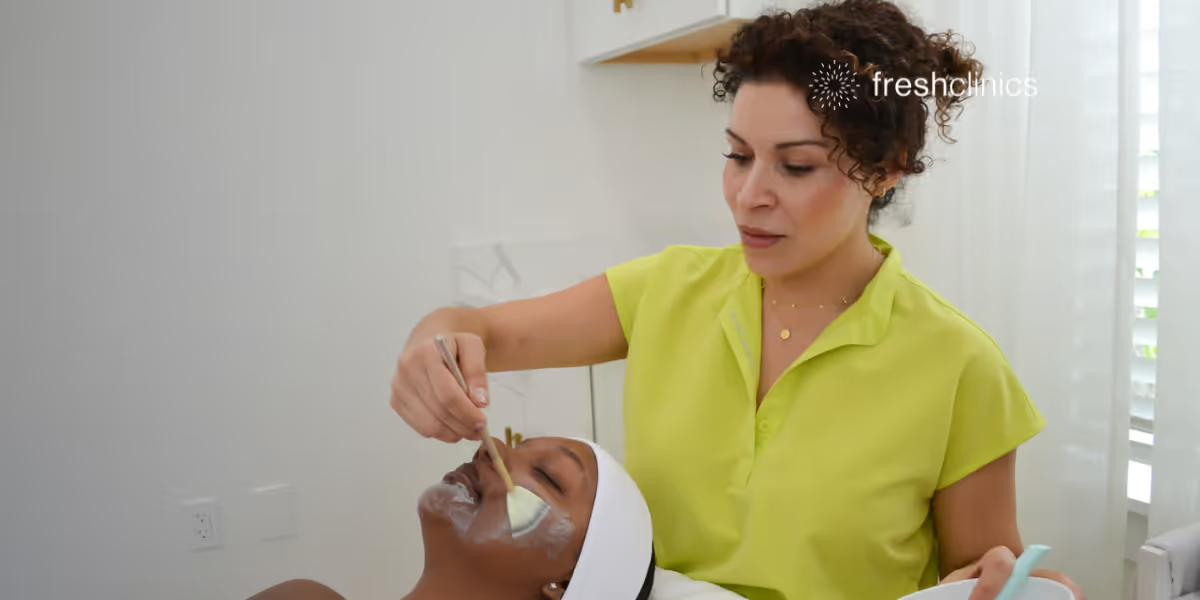
The Fresh Approach to Skin Fundamentals
Last week, Fresh Members had the opportunity to hear from Niva Leones, a passionate aesthetic nurse injector and founder of Bulverde Med Spa in the USA.
With over 20 years of experience in the industry, Niva brought her warmth, depth of knowledge, and practical strategies to a packed session focused on skin assessments, product integration, and patient outcomes.
‘’Aesthetics - I love it with all my heart," Niva shared. "I've been blessed to work alongside great cosmetic surgeons, and I want to pass on what’s helped me build a loyal, thriving patient base."
And if there’s one thing Niva made clear from the very beginning, it’s that: "Cosmetic medicine isn’t just about treatments. It’s about trust. It’s about connection. That’s how you build a long-term career."
Start with the skin
It’s tempting to focus on cosmetic treatments only, but as Niva reminded us, real results come from taking the time to understand the canvas you’re working with - the skin.
"They don’t teach skincare in nursing school," she said. "If you want to offer comprehensive care, you need to really understand the skin, and not be afraid to touch the face, assess the tissue, and ask the right questions."
Niva
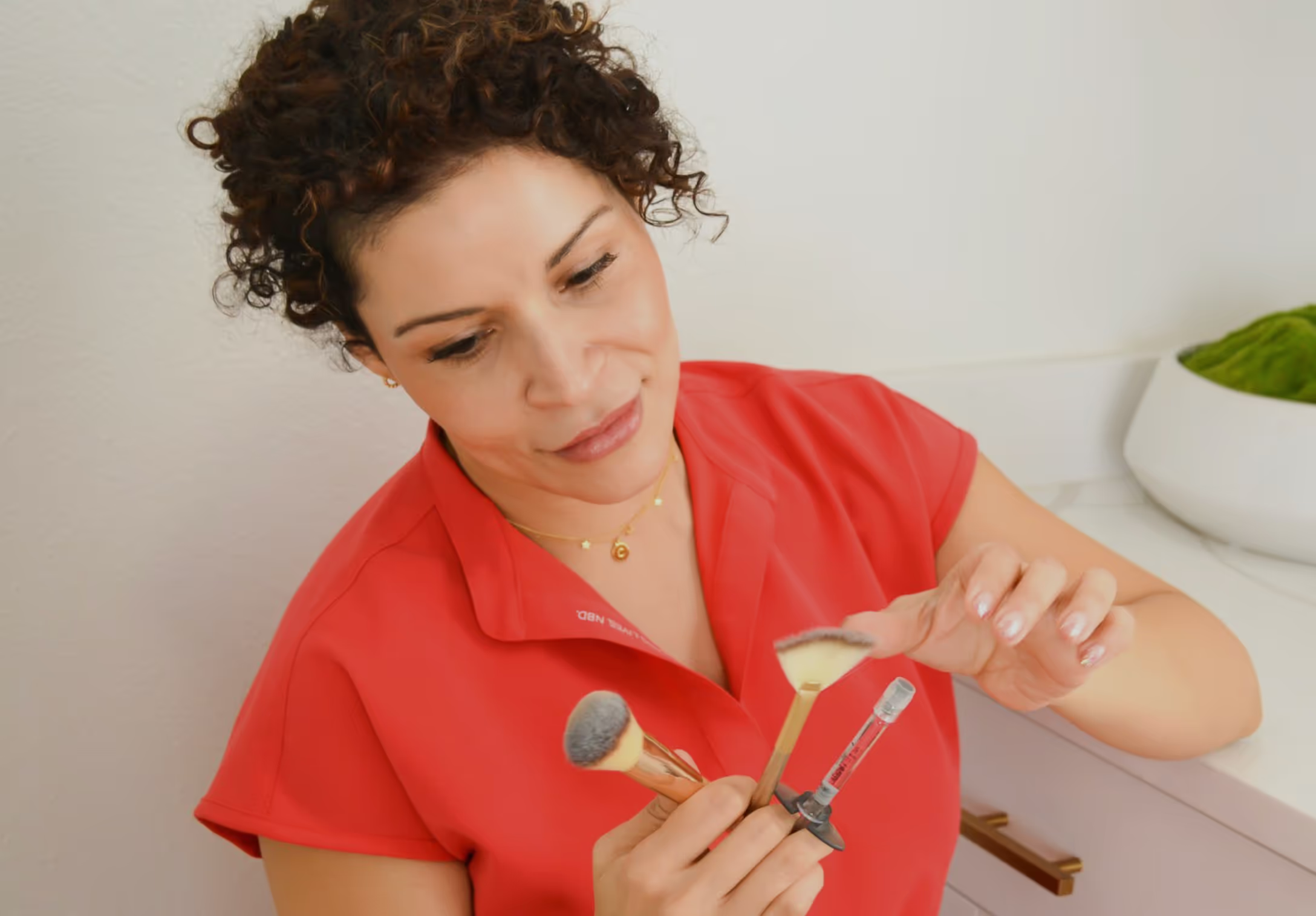
spoke passionately about using tools like the Fitzpatrick Scale* - not in a textbook sense, but with a human-first mindset. She encouraged open, respectful conversations about a patient’s background, skin structure, sensitivity, hormonal balance, heritage, and lifestyle.
"It’s not intrusive to ask about a patient’s background; it’s critical for giving them the right care," she explained. "That’s how you deliver results that patients trust you for."
*The Fitzpatrick Scale is a system used to classify skin types based on their response to ultraviolet (UV) radiation exposure. It categorizes skin into six types, with Type I being the most sensitive to the sun and Type VI being the least sensitive.
This scale helps in determining appropriate sun protection measures and understanding a person's risk of skin damage.
Why microneedling and peels matter (more than you think)
Niva encouraged our members to master the fundamentals first. Start with:
- Specialising in microneedling
- Offering chemical peels
- Dermaplaning and skin prep
- Layer in laser hair removal or simple energy devices when you're ready
"You don’t need to invest $300,000 in fancy equipment straight away," Niva said. "You need technique. You need trust. And you need a strong understanding of the skin’s needs."
Build your product range the smart way
Only recommend what you genuinely believe in and use yourself. "Stock the products you love. Trust builds from there," she said. Niva also encouraged nurses to be confident in recommending treatments and products as part of their professional duty of care.
"As nurses, recommending the right treatments isn’t about sales, it’s about helping your patients feel their best. Stick to what you know. Stick to science. Trust will follow."
Ready to take the next step?
Whether you're just starting out or looking to expand your clinic, Fresh Clinics is here to support your growth. Reach out to our team, call us, or schedule a time to chat below.

Why Thrive is the Future of Aesthetics
In a rapidly shifting industry where new competitors, products, and regulatory changes are rewriting the rules, growth alone isn’t enough. You can’t control change. But you can build a business that’s ready for it.
As we approach The Fresh Life 2025, the theme 'Thrive' invites us to explore the depths of resilience, smart growth, differentiation, and longevity. It’s about strategic, intentional success that stands the test of time, even when the rules keep changing.
This year, we're done with just surviving. It’s time to think bigger. To build stronger. To thrive.
What it means to Thrive
Thriving is growth with purpose. It's about creating businesses that are not only successful today, but are also designed to lead the future of aesthetics tomorrow.
At The Fresh Life 2025, we’ll be diving into what it takes to thrive:
- Resilience by design
True resilience is about strong foundations, smart decision-making, and having a clear direction so your business can adapt and evolve without losing its way. - Strategic growth
At The Fresh Life, you’ll learn how to grow intentionally, making the right moves at the right time, with a clear vision for where you want your business to go. - Differentiation that matters
Positioning is not just about being different; it's about being relevant. You also need to communicate that difference in a way that your patients can feel. - Retention that works
Real success isn’t just about attracting new patients - it’s also about keeping them. We’ll be exploring loyalty strategies that turn first visits into lifelong relationships and satisfaction for your patients, without relying on endless promotions or discounting your value. - Real local impact
Forget big ad budgets. Thriving businesses are those that understand their communities, tap into local insights, and build strong reputations that no amount of advertising can buy.
Why ‘Thrive?’
Think of a palm tree. It doesn’t just survive in harsh conditions; it thrives in them. Flexible under pressure. Rooted deep for strength. Designed to grow exactly where others struggle.
At The Fresh Life 2025, we’re building businesses that embody that same philosophy: Strong, strategic, adaptable, and flourishing.
This year’s Fresh Life will be filled with masterclasses, expert panels, and real-world strategies that will help you build a business that’s not just bigger — it’s better, smarter, and stronger than ever before.
Don't miss your chance to THRIVE. Tickets to The Fresh Life 2025 are now on sale - secure your spot here!
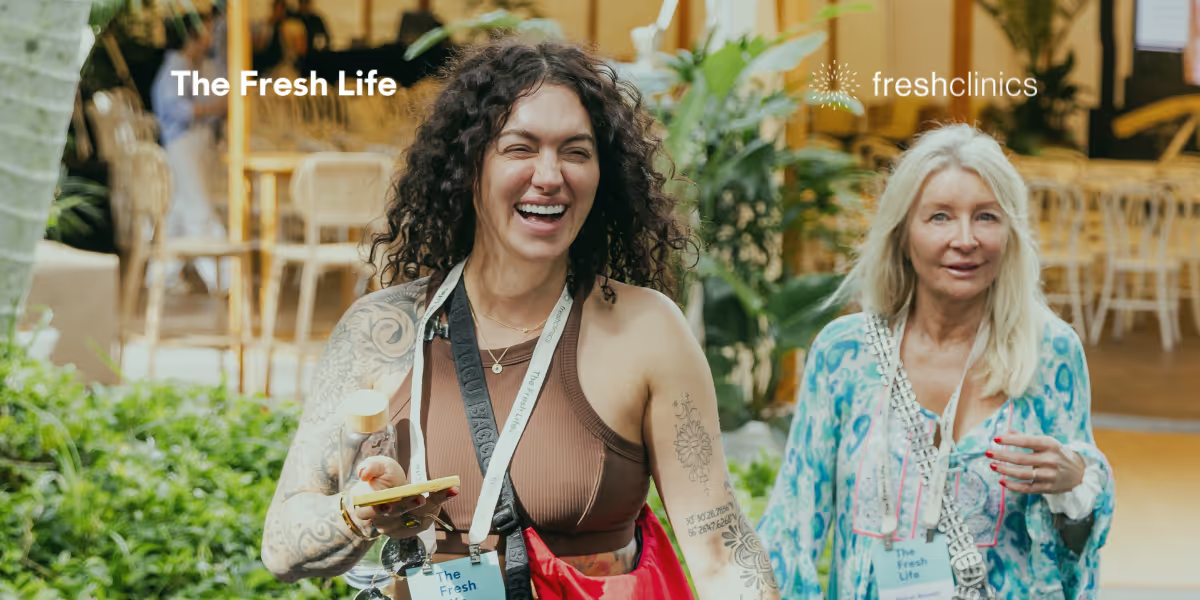
Thrive at The Fresh Life 2025 Conference
In a rapidly shifting industry where new competitors, products, and regulatory changes are rewriting the rules, growth alone isn’t enough. You can’t control change. But you can build a business that’s ready for it.
As we approach The Fresh Life 2025, the theme 'Thrive' invites us to explore the depths of resilience, smart growth, differentiation, and longevity. It’s about strategic, intentional success that stands the test of time, even when the rules keep changing.
This year, we're done with just surviving. It’s time to think bigger. To build stronger. To thrive.
Now in its fourth year, The Fresh Life has become known for three things that make all the difference:
What it means to Thrive
Thriving is growth with purpose. It's about creating businesses that are not only successful today, but are also designed to lead the future of aesthetics tomorrow.
At The Fresh Life 2025, we’ll be diving into what it takes to thrive:
- Resilience by design
True resilience is about strong foundations, smart decision-making, and having a clear direction so your business can adapt and evolve without losing its way. - Strategic growth
At The Fresh Life, you’ll learn how to grow intentionally, making the right moves at the right time, with a clear vision for where you want your business to go. - Differentiation that matters
Positioning is not just about being different; it's about being relevant. You also need to communicate that difference in a way that your patients can feel. - Retention that works
Real success isn’t just about attracting new patients - it’s also about keeping them. We’ll be exploring loyalty strategies that turn first visits into lifelong relationships and satisfaction for your patients, without relying on endless promotions or discounting your value. - Real local impact
Forget big ad budgets. Thriving businesses are those that understand their communities, tap into local insights, and build strong reputations that no amount of advertising can buy.
Why ‘Thrive?’
Think of a palm tree. It doesn’t just survive in harsh conditions; it thrives in them. Flexible under pressure. Rooted deep for strength. Designed to grow exactly where others struggle.
At The Fresh Life 2025, we’re building businesses that embody that same philosophy: Strong, strategic, adaptable, and flourishing.
This year’s Fresh Life will be filled with masterclasses, expert panels, and real-world strategies that will help you build a business that’s not just bigger — it’s better, smarter, and stronger than ever before.
Don't miss your chance to THRIVE. Tickets to The Fresh Life 2025 are now on sale - secure your spot here!