Featured Articles
Nationwide: the FDA's GLP-1 telehealth crackdown and the prescriber-network gap
The FDA's warning letters on compounded GLP-1 marketing exposed how telehealth platforms and prescribing networks split responsibility. What med spas should check.
Key facts:
- The FDA issued 30 warning letters to telehealth companies over compounded GLP-1 marketing.
- One named company, MEDVi, was cited in a February 20, 2026 letter.
- Many platforms don't prescribe themselves. Affiliated medical groups do, which can create accountability gaps.
- Intake-form-only evaluations may not meet state prescribing standards.
What did the FDA flag?
The FDA issued 30 warning letters to telehealth companies marketing compounded GLP-1 drugs with claims it called false or misleading. In a February 20, 2026 letter to MEDVi, the FDA cited claims like "same active ingredient as Wegovy and Ozempic," which are misleading because compounded drugs are not FDA-approved. See the FDA warning letter.
What is the prescriber-network issue?
A March 2026 analysis found that many of these platforms don't actually prescribe. They rely on clinicians in affiliated medical groups to evaluate patients and write prescriptions. That split between the marketing platform and the prescribing group can leave gaps in who's accountable for patient evaluation, prescribing, and follow-up. Asynchronous, intake-form-only evaluations may not meet state requirements for prescribing injectables.
What it means for your med spa
If you work with any telehealth or prescribing partner, get clear on who owns each step. Vet partners for compliance with state prescribing laws and scope of practice, make sure evaluations meet your state's Good Faith Exam standard, and confirm your marketing matches how care is actually delivered.
FAQs
Are intake-form-only evaluations enough to prescribe GLP-1s?
Often not. Many states require a real evaluation that an intake form alone may not satisfy.
Why does the platform-versus-prescriber split matter?
It can blur accountability for evaluation, prescribing, and follow-up, which is exactly where enforcement looks.
Fresh Clinics helps med spa owners vet partners and meet Good Faith Exam standards. Learn more about Fresh Clinics membership.
Nationwide: Amazon's One Medical GLP-1 program and what it signals for med spas
Amazon launched a GLP-1 program through One Medical, bundling telehealth, prescribing, and pharmacy. Here's the signal for how med spas should structure GLP-1 care.
Key facts:
- On April 21, 2026, Amazon launched a GLP-1 Management Program through One Medical, nationwide.
- It bundles screening, provider consults, prescribing, follow-up, and pharmacy fulfillment.
- On-demand telehealth handles renewals only, not new prescriptions.
- This is a commercial launch, not a regulatory action.
What did Amazon launch?
On April 21, 2026, Amazon introduced a GLP-1 Management Program through its One Medical platform, available nationwide. It runs a single care pathway: pre-visit screening, a structured consultation with a licensed provider, prescribing, follow-up visits, and clinical monitoring. Prescriptions can be filled at the patient's pharmacy of choice. See Amazon's announcement.
Is this a regulation?
No. It's a commercial program, not a government action. But it matters because it sets a market benchmark for what doing GLP-1 properly looks like: provider-led evaluation, real follow-up, and documentation, with on-demand telehealth limited to renewals rather than new prescribing.
What it means for your med spa
If you offer GLP-1 services, this is the bar patients will start comparing you to. Build a care pathway with genuine assessment, prescribing by a licensed provider, follow-up, and monitoring. Align provider involvement with your state's requirements, and document how prescriptions are issued and filled, especially when a third-party or integrated pharmacy is involved.
FAQs
Can patients get a new GLP-1 prescription through Amazon's on-demand telehealth?
No. That channel handles renewals only. New prescriptions go through the structured consultation.
Does this change any law for med spas?
No. It's a commercial program, but it signals the standard of care patients will expect.
Fresh Clinics helps med spa owners build compliant, well-documented GLP-1 care pathways. Learn more about Fresh Clinics membership.
Nationwide: the CMS-FDA RAPID device pathway, and why it likely won't touch your med spa
CMS and the FDA launched the RAPID pathway to speed Medicare coverage for Breakthrough Devices. Here's why most aesthetic devices fall outside it.
Key facts:
- On April 23, 2026, CMS and the FDA announced the RAPID coverage pathway.
- It aligns FDA authorization timing with Medicare coverage review for certain Breakthrough Devices.
- It applies only to eligible Class II and Class III devices for serious or life-threatening conditions.
- Elective cosmetic and aesthetic devices are not in scope.
What is RAPID?
On April 23, 2026, CMS and the FDA announced the RAPID (Regulatory Alignment for Predictable and Immediate Device) pathway. It coordinates the timing of FDA market authorization with Medicare's National Coverage Determination review, so eligible devices reach Medicare coverage faster. See the CMS announcement and the FDA announcement.
Does it apply to aesthetic devices?
Almost certainly not. RAPID applies only to certain FDA-designated Breakthrough Devices, which are for life-threatening or irreversibly debilitating conditions. The agencies did not identify elective cosmetic devices or routine med spa procedures as eligible. Energy-based systems, body contouring, and lasers stay under their existing FDA authorization pathways, such as 510(k), and state oversight.
What it means for your med spa
This one is mostly a good-to-know, not an action item. Still, it's a useful prompt to review how each of your device-based technologies is FDA-classified and authorized, and to make sure your marketing reflects the actual cleared indications. More detail is coming through a Federal Register notice and public comment.
FAQs
Will RAPID speed up coverage for my laser or body-contouring device?
No. Those are elective aesthetic devices and fall outside the Breakthrough Devices Program and RAPID.
What devices does RAPID cover?
Certain FDA-designated Breakthrough Devices for serious or life-threatening conditions.
Fresh Clinics helps med spa owners keep device marketing aligned with FDA-cleared indications. Learn more about Fresh Clinics membership.
Latest Articles
9 Luxury Interior Design Ideas For Your Med Spa
When a patient walks into your med spa, they’re not only here for the treatments; they’re looking for the feeling of calm, trust, and elegance.
Thoughtful interior design sets the tone before a single needle is uncapped. Sure, a well-designed space looks amazing on socials, but it also builds real-world trust the moment clients walk in. It builds credibility, helps clients relax, and shows that you care about the experience as much as the results.
Whether you’re starting fresh or refining what you’ve already built, these nine design ideas are all about making your space feel calm, polished, and professional.
1. Make your entrance feel like a high-end boutique
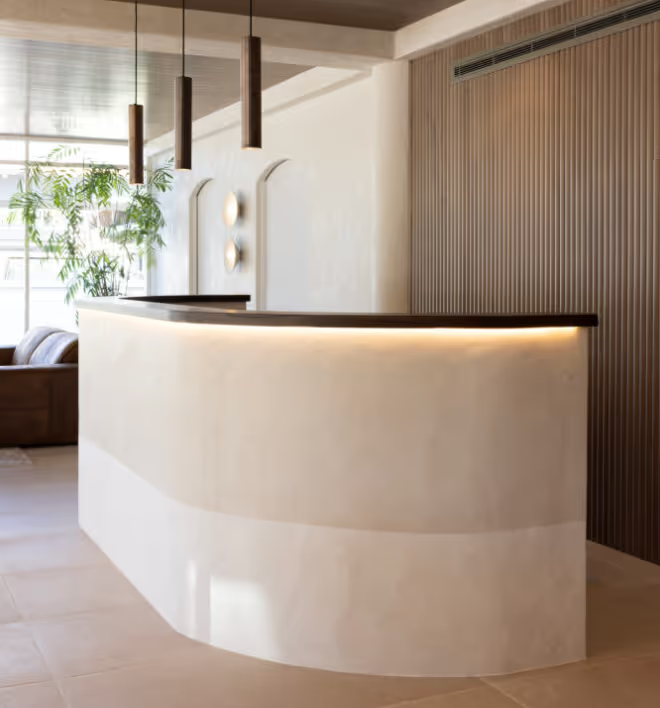
First impressions start at the front desk.
Think soft curves, clean lines, and materials that feel expensive, like fluted timber, travertine, or reeded glass.
Your reception should also be a place for clients to relax before and after their treatments, like comfortable chairs, low lighting, herbal tea, and maybe a hint of fragrance in the air.
Tip: Add one showstopper. A sculptural vase, a designer lamp, or a signature scent.
Image: Byron Bay Luxury Homes
2. Update your neutrals with earthy tones

Cream-on-cream has been done, but in 2025, neutrals are getting more depth and a little personality. If you want your space to feel calm but not bland, layer soft whites with richer tones like taupe, olive, clay, or stone.
These colors are inspired by nature, which naturally helps clients feel more grounded, safe, and relaxed. You can also try using light blues or soft, beach-like colours to add a sense of calm to the space.
While white or warm beige have their place, building on them with earth tones can strike the right balance between professionalism and warmth.
Image: Pinterest
3. Clean but not cold
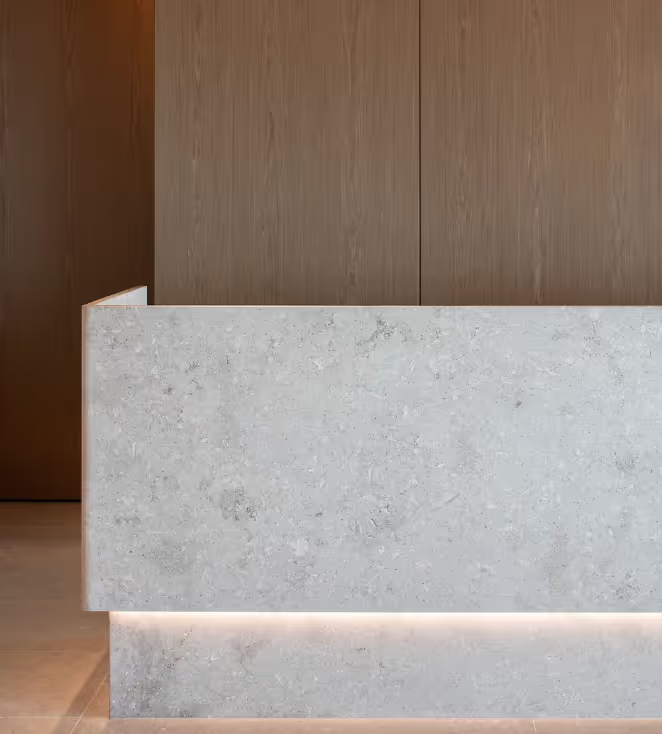
Clinical doesn’t have to mean cold. In 2025, the most elevated med spas are embracing sculptural design elements, think curved counters, fluted walls, and rounded furnishings, to bring softness and warmth into their space. These forms feel modern and organic, helping you move away from that boxy “waiting room” look without sacrificing professionalism.
It’s a subtle way to soften the space and move away from that standard “waiting room” feel, without losing the clean, clinical edge you need. Tip: For a luxury finish that’s still hygienic, consider a polished natural stone like sealed marble, which is easy to clean and elevates the look instantly.
Image: Interior Design Awards
4. Use lighting to shape mood and perception

Renowned interior designer Jonathan Adler said it best when he said, “Lighting is everything. It can make a room feel warm, cozy, and inviting, or cold and unwelcoming.”
And in 2025, elevated med spas are treating it that way, moving beyond harsh, clinical light in favor of warm recessed strips, minimalist sconces, and soft pendants that set the mood without distraction.
In treatment rooms, you’ll need your lighting to still be functional, but ideally adjustable, so you're not overwhelming clients with brightness the moment they walk in.
Image: Jonathan Adler
5. Function first, beauty second

It’s easy to get swept up in aesthetics, but if your space doesn’t work day to day, it’s going to cause stress.
Start by mapping out how your team moves through the clinic. Can they get from the front desk to the treatment rooms quickly? Are supplies easy to grab without digging through drawers? Are the waste bins where they need to be? Reception desks should have hidden storage to make your staff happy, where they can store their forms, tech, or even snacks.
Treatment rooms need cleanable surfaces, a logical layout, and room for staff to move comfortably around the client.
Image: Interempresas
6. Doors that blend privacy and polish
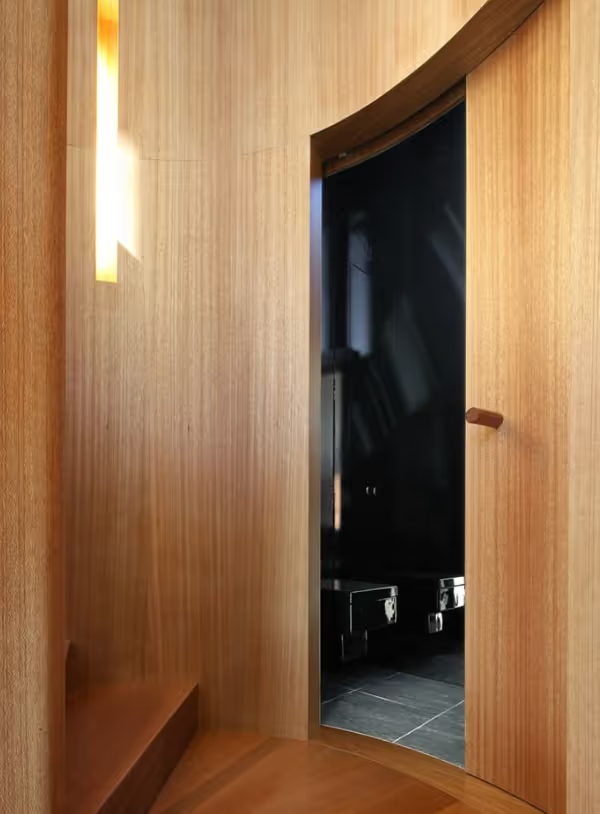
Doors do more than separate rooms. A heavy, loud, or poorly finished door can make a space feel cold and clinical. The wrong material? It clashes with your palette and shows every fingerprint.
For a more elevated look, opt for flush doors with minimal hardware, or soft-close sliders that save space without compromising on style. Matte finishes, frosted glass, and sealed timber strike the right balance between beauty and practicality. Soundproofing is essential in treatment rooms, where clients may be discussing personal medical details or undergoing procedures that require discretion.
Tip: Keep your door finishes consistent throughout the clinic. It’s a small detail, but it helps the entire space feel calm, intentional, and beautifully considered.
Image: Divisare
7. Flooring that’s practical and built to last
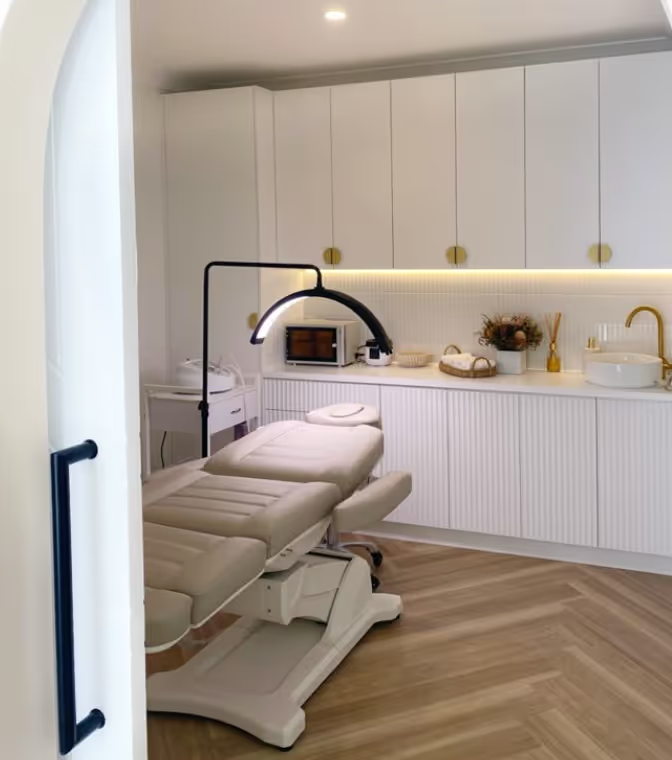
Flooring is one of the hardest-working surfaces in your space. It needs to look beautiful, hold up under constant foot traffic, and meet hygiene requirements.
In clinical zones, go for sealed concrete, large-format tile, or natural stone. These materials are also easy to disinfect and hold their shape over time. In reception, a low-pile rug or mat adds contrast, just make sure it’s washable and won’t catch under chairs.
Tip: Avoid high-shine finishes or anything with too much texture as they’re harder to clean and show wear quickly.
Image: Eye Envie Lash & Co.
8. Make your retail feel helpful
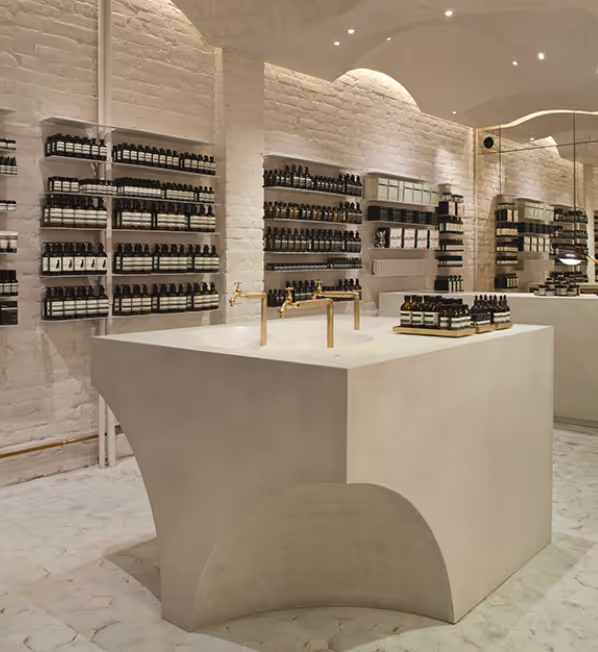
Retail can feel like an afterthought in many med spas, or worse, a hard sell that ends up gathering dust.
However, when done right, it adds value and enhances the client experience.
Use backlit shelving that matches the rest of your design. Keep your displays minimal, products spaced out, and signage clear. Patients will actually want to browse through your products if they are displayed nicely.
Tip: Position your products for sale near your counter or next to where clients sit and wait. Always keep overstock hidden to keep a clean, organized look.
Image: Arch Daily
9. Plan for technology, and conceal it well
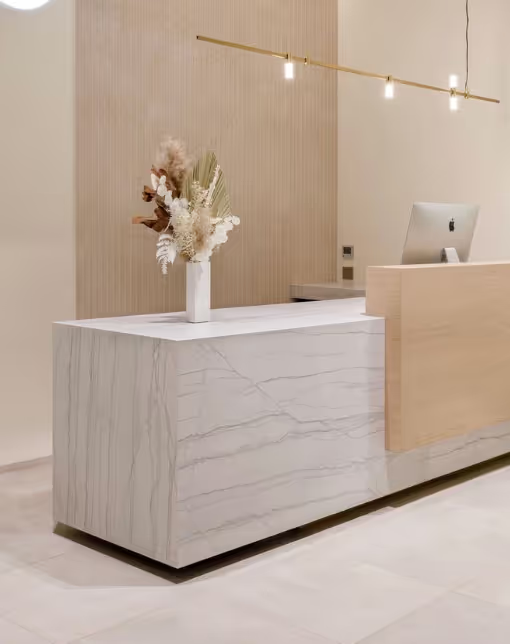
Tech is part of every med spa, from check-in tablets, booking software, and EMR stations. '
Patients want your clinic to be using the latest tech, but it shouldn’t dominate the space.
Bulky monitors, visible cables, or mismatched devices can quickly ruin an otherwise polished look. Choose hardware that suits your aesthetic, and work with cabinetry that can tuck away cords, printers, and modems.
Tip: Consider wall-mounted tablets at reception or consultation areas, as they are sleek, functional, and space-saving.
Image: Place Ideal
Key considerations for standing out
A well-designed med spa stands out because it feels intentional, not overdone. Start by defining your brand and building around that. Ask yourself, will your med spa be sleek and clinical, or soft and nurturing? How you want to define your brand should guide every detail, from the color of your walls to the shape of your reception desk.
Create a layout that flows. Avoid cramming too many chairs into reception or having clients pass storage bins on the way to the treatment rooms. Use a mix of wall lights, ceiling spots, and hidden strips, and avoid anything too harsh or blue-toned in the reception and bathrooms. Clients should feel flattered by the lighting, not exposed by it.
Add discreet signage and staff uniforms that match your palette. It’s less about each individual touch, but more about how they all come together.
Your med spa doesn’t need to be the trendiest spot in town. It just needs to feel calm, polished, and comfortable. When your layout flows, your lighting works, and nothing feels out of place, clients notice.
If you’re thinking about starting a med spa, Fresh Clinics can help. We’ll match you with a medical director, support you with HIPAA-compliant tech, and help keep everything running smoothly from day one.
Ready to create a med spa that feels as good as it looks? Contact Fresh today!
What is a Good Faith Exam? (GFE)
Running a successful med spa, whether you're in Texas, Pennsylvania, or anywhere else, means balancing safety, compliance, and building a loyal patient base.
So before you perform an aesthetic treatment like Botox, fillers, or laser therapy, there’s one fundamental step that needs to happen to make sure it’s done safely and legally.
We’re talking, of course, about the Good Faith Exam (GFE). In this article, we’ll cover what it is, when it’s required, and why it matters for safe and compliant care.
Why good faith exams matter
Before any medical treatment, it’s standard practice to assess a patient’s health and make sure they understand the risks. That’s what a Good Faith Exam does. It protects patient safety and ensures they can give proper consent.
Here’s a closer look at the three key reasons GFEs are a legal requirement.
1. Risk reduction
A GFE helps you understand your patient’s health before treatment begins. It gives your team the chance to review their medical history, spot any red flags, and decide if they’re a safe candidate for the procedure. This step is key to reducing the risk of complications, especially if the patient has conditions or medications that could affect the outcome or cause them harm.
2. Consent
GFEs give patients the chance to ask questions, understand their options, and get clear on what results they can expect or side effects.
This process ensures they can give informed consent, meaning they fully understand the treatment and what it involves before agreeing to proceed.
3. Compliance
Med spas are legally required to conduct GFEs before performing medical treatments. Keeping clear documentation of each exam helps ensure compliance, protects your patients, and reduces legal risk for your business.
Who conducts a good faith exam?
A GFE must be performed by a qualified medical professional. This can be done directly by a physician, or by a nurse practitioner or physician assistant working under physician supervision. While the exact requirements vary by state, in Texas and Pennsylvania, supervision by a licensed physician is mandatory. These licensed healthcare providers are trained to spot red flags and recommend safe options based on your medical history and current health.
At Fresh Clinics, your GFEs are made simple and efficient, with medical oversight from the top aesthetic professionals in the USA. Learn more.
What happens during a GFE?
If you're opening a med spa or simply want to know what a proper Good Faith Exam should include ahead of your next appointment, here's an overview of the process.
1. Medical history review
Providers typically begin their GFEs by reviewing the patient’s medical history, including allergies, medications, past procedures, and any existing health conditions. This step is essential to identify any potential risks before treatment begins.
2. Physical or virtual exam
Depending on your state laws, the GFE may be done in person or via telehealth. In both Texas and Pennsylvania, either can be carried out.
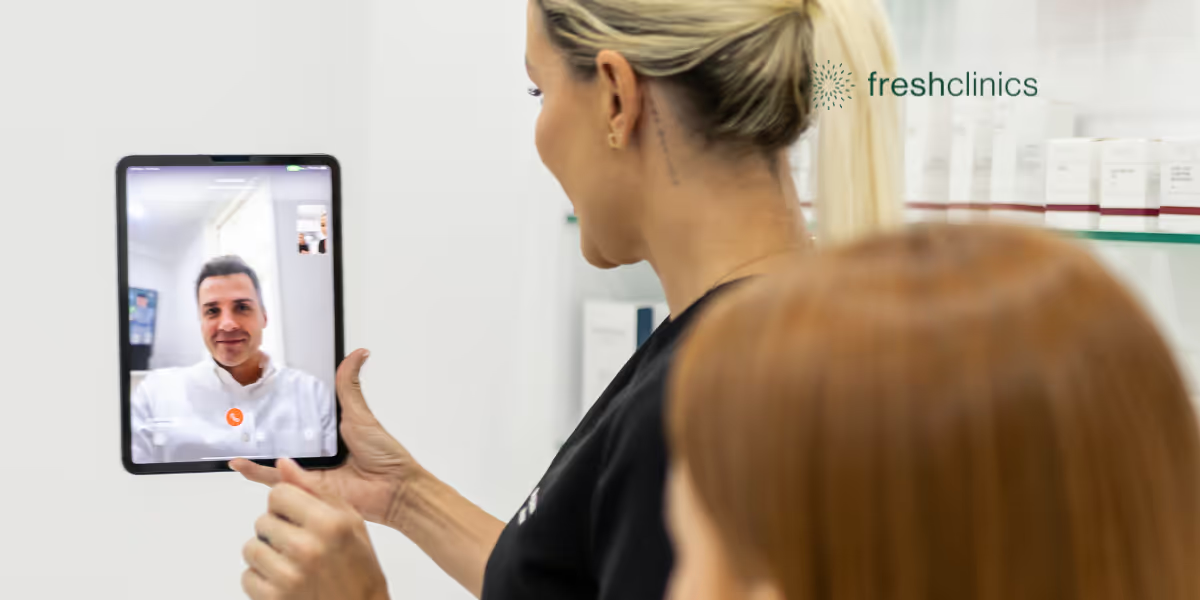
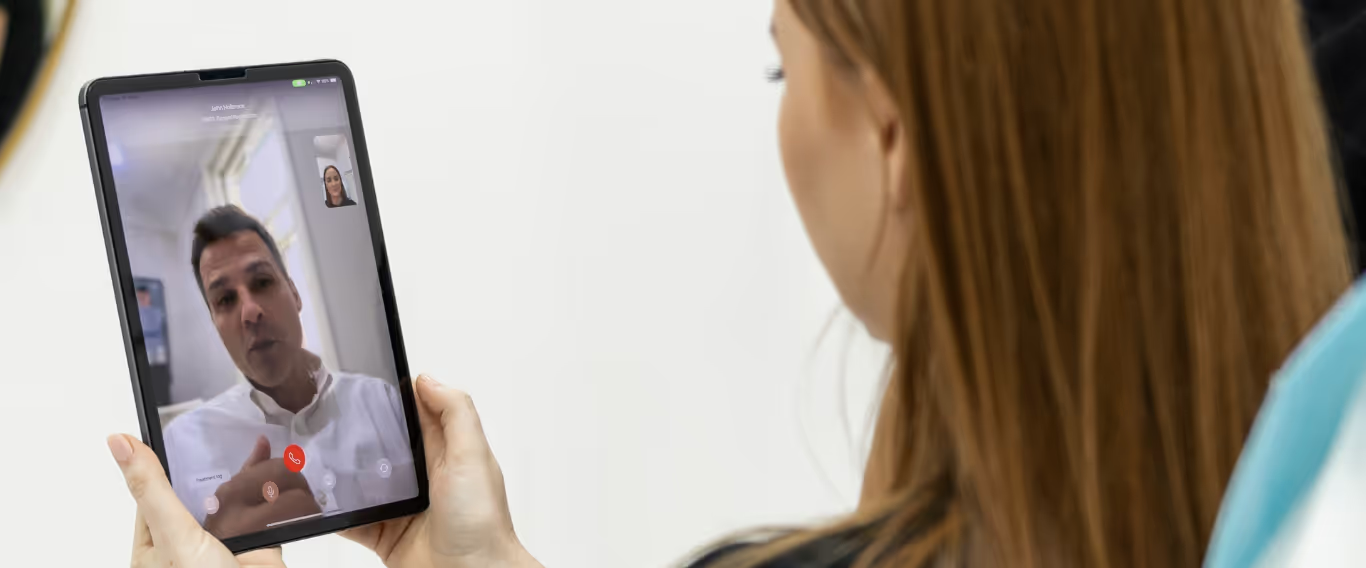
During an in-person exam, the provider may check vital signs, assess skin condition, or physically examine the treatment area to make sure it's safe to proceed. In a virtual exam, the provider will visually inspect the patient over video, ask targeted health questions, and look for any visible concerns, such as skin issues, signs of infection, or anything that may affect the outcome of the treatment. The goal is to confirm the patient is in good health and a suitable candidate for the procedure.
3. Personalized treatment planning
Based on the results of the GFE, you’ll receive treatment recommendations that are tailored to your specific circumstances. This step helps to ensure that your customized treatment plan will be safe and effective.
In-person vs virtual GFEs
Depending on your state, Good Faith Exams can be done either in person or through telehealth. In places like Texas and Pennsylvania, both are permitted, but the process still needs to meet clinical standards. Choosing between the two often comes down to your setup, the treatment type, and what works best for your team and patients.
Here’s how they compare:
In-person GFE: The provider can check vital signs, assess skin and treatment areas, and ask questions face-to-face.
Virtual GFE: Done via video call, the provider visually assesses the patient, asks targeted health questions, and looks for any red flags that could impact treatment.
In both cases, you’ll want to record the assessment, treatment decision, and provider details clearly to show you’ve met medical and legal requirements. This protects your business and ensures patient care is fully traceable.
What are the benefits of a good faith exam?
Good Faith Exams (GFEs) offer a wide range of benefits, and they don’t just apply to patients. They can also be advantageous to providers and med spa owners. At their core, a GFE helps to create a safer, more transparent, and compliant environment for these medical aesthetic treatments to take place.
Here’s how they do that:
1. Enhanced patient safety
The number one priority in any medical spa should be patient safety. A GFE helps providers identify potential contraindications, underlying medical conditions, or medications that could interfere with treatment. By thoroughly assessing a patient’s medical history and current health status, providers can recommend effective and safe treatments to reduce the risk of complications or adverse reactions.
2. Improved patient trust and satisfaction
When patients know that a licensed medical professional is reviewing their case before treatment, it helps to build their trust. The GFE gives patients a chance to ask questions, receive honest feedback, and feel confident about their decision. This transparency often leads to a higher level of satisfaction and can build stronger provider-patient relationships.
3. Better treatment planning
A GFE lays the groundwork to create a customized treatment plan specifically for the individual’s unique needs and health profile.
It helps to ensure the treatment is appropriate for the patient’s goals and physical condition. This, in turn, leads to better outcomes and more consistent results.
4. Regulatory compliance
In many states, including Texas and Pennsylvania, a Good Faith Exam is legally required before you can perform certain procedures.
Having a clear GFE process in place and following it consistently helps ensure your med spa stays compliant with state medical board regulations and accepted standards of care.
5. Potential prevention of board investigations
By completing and documenting a proper GFE, providers can demonstrate that they have taken the necessary steps to evaluate and protect their patients.
All of these steps reduce the risk of complaints or investigations from state medical boards, and most importantly, they help keep your patients safe.
Good Faith Exam (GFE) requirements vary across the U.S., so it’s important to understand the laws in your state. Here are some examples of how the law can vary based on the state you're operating in:
- Texas: GFEs are mandatory before any medical treatment. They can be done in person or via telehealth and must be performed by a licensed professional or supervised by a physician.
- Pennsylvania: Similar to Texas, GFEs must be conducted under physician oversight before medical treatments are performed.
- Illinois: Requires in-person GFEs for certain treatments, particularly injectables and laser services.
- Florida: A physician, nurse practitioner, or physician assistant can do the GFE.
- New York: GFEs are required as part of safe, compliant care. However, the physicians need to own their medical practice.
No matter the state, proper documentation is a non-negotiable for compliance and patient safety.
When is a good faith exam required?
Establishing initial contact with a new patient? Proposing a new treatment plan or significant changes? Noticing a significant time lapse since the last treatment or change in health status? These are scenarios where a GFE becomes non-negotiable. To ensure continuous safety, follow-up GFEs are recommended at least annually for every patient.
Ensuring patient safety in your med spa involves adhering to regulatory requirements that establish a framework for safeguarding patient well-being. Following these guidelines not only creates a secure treatment setting but also ensures med spas comply with healthcare standards designed to uphold ethical and safe practices.
What treatments require a good faith exam?
Any aesthetic procedure in Texas and Pennsylvania (as well as many other states in the USA) that’s considered medical usually requires a GFE. That includes:
- Injectables like Botox or dermal fillers
- IV hydration or vitamin therapy
- Hormone therapy
- Laser treatments and other medical aesthetics services
Essentially, if your prospective treatment involves a needle, prescription drug, or regulated device, you’ll likely need a GFE first.
How Fresh Clinics supports the GFE process
Fresh Clinics was started by industry professionals, so we understand what it’s really like to run a med spa. Finding the right physicians while staying compliant, efficient, and focused on patient care isn’t always easy.
That’s why we make the GFE process easier, with:
- Access to experienced medical directors
- Support from trained providers and clinicians
- Seamless virtual or in-person GFEs
- Documentation that keeps you audit-ready
- A smoother, safer experience for both patients and providers
Whether you're starting out or looking to grow an established med spa, we’ll help you stay compliant so you can focus on what matters most: your patients.
In summary
Overall, a Good Faith Exam should be seen as the foundation on which safe, ethical, and legally sound care is provided in the world of medical aesthetics. As med spas grow in popularity, GFEs ensure that patients receive proper medical evaluations. At the same time, it also helps providers stay within the boundaries of legislated practice. For any provider who wants to deliver high-quality care to their patients, GFEs are a vital part of the process.
Ready to simplify your GFE process?
Fresh Clinics offers the tools and clinical support you need to stay compliant, deliver better care, and grow your med spa with confidence.
Reach out to our team today to learn more about how our spa compliance solutions can help you. Contact Fresh today!
FAQs
Is a Good Faith Exam the same as a regular consultation?
No. While both may involve discussing your goals, a Good Faith Exam is a formal medical evaluation performed by a licensed healthcare provider. It involves reviewing your medical history, assessing your current health, and determining your eligibility for specific aesthetic treatments.
Do I need a GFE before every medical procedure at a med spa?
Yes, in most cases. GFEs are required before treatments like injectables, hormone therapy, and IV therapy to ensure safe and effective care based on your current health status.
Can a GFE be done virtually?
In many states in the USA, including Texas and Pennsylvania, where we operate, virtual good faith exams are allowed. However, these remote assessments still require a review of patient evaluations and a visual medical assessment conducted by a licensed medical provider.
What’s reviewed during the GFE?
The provider looks at your medical conditions, current medications, allergies, and any potential risks related to your requested treatment. They will then offer treatment recommendations tailored to your health and goals.
Why is it important for providers to follow the GFE process?
Following the GFE process helps to ensure patient safety and avoid legal issues. In addition, it supports ethical care standards that are being met, especially in exams in medical spas where oversight is crucial.
How to Find a Medical Director for Your Med Spa
Imagine having an outstanding off-site medical director who provides on-demand clinical oversight while you focus on running your med spa. We’ve made that a reality for countless clinics, and we can do it for you, too.
Finding a medical director for your med spa
For compliance reasons, your med spa must have a medical director. They’re heavily involved as you set up your clinic and provide vital clinical oversight and support in your day-to-day operations.
But a skilled medical director can be expensive and hard to find. Once you’re established, there isn’t always enough work to keep an in-house medical director fully occupied. Perhaps that’s why they can tend to go beyond the boundaries of their role, causing headaches for your business.
At Fresh Clinics, we understand those frustrations. And we’ve found the right balance of oversight, without overreaching, to support your med spa.
How does it work?
1. Initial call
Tell us about your clinic and needs.
2. Match with a medical director
We match you with a skilled medical director who is experienced in the types of procedures you offer. Each director covers up to 10 clinics, and because their role is off-site, they won’t get in your hair!
3. On-call support
Your medical director is on-call whenever you need clinical advice or support using our HIPAA-compliant (and free!) EMR.
4. Experience the benefits
Enjoy the confidence that your med spa is compliant with swift access to quick, HIPAA-compliant good-faith exams (GFEs). You’ll also have the freedom to run your business your way, with consistent clinical oversight from a highly capable and dependable medical director who wants your business to thrive.
What does it cost?
If you hire your own in-house medical director, you’ll probably pay them at least $3,000 a month. If you try other companies, they may ask for an ongoing share of your revenue. That might not sound much initially, but it could cost you a fortune as you grow. The Fresh way is better.
You simply pay a monthly subscription fee based on your med spa needs. That’s it. It’s refreshingly easy.
Medical director credentials
Our medical directors are all board-certified and bring many years of clinical experience. Each director has been chosen for their expertise in cosmetic medicine, their understanding of compliance, and their ability to support independent clinics. They stay up to date with regulations and best practice, so you can feel confident knowing you’re in safe hands.
From our community
Trusted by thousands of cosmetic professionals.
Keep your med spa compliant without the stress.
Access cutting-edge tools that make securing and working with a medical director simple and frustration-free.
Ready to take the first step? Contact Fresh today!
FAQs
What do med spa medical directors do?
You need a medical director to legally offer medical treatments. They are responsible for overseeing all medical procedures provided at your med spa, performing good-faith exams, supervising your medical staff, offering clinical guidance, and signing any required documents. They also play a key role in ensuring compliance, maintaining policies and procedures, and supporting patient safety at all times.
How do I find the legal requirements for med spas in Texas?
To ensure your clinic is following all the regulatory requirements in Texas for a medical spa, you’ll need to consult a lawyer. Generally speaking, there are laws that make medical oversight mandatory, and specific licenses you’ll need to operate. This is overseen by three medical associations: the Texas Medical Board (TMB), the Texas Department of Licensing and Regulation (TDLR), and the Texas Department of State Health Services (DSHS). Many spa owners partner with medical director companies or a recruitment agency to stay ahead of changing rules and stay compliant.
What counts as the “practice of medicine” in a med spa setting?
Any treatment that affects the structure of your patient’s body is considered the practice of medicine. This includes anti-wrinkle treatments, Botox, fillers, laser treatments, microneedling, PRP, or IV hydration treatment. It’s important to know what is considered the practice of medicine, as it must always be overseen by a qualified medical professional with a clear medical direction.
Can any doctor be a director at a med spa?
No, not any doctor can be a medical director. You’ll need someone with an active, unrestricted medical license in the state who is qualified to oversee the specific treatments your spa offers. The best experienced medical directors have a proven track record, strong soft skills, and solid leadership skills that align with the needs of aesthetic medicine clinics.
Can a nurse open a med spa without a medical director?
In most states, including Texas, a medical director is required to legally operate a medical spa. So no, a nurse cannot open a med spa without a medical director.
You can, however, partner with Fresh Clinics to find a suitable medical director to open your med spa. We help connect you with directors for your med business who understand regulatory compliance and have worked in medical aesthetics.
What is a good faith exam (GFE)?
A GFE is a quick check-up done before treatments like anti-wrinkle injections, Botox, fillers, or IV drips to make sure the patient is a good fit for the procedure.
It’s done by a doctor or nurse practitioner to ensure the treatment is safe for the person receiving it. It generally covers the patient’s health history, allergies, and specific questions depending on the treatment. It’s also a legal requirement in many states, including Texas.
Do all states require medical oversight for aesthetic treatments?
Most states do, but the exact rules vary. In many states, medical treatments like anti-wrinkle injections, Botox, fillers, and laser need to be overseen by a licensed medical doctor. Some states allow nurse practitioners or collaborative physicians to take the lead under certain conditions, depending on their scope of practice. Always check your state’s board regulations before you explore offering a new service, or work with management service organizations that specialize in providing medical oversight and helping healthcare organizations stay compliant.
What will happen if my clinic doesn’t have a medical director?
If you're offering medical treatments without a medical director, you're putting yourself, your business, and your patients at serious risk. You could face fines, lose your license, and be forced to shut down. In states like Texas, it’s considered medical practice without proper oversight, which is illegal and can have severe consequences. It can also jeopardize your malpractice insurance, damage your reputation, and limit your ability to deliver high-quality care.

How to Start a Med Spa Business
As more people seek subtle, non-invasive ways to enhance their appearance, the med spa industry is projected to soar from its $74 billion in 2025 to over $100 billion by 2029.
While opening a med spa can be enriching, given the industry's rapid growth, it requires careful planning, industry knowledge, and compliance with medical regulations.
If you're considering starting a med spa, this article covers everything you need to know to get started, with practical tips to help you plan, launch, and attract patients.
Step 1: Build a plan and research the market
Before you dive into the logistics, it's important to have a clear vision of what you want your med spa to be. Defining your niche will help you create a strong brand identity and attract the right patients.
Here are three elements you’ll want to have clearly defined before you get started:
- Target audience: Try to get into the mind of your ideal patient and what they’re looking for. Are you focused on injectables, skin treatments, or advanced devices? Are you offering a no-frills, affordable service, or a luxurious experience for busy patients who want to unwind? Your services, pricing, and setup should all match the persona of the people you want to walk through the door.
- Competitive analysis: Search online for other med spas in your area. What services do they offer? What isn’t offered? Pinpoint gaps in the market you can fill or ways to differentiate your brand. For example, if there are plenty of clinics offering a wide range of services, your clinic could niche down on being the best place for injectables or hair removal.
- Business planning: Once you’ve determined the direction you want to take your spa, you can create your business plan. This should include your market research, a competitor analysis, and financial projections (more on financial projections soon). A well-thought-out business plan will help guide your decisions and secure financing if needed. Once you have your plan, you’ll need to ensure that everything you intend to do is legally compliant.
Step 2: Understand licensing, compliance, and medical oversight
Before you open your doors, your med spa must be fully compliant, both legally and operationally.
Here are the five basics you’ll need to understand to navigate this:
- Business structure: You’ll need to choose a way to structure your business in a way that suits your needs. Two common choices are an LLC or an S Corp. You’ll also want to keep in mind that most states follow CPOM rules, which means that non-physicians can’t directly profit from medical treatments. This doesn’t mean you can’t start your med spa; it just means you’ll need to connect with a Management Services Organization (MSO). An MSO handles the non-clinical side of your business, so that the medical side stays under the supervision of a licensed professional, while you focus on running the business.
- Licenses and permits: Every state has different legal requirements, so you’ll need to check your local laws. This will affect which licenses are required and who, and with what accreditations, can legally perform the treatments at your med spa. Working with a provider like Fresh Clinics helps you get the paperwork right from the start, taking a huge weight off your shoulders.
- Medical oversight: A Good Faith Exam (GFE) is something your med spa needs to do for patient safety. It’s a medical consultation done before treatment, and only qualified professionals like physicians, PAs, or nurse practitioners can perform them.
- HIPAA and OSHA compliance: The Health Insurance Portability and Accountability Act, better known as HIPAA, protects patient information from being shared without consent. Managing this data securely isn’t optional; it’s a legal requirement. You'll also need to meet OSHA standards to ensure a safe, professional working environment for your staff.
- Insurance: It’s important to protect your business with the right insurance. At minimum, you’ll need to have professional liability, general liability, and workers’ compensation insurance. Most insurance providers will have plans specifically designed for aesthetic services. Now that you’ve covered your legal bases, you can develop a plan for funding, budgeting, and maintaining the financial health of your med spa.
Step 3: Build a plan for long-term profitability
You’ve got the vision, the compliance, and the groundwork. Next, you need to ensure your plan will be profitable.
- Startup costs: Setting up a new business, especially a med spa, comes with significant upfront costs. This is your initial investment, which will return dividends in the years to come. To start, you’ll need treatment equipment, an interior build-out, rent, medical supplies, software, staff training, insurance, and marketing. This can add up quickly, so defining your budget at the start will help you feel confident about what you can and can’t invest in initially.
- Funding options: There are a few ways to fund your med spa. You could use personal savings, a business loan, or outside investment. Each one comes with trade-offs. If you’re planning to borrow money or pitch to investors, you’ll need to show them exactly how your business will work and why it’s worth backing. It’s a good idea to speak to a financial advisor to figure out what funding suits your situation best.
- Profitability: Med spas can be hugely profitable, but the level of profitability and how long it takes to get there won’t be the same for every business. Your profit will depend on things like location, costs, pricing, and how well you bring in and keep patients. Services like injectables, laser treatments, body contouring, and skin-tightening packages tend to offer the best margins, especially when they’re booked as part of a treatment plan.
- Patient retention: Getting patients through the door is one thing, but getting them to come back is what builds your business. Patients are more likely to return when they trust your care, feel good about their results, and have a consistent experience. They’re also more likely to refer friends, which is a free and effective form of marketing. A strong financial plan isn’t only about the initial launch, it’s about long-term sustainability. Now, let’s look at the practical logistics of opening your med spa.
Step 4: Location, setup, and equipment
Where you open and the equipment you use will shape both your client experience and daily operations.
Here are some decisions you’ll need to make before you open your med spa:
- Choosing a location: Look for a space that’s within your price range, accessible, and close to your ideal patients. Consider parking, surrounding businesses, and whether the area fits your brand. If you're targeting suburban areas, you’ll want plenty of parking and a quieter setting. If you’re aiming for professionals, choose a spot near office buildings so they can pop in after work or during their lunch break.
- Med spa design: Your layout should feel calm and professional. Chaotic or overly playful spaces can make clients feel uneasy, especially in a medical setting where it’s all about trust. Your space should feel comfortable, meet health and safety standards, and support a smooth workflow for your team. Consider providing comfortable seating in the waiting room, low-volume calming music, a designated area for returning medical forms to your staff, or light reading options.
- Equipment and supplies: Choose quality equipment you can trust. Cheap devices might cut it short-term, but they’re more likely to fail or give your patients inconsistent results. This will ultimately cost you money, as patients will seek better results elsewhere. Stick with suppliers that are well-known and recommended in the industry.
- Software and systems: In addition to treatment equipment, consider the software you’ll use to manage your business. From medical directorship to electronic medical records (EMR), having the right technology in place will streamline operations and help you stay organized. On top of having the right equipment, you’ll want to hire the best people. Let’s discuss how you can hire and develop staff.
Step 5: Hiring and training staff
Your team plays a huge role in the success of your med spa, both in delivering safe treatments and building trust with patients. Here are some tips for hiring the right staff and developing them.
- Hiring qualified staff: Everyone on your team must be properly licensed and experienced in the treatments they deliver. That includes nurses, doctors, or other medical professionals who are legally allowed to perform or supervise services like injectables and laser treatments. You can’t have someone unqualified even holding the equipment while your nurse steps out. Which is why it is so important to make sure you and your team know exactly what’s required in your state to avoid legal trouble.
- Comprehensive training: Even experienced staff still need a proper onboarding to work in your space. Every member of your team should feel confident using your equipment, following your protocols, and knowing exactly how you want things done. The clinical side is only half the equation. It’s also about how patients are welcomed, how questions are addressed, and the consistency of care you provide. Patients will come back for great results, but just as often, they return because they felt understood and looked after. Once your team is in place and trained, the next step is to attract patients and build your brand. Let’s explore how to get started with marketing your med spa.
Step 6: Marketing and acquisition
Once you’re set up and ready to receive patients, you’ll need a plan to get them in the door. Here are three of the most common ways med spa businesses attract and retain patients. clients.
- Brand identity: You want to have a strong, consistent brand. Your logo, website, and social media should all reflect the look and feel of your space. A professional, polished image builds trust even before patients walk in. Having an active social media also signals to potential patients that you’re still in business, even if you don’t get a huge amount of engagement.
- Digital marketing: There are a million places you could start with digital marketing. It's best to put your budget towards bringing patients to the place you’ve already invested time in. If you already have a curated social media profile, consider paying for social ads. If it’s your new, beautiful website, try Google Ads. On these platforms, you can share the results you’ve achieved, testimonials, behind-the-scenes content, and special offers. When you have a customer's attention, be clear about what their next step should be, such as directing them to book a consultation.
- Patient relationships: The best marketing is word of mouth. Great service, thoughtful touches, and consistent care can turn first-time visitors into loyal advocates. Especially for more intensive procedures, make sure to follow up with a friendly email or text to check in. These little details go a long way to make your patients feel appreciated and keep you top of mind when they are looking to book their next appointment. Once your med spa is up and running, you can start to look at best practices to ensure you get the best results from your business.
Best practices for running a safe, successful med spa
Starting a med spa takes time, focus, and a serious level of responsibility. Once you’re operational, these are the practices that will keep things running smoothly and your patients safe.
Keep your medical director involved: They’re not just there for the paperwork. Your medical director should be actively involved, reviewing protocols, supporting your team, and being available when issues come up.
Commit to ongoing training: This industry moves quickly. Ongoing training keeps your team confident, up to date, and ready to deliver the kind of care patients trust.
Put safety first, always: Every decision should start here. Shortcuts, unclear steps, or staff who aren’t properly trained can do real damage to your patients and your reputation.
Stay in control of your schedule: Packed days don’t mean productive ones. Build in buffer time for consults, cleaning, and follow-ups so your team isn’t rushed and your patients feel looked after.
Starting a med spa is a big step, but with the right planning and support, it can be a rewarding and sustainable business. Remember, you don't have to navigate this journey alone. Fresh Clinics has helped med spas get up and running across the U.S., with particular expertise in Texas and Pennsylvania.
Ready to take the first step? Contact Fresh today!
FAQs
What is a med spa?
A med spa is a mix between a medical clinic and a day spa. They offer treatments like injectables (anti-wrinkle treatments, fillers), laser services, body sculpting, skin therapies like Hydrafacials, and more. All these procedures are performed under the supervision of a medical professional. It’s where the power of modern medicine meets the beauty industry.
Do I need a medical license to own a med spa?
Not necessarily, ownership requirements vary by state. In many cases, non-physicians can’t own the medical side of the business but can operate through a Management Service Organization (MSO).
What is the American Med Spa Association (AMSA)?
The AMSA offers industry updates, compliance support, and business consulting services to medical spa owners and practice managers. They’re a helpful resource when you’re new to navigating the rules and regulations.
Is it possible to lease the equipment instead of buying it?
Yes. Leasing equipment is an option to help lower your startup costs, but buying the equipment may offer better value in the long term. Either way, work with reputable suppliers and check what’s included in the contract.

Embracing AI in Marketing for Cosmetic Clinics
-2.png)
It’s no secret that artificial intelligence is becoming a part of everyday business. From writing captions to planning your content calendar, AI can help make marketing easier, faster, and more efficient.
But let’s be clear: AI isn’t here to replace you or your clinic’s unique brand voice. What it can do is help you save time and stay consistent, so you can focus more on patient care and outcomes.
AI = Your new marketing assistant
The most successful clinics are using AI to write better emails, shape messaging for patients’ needs, and automate repetitive admin tasks. It’s not about losing the human touch, it’s about using tools that give you more time to be present for your patients.
You’re still the expert. AI just helps with the heavy lifting behind the scenes.
Your 90-day AI refresh plan for your business
Treat your marketing like you treat skin—it needs regular TLC to stay glowing. Here’s your every-90-days marketing check-in. Every quarter, take a moment to reflect on:
- Your mission: What change are you helping your patients make?
- Your ideal patient: Who are they, and what are they looking for?
- Your point of difference: Why would someone choose you over another clinic?
- Your strengths: Where can AI support you, and where is your personal touch essential?
Think of it like a quarterly skin check-up, but for your marketing.
No matter how good AI gets, patients will always want a real human connection. They want to feel safe, heard, and understood, and that’s something that can’t be automated. Use AI to draft your email, but you add the warmth. Use it to auto-send birthday messages, but follow up with a personal message or check-in.
And remember: behind every open rate, every click, and every conversion... is a human being who trusts you with their face. Marketing isn’t optional - it’s a core part of growing a successful business. And learning how to do it well is one of the most valuable skills you can build.
Fresh Clinics Members get exclusive access to The Clever Bunch, a 12-week marketing mentoring program run by international marketing experts at Basic Bananas.

Why Thrive is the Future of Aesthetics
In a rapidly shifting industry where new competitors, products, and regulatory changes are rewriting the rules, growth alone isn’t enough. You can’t control change. But you can build a business that’s ready for it.
As we approach The Fresh Life 2025, the theme 'Thrive' invites us to explore the depths of resilience, smart growth, differentiation, and longevity. It’s about strategic, intentional success that stands the test of time, even when the rules keep changing.
This year, we're done with just surviving. It’s time to think bigger. To build stronger. To thrive.
What it means to Thrive
Thriving is growth with purpose. It's about creating businesses that are not only successful today, but are also designed to lead the future of aesthetics tomorrow.
At The Fresh Life 2025, we’ll be diving into what it takes to thrive:
- Resilience by design
True resilience is about strong foundations, smart decision-making, and having a clear direction so your business can adapt and evolve without losing its way. - Strategic growth
At The Fresh Life, you’ll learn how to grow intentionally, making the right moves at the right time, with a clear vision for where you want your business to go. - Differentiation that matters
Positioning is not just about being different; it's about being relevant. You also need to communicate that difference in a way that your patients can feel. - Retention that works
Real success isn’t just about attracting new patients - it’s also about keeping them. We’ll be exploring loyalty strategies that turn first visits into lifelong relationships and satisfaction for your patients, without relying on endless promotions or discounting your value. - Real local impact
Forget big ad budgets. Thriving businesses are those that understand their communities, tap into local insights, and build strong reputations that no amount of advertising can buy.
Why ‘Thrive?’
Think of a palm tree. It doesn’t just survive in harsh conditions; it thrives in them. Flexible under pressure. Rooted deep for strength. Designed to grow exactly where others struggle.
At The Fresh Life 2025, we’re building businesses that embody that same philosophy: Strong, strategic, adaptable, and flourishing.
This year’s Fresh Life will be filled with masterclasses, expert panels, and real-world strategies that will help you build a business that’s not just bigger — it’s better, smarter, and stronger than ever before.
Don't miss your chance to THRIVE. Tickets to The Fresh Life 2025 are now on sale - secure your spot here!
Why Clinics are Adopting Exosomes
Are you searching for the next groundbreaking innovation in skincare to offer to your patients?
Welcome to the world of exosomes, the tiny yet mighty cellular communicators revolutionising skin quality.
During a recent Fresh Clinics webinar, expert trainer Rajdi Gemeri, a registered nurse and owner of Pause Mediclinic explored the science behind exosomes, their clinical applications, and how practitioners can integrate them into their clinics.
What are Exosomes?
Exosomes are tiny extracellular vesicles that play a crucial role in cell communication. They carry proteins, lipids, and nucleic acids as molecular messengers that promote skin regeneration, collagen production, and overall tissue repair.
"I like to explain exosomes to my patients as ‘text messages for your skin,’ sending signals to behave optimally," explained Rajdi.
Unlike traditional growth factors used in skincare, exosomes offer a more advanced, targeted approach by delivering bioactive materials directly to skin cells, resulting in stronger, healthier, and more resilient skin.
Bringing exosomes to your practice
The versatility of exosome therapy allows it to be seamlessly incorporated into existing treatments. Exosomes are most effective when combined with procedures that create microchannels in the skin, allowing deeper penetration:
- Micro-needling: When combined with micro-needling, exosomes penetrate the skin more effectively, enhancing their regenerative effects. The micro-needling process creates tiny channels that allow exosomes to deliver deeper into the skin layers, resulting in improved texture, reduced pore size, and a reduction in pigmentation.
- Energy-Based Devices: Exosomes can be applied post-treatment for those with access to lasers or radiofrequency devices. They accelerate healing, reduce downtime, and act as an anti-inflammatory.
One of the greatest advantages of exosomes is their simplicity of use. Clinicians can add exosome therapy to existing treatments without extending session times.
"If you're already offering micro-needling or laser treatments, adding exosomes is a natural next step. It enhances results, improves patient satisfaction, and increases your service value,” Rajdi shared.
Patients are becoming more educated and are actively seeking non-invasive, regenerative treatments. Clinics that offer exosome therapy set themselves apart in an increasingly competitive market.
Rajdi’s advice is clear: "Don't overthink it. Just go with it and watch the magic happen."
The future of skincare is here. Want to incorporate exosomes into your clinic? Reach out to our team today, call us, or schedule a time to chat below.
Retail in Cosmetic Clinics: A Natural Approach to Selling
Retail isn't just reserved for department stores or beauty boutiques. In fact, integrating retail products in your aesthetic clinic can significantly enhance patient outcomes, add to your revenue, and offer a competitive advantage.
A tailored approach to treatments not only enhances patient outcomes but also creates opportunities to introduce complementary products and services. By personalising recommendations based on individual needs, clinics can build trust and improve patient satisfaction, making them more likely to explore additional offerings. Patients are already investing in their skin; guiding them toward the right products ensures they achieve the best possible results.
Patient Outcomes
Patients come to your clinic seeking solutions for their skin concerns, and the products they use at home play an important role in maintaining results. 80% of a patient's outcomes come from their at-home routine. By offering retail products tailored to skin concerns, you empower patients to extend the benefits of your treatments, and encourage them to come back.
Overcoming the Hesitation to Sell
Many practitioners feel uncomfortable selling retail products, fearing it will seem pushy or take time away from treatments. However, retailing should be seen as an extension of patient care rather than a sales pitch.
Strategies to make retail feel natural:
- Position retail as part of treatment plan: Frame product recommendations as essential for post-treatment care and long-term results
- Use the right language: Features are the factual aspects of a product - ingredients, clinical data, etc. Benefits, on the other hand, answer the question, "What's in it for me?" For instance, instead of just stating that a serum contains Vitamin C, highlight that it will brighten their skin, reduce pigmentation, and give them a radiant glow
- Integrate retail into the consultation: Introduce products early in the conversation rather than at checkout, making them feel like a natural part of the process
- Leverage trust: Unlike a walk-in at a department store, your patients have invested time and trust in your expertise. Recommending products that align with their treatments will reinforce this trust
Retail as a Revenue Stream
Retail offers a profitable revenue stream with minimal effort. Unlike aesthetic treatments, retail sales generate income even when you’re not in the clinic. Successful clinics integrate e-commerce, allowing patients to repurchase products online, which in return creates a passive income.
Start thinking beyond treatments and embrace retail as a powerful tool for growth.
At Fresh Clinics, we support our members in building successful businesses, including strategies for seamless retail integration. If you're ready to take your clinic to the next level, reach out to our team today, call us, or schedule a time to chat below.
Consultative Mastery in Aesthetics
In the fast-paced world of aesthetics, a secret weapon separates the good from the great - consultative mastery.
With nearly two decades of industry expertise, Suzie Hoitink, business coach and industry leader, recently shed light on the power of effective consultation and treatment planning with Fresh Members.
Suzie ventured into the cosmetic industry with Clear Complexions Clinics, the first initiative of its kind in Australia. "We started with very humble beginnings, a 60 square meter clinic," Susie recalled. The initial focus was treating conditions like acne, rosacea, and melasma. However, as the industry evolved, so did the clinic's services, expanding to include treatments for patients seeking anti-aging solutions.
Clear Complexions grew exponentially, boasting six clinics by 2017, with over 70 staff members, mostly nurses and doctors. This success story proves the significance of structured consultation processes and effective treatment plans. It isn’t just about having the best technology or the fanciest treatments; it's about understanding your customer’s needs and using systematic processes to ensure every patient leaves satisfied.
"The difference between a good clinician and a great clinician is actually their consultative skill," Suzie asserts. She highlighted that while clinical skills are essential, the ability to connect with patients and understand their needs is the true differentiator among competitors.
Understanding Your Patients
Suzie identified two primary patient groups in the aesthetic industry: needs-based patients and wants-based patients.
- Needs-Based: These are individuals with problematic skin conditions, seeking control over their skin health. They are educated about their conditions and expect you to be equally knowledgeable
- Wants-Based: This group is focused on anti-aging and can be further divided into three subgroups:
Preventers: Typically younger patients wanting to get ahead of the aging curve
Preservers: Often perimenopausal women noticing significant changes in their skin and wanting to maintain their appearance
Reversers: Usually older patients aiming to restore aspects of their youth
Understanding these demographics allows you to tailor your consultation and treatment plans more effectively.
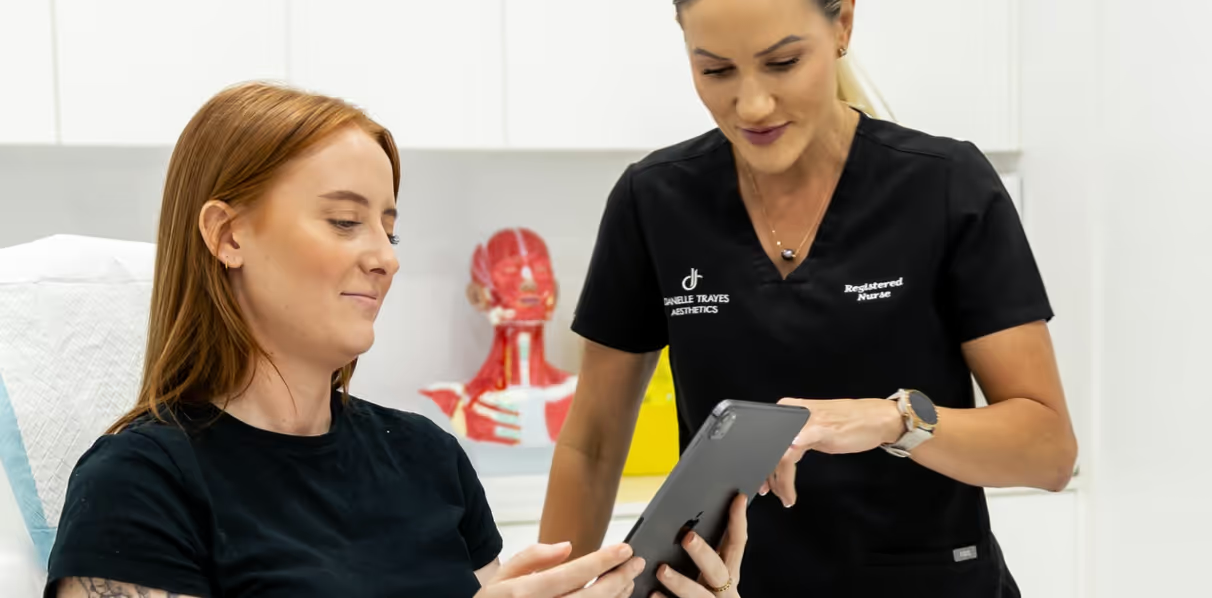
Consistency is key to creating a loyal patient base and achieving positive clinical outcomes. Suzie introduced the concept of the "prescriptive cycle," a systematic approach to treatment planning that ensures every patient receives consistent care.
The Prescriptive Cycle Breakdown
- Seeding the Need: During consultations, it's important to mention potential treatments subtly. "Seeding the need is about saying... well if we are treating around that crow's feet area... I think you should start using a vitamin B3 or a vitamin A eye cream as well," Suzie explained
- Comprehensive Assessment: Suzie's method of assessing a patient involves the 6-4-2 rule: six areas of wrinkles, four areas of volume, and two areas of skin. This thorough assessment ensures no aspect of the patient's skin condition is overlooked. "If you see it, say it.”
- Treatment Phase: "Full prescriptions every client, every time" is Suzie's mantra. She believes in providing detailed treatment and skincare plans. "Our duty of care is to provide results safely... but also to give our expert advice.”
- Five-Minute Reviews: Regular reviews can help maintain the efficacy of treatment plans. Suzie highlighted the importance of accountability, stating, “See patients every three months... to assess the treatment and skincare ensuring that I'm accountable for those results."
- Review and Replan: At the end of the three months, conduct a thorough review and create a new treatment plan
To achieve this approach, certain tools and processes are important to consider:
- Standard Operating Procedures (SOPs): Detailed guidelines for every treatment ensuring every clinician performs procedures uniformly
- Clinical Pathways: Specific treatment and skincare prescriptions for various conditions, aligned with a three-month treatment plan
- Treatment and Skincare Plans: Personalised plans detailing the treatments and products for each patient
Overcoming Common Challenges
One of the toughest challenges in this industry is handling patient objections, whether about time, cost, or skepticism. Suzie provided a simple yet effective strategy: the open-ended question. When a patient voices an objection, respond with empathy and an open-ended question, such as, "I understand. What can you do?" which opens the door for patients to express their limitations and find workable solutions.
Tactics to Increase Conversion
- Stress Accountability: Emphasise that you will be assessing results and are accountable for their success
- Risk Reversal: Ensure patients know they can come back if they are not 100% happy with the treatment or skincare products
- Utilise "I" Statements: Position yourself as the expert by using statements like, "I need you to use this product for the best results."
Metrics such as consultation conversion rates, average appointment values, and patient retention rates should be monitored to gauge success. Clinics that have adopted these strategies have seen significant improvements in these areas, demonstrating the efficacy of a well-implemented consultation and treatment planning process.
By mastering the art of consultation, implementing systematic processes, and effectively managing objections, clinics can improve patient outcomes and drive business success. As Suzie’ insights revealed, it all starts with a conversation - a conversation that can turn a one-time visitor into a lifelong patient.