News
A Nurse’s guide to opening a med spa
If you’re a nurse looking for a more independent and flexible way to build your career, opening a med spa is a great opportunity. It’s an attainable goal for anyone with ambition and a willingness to learn.
Many clinicians in the United States are choosing this path because it allows them to use their clinical skills in a more rewarding environment with more time to focus on patient care. It also gives them a business they can grow in a way that reflects their values and long-term goals.
In this article, we’ll walk through state requirements, business structures, clinical partnerships, and practical steps any nurse can follow to open their own med spa.
Please note: This is general information only. Always check your state rules and speak with a healthcare attorney.
Can a nurse open a med spa?
Yes, nurses can open a med spa, and many do. The exact pathway simply depends on your license and the rules in your state.
Depending on your state, some NPs can open independently, while others require you to have a physician partner. For most states, RNs need a supervising physician, medical director, or NP in place before they can operate.
LPNs and LVNs generally can’t open a med spa on their own, but in some states, they can work as injectors under supervision.
To understand what laws apply to you, we recommend checking your State Board of Nursing, State Medical Board, and resources like the American Med Spa Association.
At a glance, here is what RNs, NPs, and LPN / LVNs can do:
RN: Can open a med spa? Yes, but only with a physician partner. You’ll need a medical director partner and a compliant business structure.
NP: Can open a med spa? Yes, sometimes independently. This depends on the state’s full practice authority laws.
LPN or LVN: Can open a med spa? No, they cannot open one alone. You may still be able to work as an injector under supervision in some states.
**Please keep in mind that this information might differ based on the state you're operating in.
How to open a med spa as a nurse
Opening your own spa follows a well-established path, and understanding each step will help you set up safely and within your state’s rules. Here are some of the key steps.
- Check your state rules: Check what your license allows in your state and whether you need a supervising physician.
- Choose your business structure: Choose the setup that fits your license, either an NP independent practice or the MSO model.
- Find a medical director: Find a medical director if your state requires one, and make sure they will have time to support you.
- Get licenses and insurance: Get your business license, malpractice insurance, and any local permits you need.
- Build your service menu: Decide which treatments you’ll offer based on what you’re trained on and are comfortable doing.
- Plan your startup costs and funding: Work out your startup costs, including any equipment, fit-out, and training.
- Build your brand: Set up your brand online and start building interest from potential clients.
- Legal setup, entity formation, contracts: $3k to $8k
- Insurance (year 1 cost): $1.2k to $5k
- EHR and med spa software: $500 to $2k
- Build-out, furnishings, fixtures: $15k to $60k
- Devices and equipment (leased or purchased): $50k to $150k+
- Training and certifications: $3k to $5k
- Initial supplies and inventory: $2k to $5k
- Marketing, branding, website launch: $1k to $7k
- Medical waste/sharps disposal setup: $500 to $1.5k
- Licenses, permits, and inspection fees: $500 to $3k (varies by state)
- GFE/medical oversight costs: $500 to $1,000+ per month ($475 per month at Fresh Clinics)
- Emergency medications and compliance supplies: $500 to $1.5k
- Professional services (CPA, bookkeeping): $1k to $3k annually
Step 1: Check your state rules
Your state’s rules decide what your spa can look like, so this is always the best place to start. It is easy to get excited about your new path and jump ahead to branding, equipment, or treatment ideas, but the practicality of all this is determined by your license type and state laws. Making sure you understand these early can save you a lot of time and avoid any nasty surprises down the road.
The two places to get the most accurate guidance are:
These two boards outline who can provide aesthetic treatments, what supervision is needed, and whether nurses can own a medical business directly.
When you are reading the rules, you will see terms like ‘scope of practice’ and ‘supervision’. The scope of practice simply means what your license legally allows you to do in your state, such as the treatments you can perform. Supervision refers to how closely a physician or NP must be involved in your clinical work. In some states, this might be direct oversight; in others, it might be collaborative support or reviews.
Once you know your state’s rules, the rest of the setup process becomes much clearer.
Step 2: Choose your legal business structure
This step is about choosing the legal pathway that fits your license and your state’s rules. Here are the two options available in most states.
Option 1: NP independent practice
If your state allows NPs the right to practice independently, you can own the clinical side of the business yourself, usually through a PLLC.
You might still choose to work with a collaborating physician or a medical director, but you own the med spa.
Option 2: The MSO model
If you are an RN or you are in a state that restricts medical ownership, the MSO (Management Services Organization) model is the most common path.
It means that you own the LLC and handle everything non-medical, while a physician owns a separate Professional Corporation that handles the medical side. To keep both parties safe, your MSO and the physician’s company sign a management agreement. This setup allows your spa to be compliant while still giving you full control over the brand and business operations.
Step 3: Find a medical director (if needed)
Most states require a medical director to oversee all medical treatments. Their role will be to provide clinical oversight, complete Good Faith Exams, review treatment plans, and be available if anything unexpected comes up. Their level of involvement varies by state, but the goal is always to keep your business and patients safe.
If your state requires the MSO model, the setup is slightly different. Instead of hiring a medical director as an employee, you partner with a physician.
Fresh Clinics can connect you with a physician/medical director who has experience in aesthetic medicine.
Step 4: Get licenses and insurance
Once you know your state rules and the business structure you can use, you can start getting your licenses and insurance in place. This step allows you to go ahead with your work, confident that you are compliant and protected.
Common licenses and insurance that a new med spa needs to get are:
- A state or city business license
- Professional liability (or malpractice) insurance
- Normal business insurance
- An EIN for your business
- Any other required state or local permits
We’ve already mentioned it, but it’s important to highlight that you must have malpractice insurance. It is often required by medical directors, and it will cover you if something goes wrong during a medical procedure.
If you aren’t sure where to get it from, many nurses start with providers who specialize in insuring med spas.
It is also worth checking if there are any local permits you need. For example, in Texas, you need a Laser Hair Removal Facility License if you plan to offer laser services.
Step 5: Build your service menu
Your service menu is the services your spa offers. The most obvious place to start your menu is by offering treatments you are trained and licensed to provide.
Many new spas begin with popular options that they know will get people in the door, like anti-wrinkle treatments or injections, dermal fillers, microneedling, chemical peels, or laser hair removal. As you build your patient list, you can upskill in more advanced services.
If you want to learn the basics, polish up your skills, or start offering more advanced treatments, Fresh Clinics provides practical, clinician-led training.
You can view all our training courses here.
Step 6: Plan your startup costs and funding
Once you know your state rules and business model, you’ll need to budget for startup costs and work out how you’ll fund it.
Below are three common funding options:
- Personal savings: If you have some cash set aside, this is the best option and gives you a lot of freedom without taking on debt.
- SBA loans (or other small-business loans): These let you spread out the cost over time. Sometimes these offer better terms for healthcare-adjacent businesses. Many spas use SBA loans to get started.
- Physician partner: If you’re working under an MSO model, a physician partner may be willing to invest or share the costs to get the business started.
Here is a rough estimate of how much you should expect to spend when opening your own aesthetic medicine business.
CategoryTypical rangeLegal setup, entity formation, contracts$3k to $8kInsurance (year 1 cost)$1.2k to $5kEHR and med spa software$500 to $2kBuild-out, furnishings, fixtures$15k to $60kDevices and equipment (leased or purchased)$50k to $150k+Training and certifications$3k to $5kInitial supplies and inventory$2k to $5kMarketing, branding, website launch$1k to $7kMedical waste/sharps disposal setup$500 to $1.5kLicenses, permits, and inspection fees$500 to $3k (varies by state)GFE/medical oversight costs$500 to $1,000+ per month ($475 per month at Fresh Clinics)Emergency medications and compliance supplies$500 to $1.5kProfessional services (CPA, bookkeeping)$1k to $3k annually
**Please note: all costs are approximate and provided as information only.
Step 7: Build your brand
The simplest way to start getting patients as a new med spa is by making yourself easy to find online.
A great first step is setting up your Google Business Profile with your location, hours, services, and some nice photos. It’s easy to set up and completely free. Once it’s live, your med spa will appear when people search for services like yours in their area or browse Google Maps.
The next step is to create a website. For a med spa, the gold standard is still having a website. While having only social media might work for a beauty salon, for a medical spa, it appears more legitimate to have a full site.
You can build your own website with tools like Squarespace or Wix, or hire an agency to do it for you. Once it’s up, you can attract more patients through posting educational content or the results you’ve achieved.
Social media is also an effective way to get your work in front of potential patients. The most popular platforms for this are Instagram and TikTok. Short explanations of treatments or showing what patients can expect when they visit your spa usually do well.
While it can be fun to share your work online, you always need to keep compliance in mind. For example, you can describe treatments, but you cannot advertise prescription-only products by name.
Your easy pre-launch checklist
It can feel exciting (and a little overwhelming) to start your own spa. To help keep track of all the things you need to do before opening your doors, we’ve made a simple checklist you can use.
- Make sure your nursing license is active and up to date.
- Do research into your state rules or speak with a lawyer, so you know exactly what you can legally offer and how to structure your business.
- Find a medical director if your state requires one.
- Set up your business structure.
- Register your company.
- Buy your insurance policy, especially malpractice insurance.
- Finalize your legal documents and any required contracts.
- Build your treatment menu, making sure you have the training and equipment you need.
- Create your branding and get your website ready to go.
- Set up your scheduling, payments, and patient record systems.
- Prepare your space so it’s ready for patients.
- Do a soft launch and offer discounted procedures to get your first few happy patients and reviews.
How Fresh Clinics can help
If you’re ready to start building a spa of your own but aren’t an expert in local laws or business, don’t worry. Fresh Clinics is here to guide you through every stage of bringing your business to life.
We can connect you with a medical director, help you stay compliant, support your team with hands-on training, and give you access to software that makes running your spa a breeze.
You’ll also get access to a community of nurses who are on the same path as you. When things get confusing or overwhelming, it can be a lifesaver to be able to ask questions in the community or just bounce ideas around.
You’ll also have access to the Fresh Clinics team, who have helped more than 2,000 spas start up – and we can do the same for you.
If you’re ready to turn your med spa dreams into a reality, reach out to our expert team to get started.
FAQs
Can an RN perform Botox injections without a doctor?
In most states, no. Typically, RNs will need a physician or NP oversight for injectables.
A few states (for example, Louisiana) have stricter rules where RNs cannot do any injections without direct physician involvement.
To make sure you’re following the rules in your state, check your local State Board of Nursing for the most accurate, up-to-date information.
Do I need to be an NP to own a med spa?
Not necessarily. Some states let NPs own the clinical side of a med spa, while others restrict ownership to physicians only.
If you are an RN in a state with tighter rules, you can usually still operate through the MSO model. This means you run the business side while a physician runs the medical entity.
How long does it take to open a med spa?
It usually takes two to six months, depending on your state's rules, the treatments you plan to offer, and whether you are leasing equipment or building out a space. When you have your training, medical oversight, and business structure in place early, you can often open sooner.
What is a Good Faith Exam?
A Good Faith Exam (GFE) is a required medical assessment performed before certain aesthetic treatments. It makes sure that the patient is safe to treat and meets state regulations. A GFE must be performed by a licensed medical professional, usually a physician or nurse practitioner, depending on your state’s rules.
You can learn more about Good Faith Exams here.
Do I need a medical director?
Most nurses need a medical director to run their own med spa. In many states, any medical aesthetic treatment needs clinical oversight from a physician or an NP with the right authority.
A few states are more flexible, but RNs almost always need a medical director or physician partner to stay compliant.
The 7 best med spa software platforms in the US
Owning a med spa is one of the most rewarding things you can do. You can build something that’s yours, set the standard for patient care, and run it your way.
The difference between a clinic that runs smoothly and one that runs you comes down to systems. In a regulated field like aesthetics, the right software is what keeps compliance, admin, and patient care from eating your week.
Running your own med spa is demanding enough without fighting your tools. To help you choose well, we reviewed 15 of the most popular med spa management software platforms in the US.
We ranked each option based on what matters most to med spa owners, including:
- Compliance
- Clinical workflows
- Core business operations
- Patient experience
- Automation and integrations
- Usability
One note on transparency: Fresh Clinics is on this list. We scored every platform against the same criteria using publicly available information.
Key takeaways
- Different platforms are designed to support different med spa models
- The best med spa software platforms now combine multiple functions under one roof
- Telehealth, automation, reporting, and multi-location support become more important as clinics grow
The top 7 med spa software platforms at a glance
Here are the seven that rose to the top. Each is a strong platform in its own right; the best one for you depends on how your clinic runs today and where you want to take it.
Med spa software comparison
- Fresh Clinics: best suited for growing med spas offering a wide range of services. Standout feature: built around medical oversight and has strong med spa workflows.
- AestheticsPro: best suited for compliance-focused clinics. Standout feature: uses a compliance-focused structure.
- Portrait: best suited for med spas that want to offer multiple payment options. Standout feature: includes integrated payments and business tools.
- Aesthetic Record: best suited for clinics focused on injectables. Standout feature: offers detailed treatment and photo tracking.
- PatientNow: best suited for larger, multi-site clinics. Standout feature: offers a balance of clinical and business features.
- OptiMantra: best suited for wellness and aesthetic clinics. Standout feature: supports both wellness and medical services.
- Boulevard: best suited for high-end med spas. Standout feature: focuses on a premium booking and front-desk experience.
1. Fresh Clinics
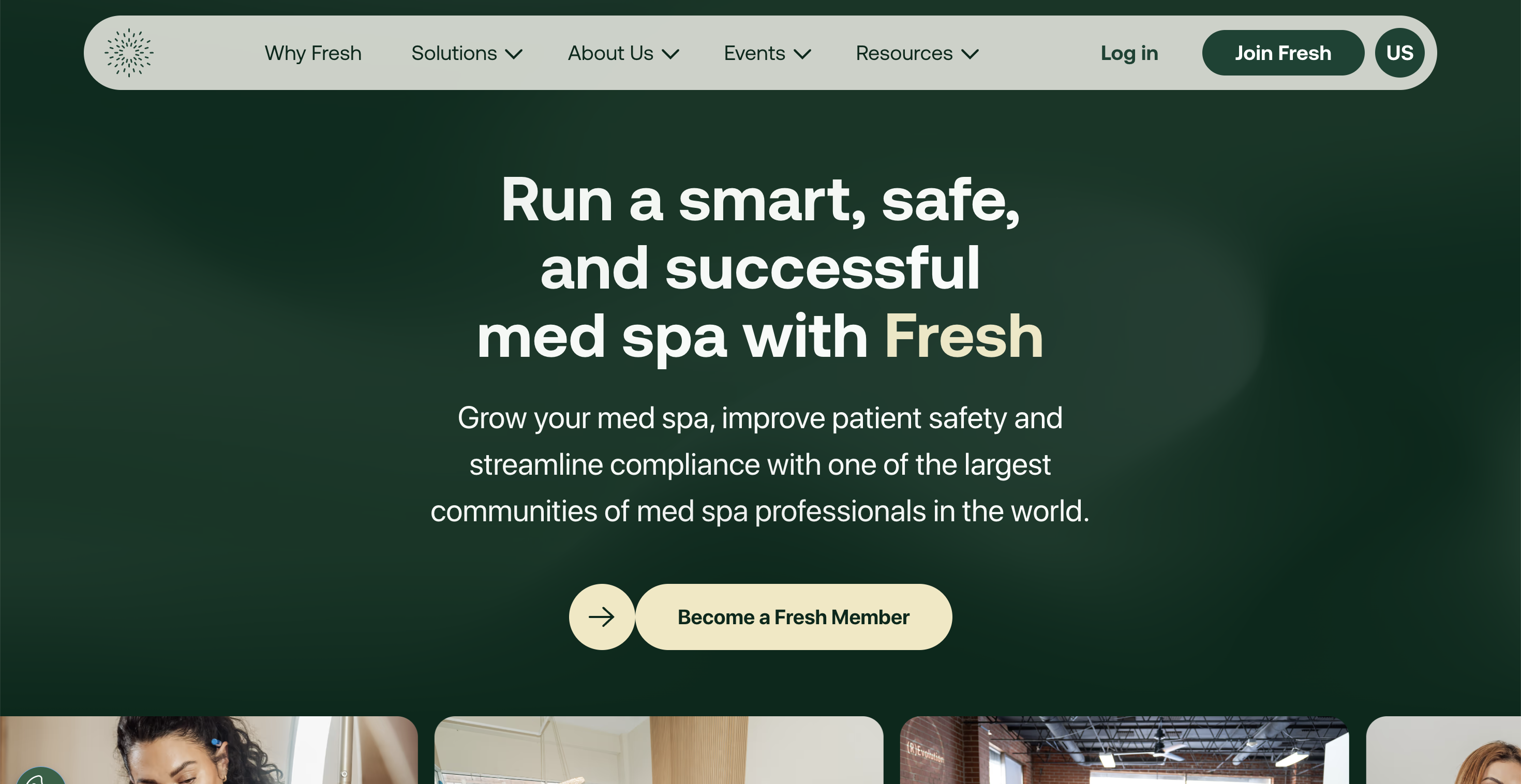
Fresh Clinics tops our list because it pulls the whole clinic together: clinical compliance, medical oversight, telehealth, inventory management, and operational workflows in one connected platform, built specifically for US med spas.
The platform was purpose-built by MDs to give clinics the full infrastructure they need to run both the operational and medical sides of the business, without dropping medical-grade standards. Alongside an EMR designed to be HIPAA compliant, you get compliance tools like digital consent forms and automated aftercare.
Two things set it apart. Instant telehealth support for Good Faith Exams and treatment authorizations, and a dedicated complication management system that connects your team to a medical director the moment something looks off.
There’s more beyond the clinical side, too: a community of med spa owners who get it, regular events, and built-in medical ordering through a connected platform.
Source: Fresh Clinics
Why do clinics choose Fresh Clinics?
- Software that’s purpose-built by MDs for med spa workflows
- Instant access to doctors for Good Faith Exams and treatment authorizations
- Designed to be HIPAA compliant, with integrated compliance tools and digital consent forms
- Mobile-friendly options designed for busy clinic teams
2. AestheticsPro
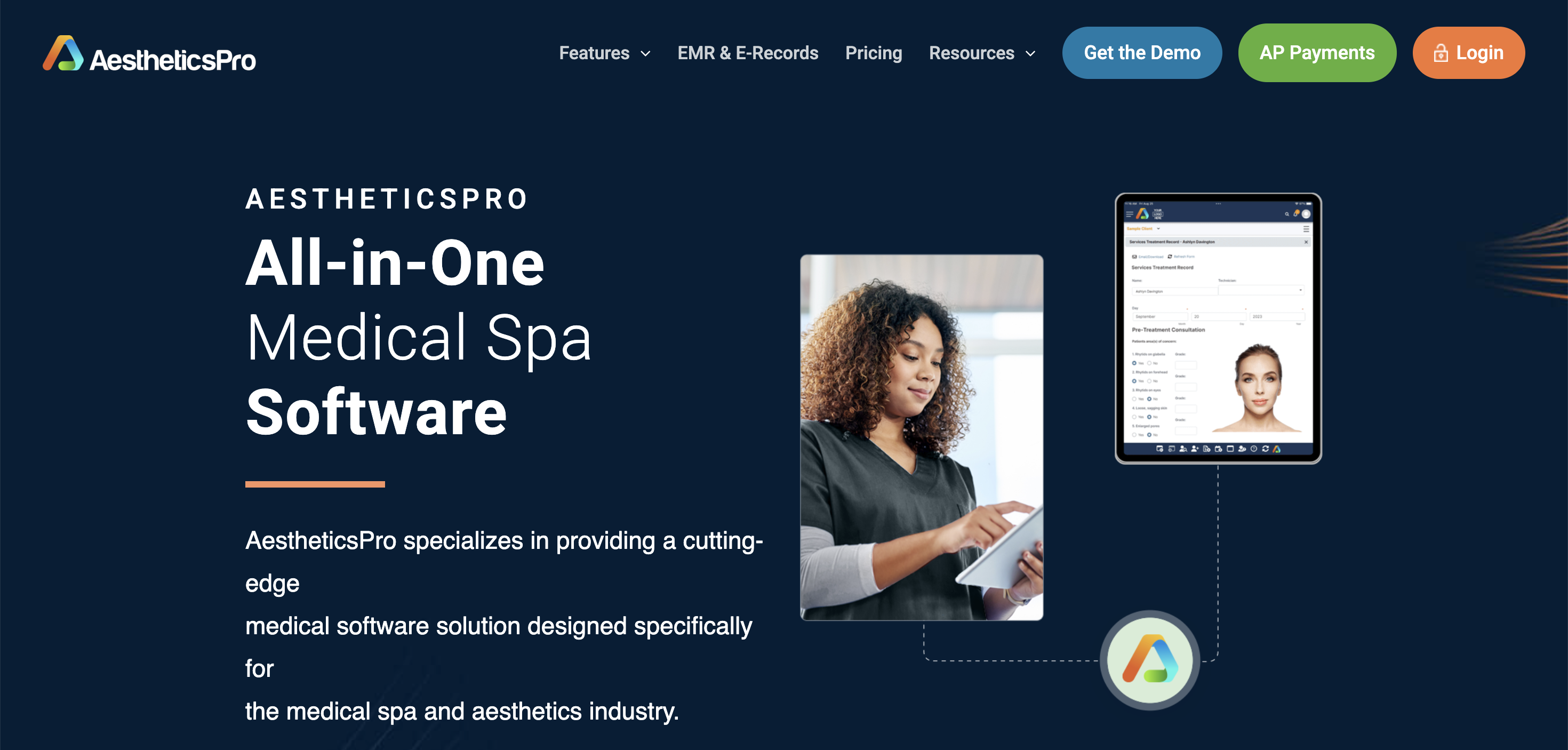
AestheticsPro ranks highly on the strength of its compliance-focused structure and its detailed clinical documentation.
It brings scheduling, payments, online booking, marketing, loyalty programs, telemedicine, and e-prescribing into one system, then adds treatment photo tracking, digital forms, and reporting to keep day-to-day operations tidy.
Its real strength is structure. If your clinic lives or dies by clean records, AestheticsPro keeps patient files, virtual consultations, and daily admin easy to stay on top of, all in one place.
Source: AestheticsPro
Why do clinics choose AestheticsPro?
- Strong compliance-focused workflows
- Integrated telemedicine and e-prescribing
- Detailed treatment photo tracking for before and after results
- Built-in CRM, marketing, and loyalty tools
3. Portrait
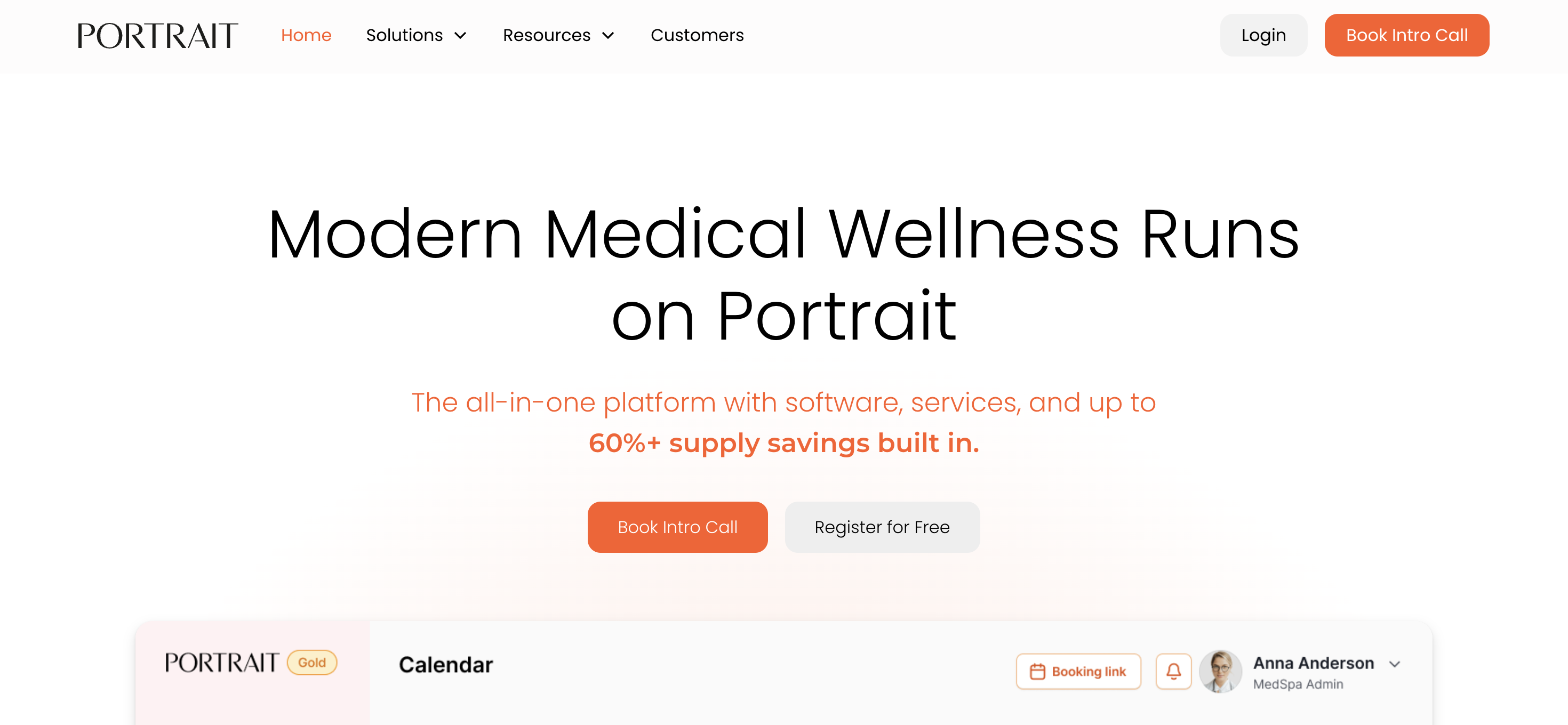
Portrait earns its spot by behaving less like software and more like a full business platform for med spas.
You get the essentials, EHR tools, scheduling, payments, CRM, inventory management, marketing tools, and operational support, plus a commercial edge: like Fresh Clinics, Portrait offers national pricing partnerships that help clinics cut costs on products and equipment.
Source: Portrait
Why do clinics choose Portrait?
- Software built for both wellness and med spa clinics
- Medical oversight and compliance support included
- Integrated scheduling, CRM, payments, and inventory management tools
- Access to national pricing and supply discounts
4. Aesthetic Record
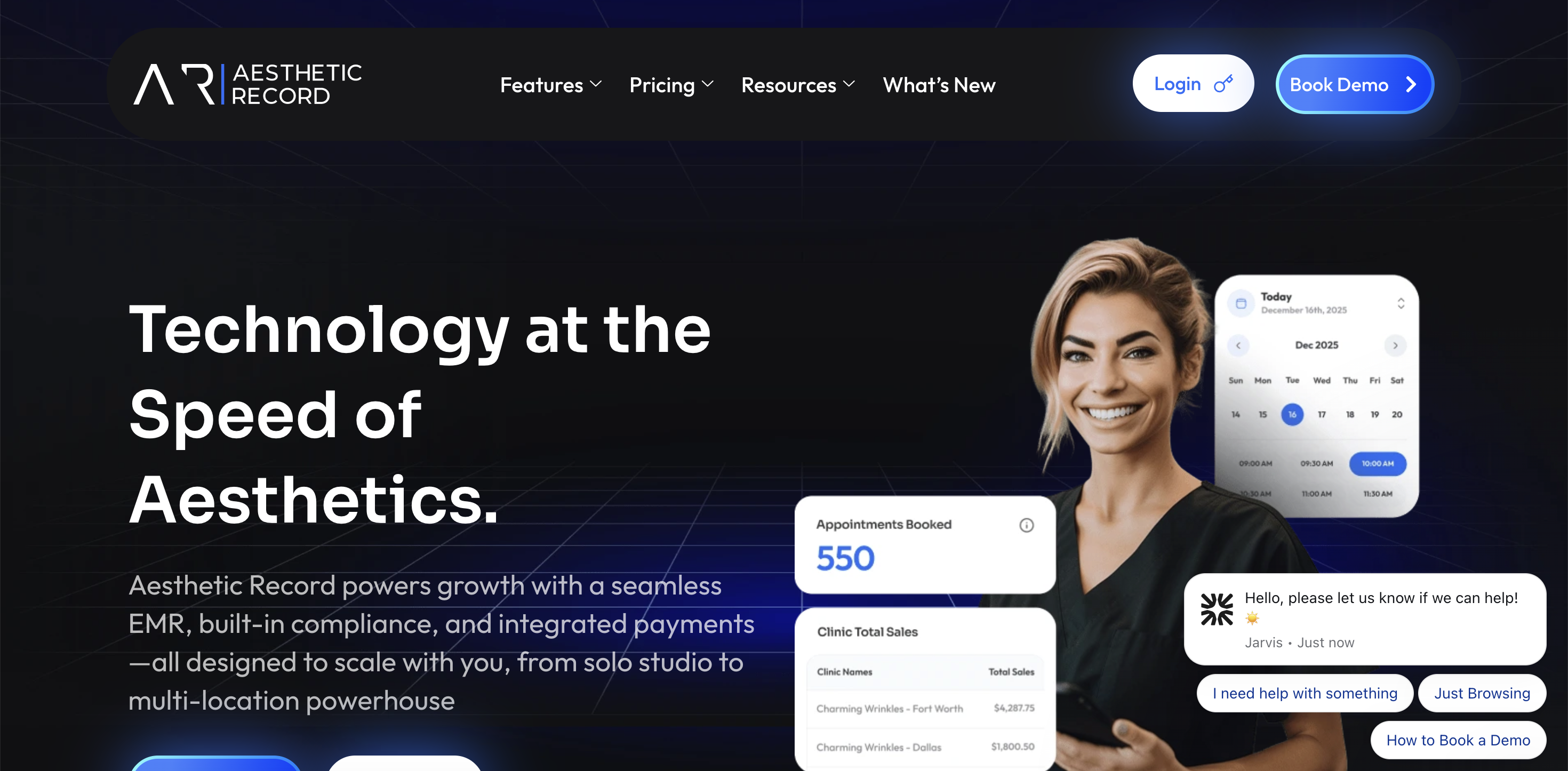
Aesthetic Record is built for clinics that want serious clinical documentation and treatment tracking. It leans hard into the clinical side of aesthetic medicine with detailed charting, then rounds things out with memberships, financing, messaging, and online booking.
Visual documentation is where it shines. That focus on patient treatment history makes it a natural fit for clinics offering injectables and ongoing treatment plans.
It’s also designed to support clinics as they grow, with options for multi-location practices and larger enterprise businesses.
Source: Aesthetic Record
5. PatientNow
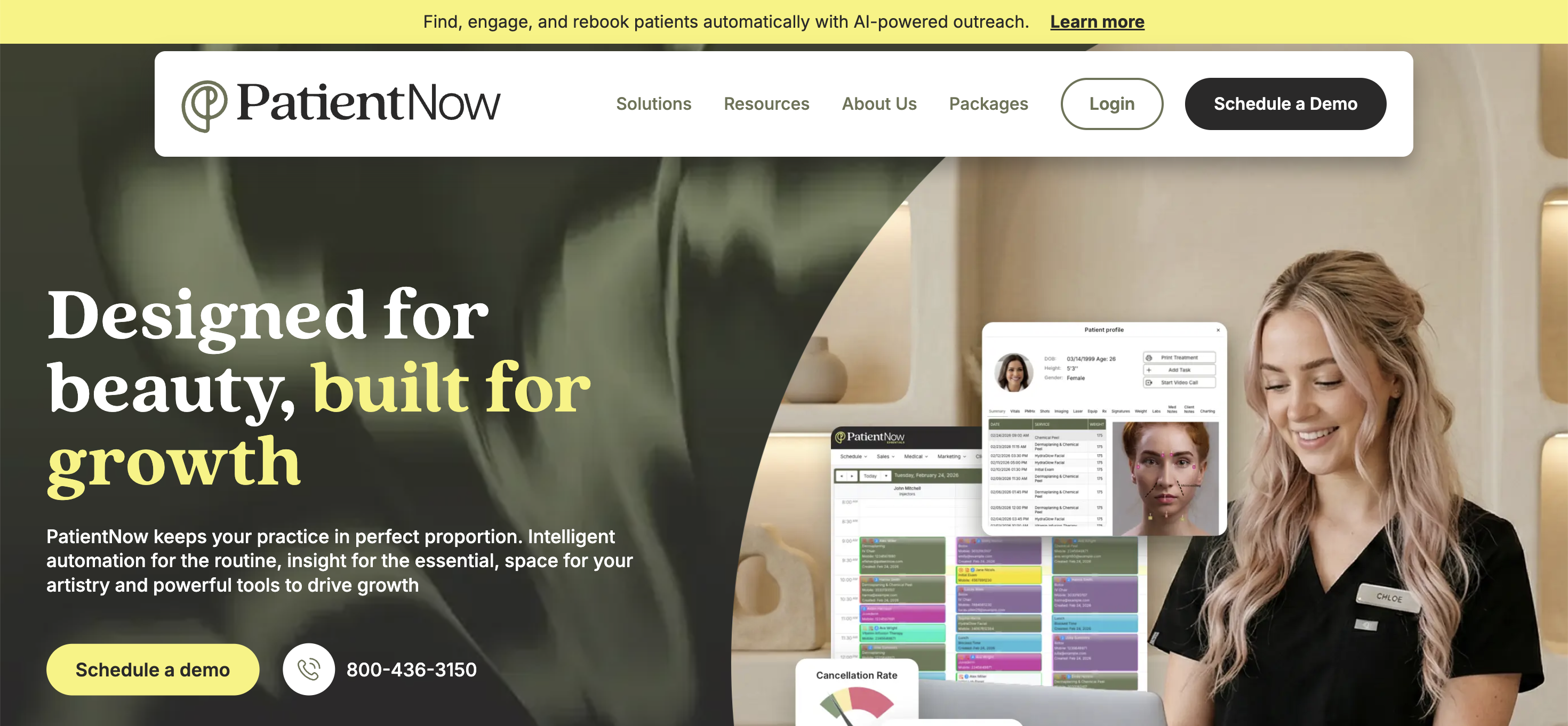
PatientNow puts patient communication and marketing automation front and center, sitting alongside the practice management software you already run.
It integrates with Recura, an AI-powered engagement system that answers calls, texts, and leads on its own. It also automates bookings, rescheduling, cancellations, deposits, and follow-ups, which takes real pressure off your front desk.
It wasn’t built for med spas alone, either. Weight loss clinics, IV therapy businesses, and wellness clinics all run on it, which makes it a flexible pick for multi-service practices.
Source: PatientNow
6. OptiMantra
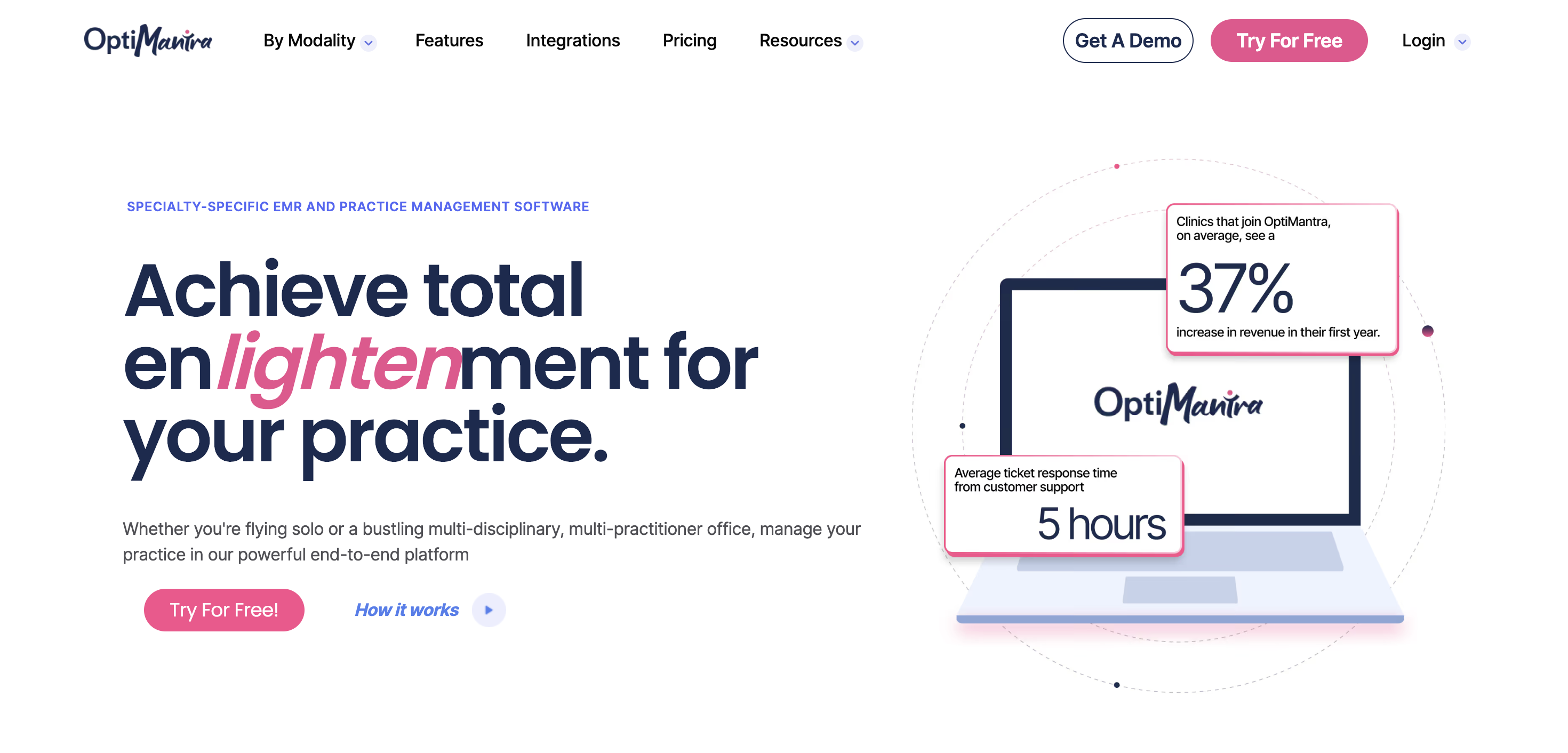
OptiMantra suits clinics that blend aesthetic and general wellness services and want to shape the platform around themselves.
Customization is the draw. Charting, intake forms, questionnaires, reminders, and workflows all bend to how your clinic actually operates.
It also covers telehealth, insurance billing, diagnostics integrations, inventory management, online invoicing, and patient messaging, which is a lot of ground for a clinic running several service lines.
Source: OptiMantra
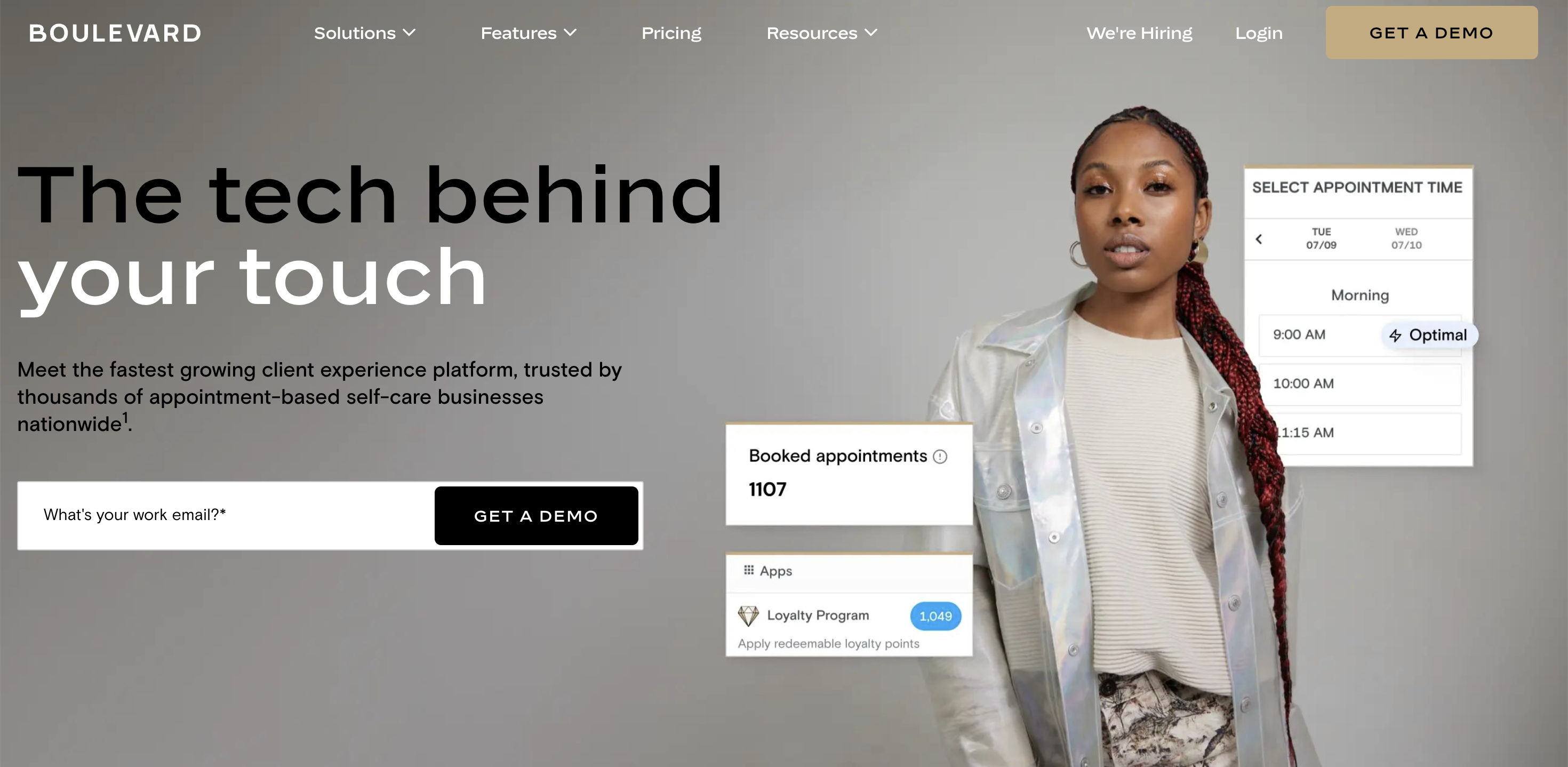
7. Boulevard
Boulevard is the pick for med spas chasing a premium feel and a slick front desk.
Its booking experience is polished and modern. Self-booking, checkout, loyalty programs, memberships, messaging, and scheduling are all built to create a smoother experience for both clinics and patients.
There’s ePrescribe, forms, reporting, marketing, and integrations under the hood, but the client-facing polish is the real draw. That makes Boulevard a strong fit for clinics built on retention, premium service, and operational simplicity.
Source: Boulevard
What matters most to med spa owners?
The best med spa software isn’t the one with the longest feature list. From our conversations with med spa owners, these are the things that actually change how their day runs.
1. Compliance and medical oversight
For a lot of med spas, compliance and access to medical oversight are the deciding factors. Some platforms stop at scheduling and payments; others build in Good Faith Exams, treatment documentation, consent forms, e-prescribing, and telehealth workflows.
In a regulated field, that gap matters. Ask each vendor directly whether their platform supports compliant workflows, and how often those workflows are updated.
2. Ease of use for staff
A beautiful platform is useless if your team dreads opening it. Test the software yourself, and watch how easily staff handle the everyday stuff: bookings, patient records, payments.
3. Patient experience
Think about how the whole visit feels, inside the treatment room and well beyond it. Online bookings, automated reminders, financing, memberships, loyalty programs, and two-way messaging all lighten your admin load and make things smoother for patients.
4. Treatment and charting workflows
Look for platforms built specifically for aesthetic medicine. They handle medical services, treatment tracking, before-and-after photos, and detailed charting far better, which pays off for clinics running ongoing treatment plans.
5. Business growth tools
What carries a solo provider often buckles under a larger clinic team. As you grow, reporting, inventory management, marketing automation, integrations, and multi-location support all start to matter. Choose a platform that can keep pace with where you’re headed.
6. Flexibility across services
Not every clinic is medical-only. Some platforms are better suited to lighter wellness services, so check what the software is actually built to support and make sure it matches your plans.
Signs it’s time to upgrade your med spa software
The right platform makes running your clinic feel natural. If your current setup is fighting you and holding back your growth, it’s worth a hard look.
Here are the other signs that it’s time to invest in a better system:
- Your compliance still feels risky: If your staff is relying on separate spreadsheets or workarounds, your current system may be introducing a lot of risk for your business.
- Workflows feel sluggish: No mobile app, disconnected tools, or difficult tracking processes can slow treatments down at best and lead to mistakes at worst.
- Scheduling and payments are challenging: This should be one of the easiest parts of a med spa to run, so if you're having frequent booking issues and payment delays, it’s time to find a better system.
- Marketing tools are disconnected: You can save a lot of time by having all of your staff work from one platform. Switch to an all-in-one platform to get the most out of your marketing.
- Integrations are limited: If your software struggles to connect with the other tools you rely on, this will become increasingly challenging as the business grows.
- Training new staff takes too long: A platform with a steep learning curve can lead to inconsistent workflows, avoidable mistakes, and slower onboarding.
- Your clinic is outgrowing the platform: Some systems work well for solo providers but struggle to support multi-location clinics or larger teams.
- Reporting lacks visibility: You need to know how profitable your clinic is. If it’s difficult to track revenue or performance trends clearly, your decision-making will be less accurate than if you had all the relevant information.
Finding the best fit for your med spa
The software you choose shapes how your clinic runs and how confidently your team handles compliance. Every platform here has real strengths; the right fit comes down to the treatments you offer and where you want to be in a few years.
If you want a more connected approach to compliance, medical oversight, telehealth, inventory management, and clinic operations, Fresh Clinics is purpose-built for modern aesthetic medicine businesses.
Join Fresh Clinics to get the software plus medical oversight, training resources, Fresh Shop discounts, and a connected community of med spa professionals.
FAQs
What is the best med spa booking software?
Fresh Clinics is one of the strongest options for med spas that want more than a booking tool. Alongside scheduling, you get compliance workflows, medical oversight, telehealth, inventory management, and treatment documentation in one system.
How do med spas store patient information?
Most med spas store patient information in EMR software designed to be HIPAA compliant. Fresh Clinics includes an EMR built specifically for med spa medicine, so clinics can securely manage things like patient records and consent forms.
What med spa software is HIPAA compliant?
Fresh Clinics offers a platform designed to be HIPAA compliant, built for US med spas. It includes secure patient records, telehealth workflows, digital consent forms, treatment documentation, and compliance-focused clinical tools.

How to work out your med spa's margins and break-even point
Fresh Clinics' State of Medical Aesthetics Report 2025 found that 63% of med spa owners are not confident understanding their financial performance. If you trained clinically and picked up the business side as you went, below is a guide for where to start with understanding the numbers behind your business. Set aside twenty minutes and have last month's figures where you can see them:
Step 1. Start with last month
Write down everything the med spa spent last month, including rent, product, consumables, electricity bills, then write down what came in from patients. The gap between those two is your profit for the month, and that's a profit and loss statement. Megs Reid, our Head of Partnerships, describes P&Ls a snapshot of how the business is performing.
Step 2. Pick one treatment, not your whole menu
Profit for the whole med spa tells you whether you made money for the month, but not which treatments were the most successful. Margin per treatment answers that, so choose a treatment you perform often and write down what a patient pays for it and what it costs you to deliver.
Step 3. Work out the margin
Subtract the cost from the price, divide what's left by the price, then multiply by 100. That's your gross margin on that treatment (Gross margin % = (Price − Cost) ÷ Price × 100). Then run it on a second treatment. Two treatments priced similarly can leave very different margins, so start with the one that fills your diary and the one you assume is most profitable.
Step 4. Check what you counted as cost
Most cost columns are missing something. Add freight, gloves and anything else consumed in the room. Device and peel treatments need one extra line, because they carry little product cost but a lot of chair time, so put a value on the time and add it in. Don't chase precision here, because within a couple of percent is close enough to make a decision.
Step 5. Work out what you need to bill each week
Add up your fixed costs for the year, meaning the commitments that don't move month to month, like rent, insurance, electricity and wages. Divide that annual figure by 52, and you have what the med spa costs every week before it earns anything. Now divide that weekly figure by your gross margin from step 3. The result is the revenue you need to bill each week to break even, so compare it against what you billed last week.
Step 6. If a margin looks lower than you expected
You have three levers before price, so look at what you're buying, who you're buying it from, and whether a larger order gets you a better rate. Weigh a bigger order against your cash flow before you place it, and check you can still cover rent and wages that month.
Step 7. Put it in the diary
Book an hour or two a month and block it at the start of the week, before the diary fills. Megs treats that time as working on the business rather than in it. Review your prices on a slower cycle, twice a year. Patients absorb small regular adjustments more easily than one large correction, so put the question in your calendar rather than waiting for a margin to slip.
What changes once you've done it a few times
On the first episode of Fresh Pod, Megs compares a set of business numbers to a blood test. You get the results, one is fine and another is low, and the low one tells you what to change. Listen to the full episode here.
Nationwide: the FDA's GLP-1 telehealth crackdown and the prescriber-network gap
Key facts:
- The FDA issued 30 warning letters to telehealth companies over compounded GLP-1 marketing.
- One named company, MEDVi, was cited in a February 20, 2026 letter.
- Many platforms don't prescribe themselves. Affiliated medical groups do, which can create accountability gaps.
- Intake-form-only evaluations may not meet state prescribing standards.
What did the FDA flag?
The FDA issued 30 warning letters to telehealth companies marketing compounded GLP-1 drugs with claims it called false or misleading. In a February 20, 2026 letter to MEDVi, the FDA cited claims like "same active ingredient as Wegovy and Ozempic," which are misleading because compounded drugs are not FDA-approved. See the FDA warning letter.
What is the prescriber-network issue?
A March 2026 analysis found that many of these platforms don't actually prescribe. They rely on clinicians in affiliated medical groups to evaluate patients and write prescriptions. That split between the marketing platform and the prescribing group can leave gaps in who's accountable for patient evaluation, prescribing, and follow-up. Asynchronous, intake-form-only evaluations may not meet state requirements for prescribing injectables.
What it means for your med spa
If you work with any telehealth or prescribing partner, get clear on who owns each step. Vet partners for compliance with state prescribing laws and scope of practice, make sure evaluations meet your state's Good Faith Exam standard, and confirm your marketing matches how care is actually delivered.
FAQs
Are intake-form-only evaluations enough to prescribe GLP-1s?
Often not. Many states require a real evaluation that an intake form alone may not satisfy.
Why does the platform-versus-prescriber split matter?
It can blur accountability for evaluation, prescribing, and follow-up, which is exactly where enforcement looks.
Fresh Clinics helps med spa owners vet partners and meet Good Faith Exam standards. Learn more about Fresh Clinics membership.
Nationwide: Amazon's One Medical GLP-1 program and what it signals for med spas
Key facts:
- On April 21, 2026, Amazon launched a GLP-1 Management Program through One Medical, nationwide.
- It bundles screening, provider consults, prescribing, follow-up, and pharmacy fulfillment.
- On-demand telehealth handles renewals only, not new prescriptions.
- This is a commercial launch, not a regulatory action.
What did Amazon launch?
On April 21, 2026, Amazon introduced a GLP-1 Management Program through its One Medical platform, available nationwide. It runs a single care pathway: pre-visit screening, a structured consultation with a licensed provider, prescribing, follow-up visits, and clinical monitoring. Prescriptions can be filled at the patient's pharmacy of choice. See Amazon's announcement.
Is this a regulation?
No. It's a commercial program, not a government action. But it matters because it sets a market benchmark for what doing GLP-1 properly looks like: provider-led evaluation, real follow-up, and documentation, with on-demand telehealth limited to renewals rather than new prescribing.
What it means for your med spa
If you offer GLP-1 services, this is the bar patients will start comparing you to. Build a care pathway with genuine assessment, prescribing by a licensed provider, follow-up, and monitoring. Align provider involvement with your state's requirements, and document how prescriptions are issued and filled, especially when a third-party or integrated pharmacy is involved.
FAQs
Can patients get a new GLP-1 prescription through Amazon's on-demand telehealth?
No. That channel handles renewals only. New prescriptions go through the structured consultation.
Does this change any law for med spas?
No. It's a commercial program, but it signals the standard of care patients will expect.
Fresh Clinics helps med spa owners build compliant, well-documented GLP-1 care pathways. Learn more about Fresh Clinics membership.
Nationwide: the CMS-FDA RAPID device pathway, and why it likely won't touch your med spa
Key facts:
- On April 23, 2026, CMS and the FDA announced the RAPID coverage pathway.
- It aligns FDA authorization timing with Medicare coverage review for certain Breakthrough Devices.
- It applies only to eligible Class II and Class III devices for serious or life-threatening conditions.
- Elective cosmetic and aesthetic devices are not in scope.
What is RAPID?
On April 23, 2026, CMS and the FDA announced the RAPID (Regulatory Alignment for Predictable and Immediate Device) pathway. It coordinates the timing of FDA market authorization with Medicare's National Coverage Determination review, so eligible devices reach Medicare coverage faster. See the CMS announcement and the FDA announcement.
Does it apply to aesthetic devices?
Almost certainly not. RAPID applies only to certain FDA-designated Breakthrough Devices, which are for life-threatening or irreversibly debilitating conditions. The agencies did not identify elective cosmetic devices or routine med spa procedures as eligible. Energy-based systems, body contouring, and lasers stay under their existing FDA authorization pathways, such as 510(k), and state oversight.
What it means for your med spa
This one is mostly a good-to-know, not an action item. Still, it's a useful prompt to review how each of your device-based technologies is FDA-classified and authorized, and to make sure your marketing reflects the actual cleared indications. More detail is coming through a Federal Register notice and public comment.
FAQs
Will RAPID speed up coverage for my laser or body-contouring device?
No. Those are elective aesthetic devices and fall outside the Breakthrough Devices Program and RAPID.
What devices does RAPID cover?
Certain FDA-designated Breakthrough Devices for serious or life-threatening conditions.
Fresh Clinics helps med spa owners keep device marketing aligned with FDA-cleared indications. Learn more about Fresh Clinics membership.
Nationwide: 36 states have no med spa-specific rules, per the AMA
Key facts:
- In April 2026, the AMA reported that 36 states have no med spa-specific laws or regulations, citing a 2025 Dermatologic Surgery study.
- 44 states lacked patient-protection requirements specific to med spas.
- Only 12 states had any med spa-specific provisions.
- Roughly 70% of med spas operate without affiliation to a physician practice.
What did the AMA report?
On April 6, 2026, the American Medical Association highlighted a 2025 study in Dermatologic Surgery finding that 36 states have no identified laws or regulations specific to med spas, and 44 states lacked med spa-specific patient-protection requirements. Only 12 states had any med spa-specific provisions: Connecticut, Iowa, Illinois, Indiana, Massachusetts, New Mexico, Oklahoma, Rhode Island, Tennessee, Texas, Utah, and Wisconsin. See the AMA article.
If my state has no med spa rules, am I unregulated?
No, and this is the trap. In states without med spa-specific rules, oversight still comes through the general laws governing the practice of medicine, nursing, and facility operations. Regulators apply those. The AMA brief notes roughly 70% of med spas operate without affiliation to a physician practice, which is exactly the gap regulators are watching.
What it means for your med spa
Don't mistake no med spa statute for no rules. Check your supervision and delegation structure against your state's medical and nursing laws, confirm every clinical staff member is properly licensed for what they do, and keep documentation for patient evaluation, treatment planning, and consent. Enforcement sweeps are already happening, including a New York inspection of 223 med spas that cited 87 for violations.
FAQs
Which states have med spa-specific rules?
Per the study, twelve: Connecticut, Iowa, Illinois, Indiana, Massachusetts, New Mexico, Oklahoma, Rhode Island, Tennessee, Texas, Utah, and Wisconsin.
What governs med spas in the other states?
General laws on the practice of medicine, nursing, and facility operations.
Fresh Clinics helps med spa owners build a supervision structure that holds up under general medical and nursing law. Learn more about Fresh Clinics membership.
Nationwide: FDA removes 12 peptides from Category 2, but they're not cleared
Key facts:
- On April 22, 2026, the FDA removed 12 peptides from Category 2 of its 503A bulk drug substances list.
- The removal happened because nominators withdrew their nominations, not a new safety finding.
- Removal does not mean the peptides are eligible for compounding.
- Several go to Pharmacy Compounding Advisory Committee review, with meetings expected through February 2027.
What did the FDA do?
On April 22, 2026, the FDA removed 12 peptide substances from Category 2 of its 503A bulk drug substances list. The list includes BPC-157, LL-37 (Cathelicidin), Dihexa acetate, DSIP (Emideltide), Epitalon, injectable GHK-Cu, KPV, PEG-MGF, Melanotan II, MOTs-C, Semax, and TB-500. You can see the FDA 503A bulk drug substances list.
Does removal mean they're approved for compounding?
No, and this is the part that trips people up. The substances came off Category 2 because the parties who nominated them withdrew their nominations, not because the FDA decided they're safe to compound. Removal does not establish that they meet the criteria for compounding under section 503A. They remain under evaluation.
What happens next?
Several go to the Pharmacy Compounding Advisory Committee for review, with meetings expected through the end of February 2027. The committee gives non-binding recommendations, and the FDA acts after that. Existing 503A rules stay in effect. See the advisory committee meeting page.
What it means for your med spa
Don't read the headline as a green light. Verify each peptide's eligibility under section 503A before sourcing or using it, audit your compounding pharmacy partners, and keep prescriber documentation for patient-specific prescriptions. Watch the advisory committee outcomes through early 2027.
FAQs
Can I use these 12 peptides now?
Not on the basis of this change. Removal from Category 2 is not approval for compounding, and they remain under review.
Why were they removed?
The nominators voluntarily withdrew their nominations. It was not a new safety determination.
Fresh Clinics helps med spa owners stay on top of compounding eligibility and sourcing. Learn more about Fresh Clinics membership.
Nationwide: FDA's MoCRA cosmetic rules, what they mean if you sell skincare
Key facts:
- MoCRA (2022) expanded FDA authority over cosmetics: facility registration, product listing, adverse-event reporting, safety substantiation, and recall authority.
- On February 11, 2026, the FDA updated its Cosmetics Direct portal ahead of biennial registration renewal.
- Manufacturers and processors register facilities. A responsible person lists each marketed product.
- It's most relevant to med spas selling retail or private-label skincare.
What is MoCRA?
The Modernization of Cosmetics Regulation Act of 2022 gave the FDA broader authority over cosmetics. It added requirements for facility registration, product listing including ingredients, serious adverse-event reporting, safety substantiation, records access, and mandatory recall authority. On February 11, 2026, the FDA updated its Cosmetics Direct submissions portal to help facilities prepare for biennial registration renewal. See the FDA update and the MoCRA overview.
Does this apply to a med spa?
It depends on your relationship to the products you sell. If you only resell another company's finished, already-listed products, the manufacturer usually carries the registration and listing duties. If your practice's name is on the label, you market a private-label line, or you're involved in manufacturing, distribution, or listing, you may be a responsible person with obligations of your own. There are exemptions for some small businesses.
What it means for your med spa
Map your retail and private-label products to a responsible person. Keep supplier documentation showing who manufactures, labels, and lists each product, and set a clear path for routing adverse reactions and complaints to the right party.
FAQs
What is a responsible person under MoCRA?
The party responsible for listing a cosmetic product with the FDA, typically the manufacturer, packer, or distributor whose name is on the label.
Does selling retail skincare automatically trigger MoCRA registration?
Not necessarily. Reselling finished, already-listed products usually keeps the obligation with the manufacturer. Private-label or own-brand products are where duties can attach to you.
Fresh Clinics helps med spa owners keep their retail and product operations compliant. Learn more about Fresh Clinics membership.