Featured Articles
Clinic marketing in 2026: what to do when you can't directly market your services
Since Ahpra's September 2025 update, many AU clinics have gone quiet on social. Here's what's working instead, from rebooking to word-of-mouth.
When you stop posting, you're not pressing pause on your marketing. You're making a brand decision, whether you meant to or not. Since Ahpra's September 2025 advertising update, that decision has hit thousands of cosmetic clinics across Australia. The rules on what nurses can say, show, and imply on public-facing content got tighter. Before-and-after imagery for higher-risk procedures is restricted. S4 product names are banned from public channels. Influencer endorsements for cosmetic procedures are off the table.
Plenty of clinics have responded by stepping back from social altogether. If you can't show your results, can't name the products you use, and can't lean on the content formats that used to drive bookings, the instinct is to stop posting until the rules settle.
The cost of that decision is often higher than clinics realise.
Silence isn't neutral
On our recent Member webinar, The Profit Treasure Map, Jade Spehr from Jade Start (a consulting firm Fresh works with) made a point that reframed the room: not posting is still creating a brand. It's just not the brand you want.
Jade's background is in insolvency. She's watched businesses go quiet on their public channels and seen what happens next. Patients scroll past an empty grid and draw the same conclusion they'd draw about a restaurant with the lights off. They assume you've closed.
The platform compounds the problem. Instagram deprioritises accounts that don't post regularly. When you do come back, your reach has already dropped because the algorithm decided you're not active. You're not just recovering from a break. You're climbing back from a position the platform assigned you while you were away.
Megs Reid, Fresh Member Lead, added a practical layer. Post-September 2025, a lot of nurses felt they shouldn't post anything. But patients knew the regulations were changing, and clinics were closing at the time. The ones that went quiet looked like they were part of that wave.
What you can still post (and what's working)
The question isn't whether to show up. It's how to show up when the old playbook is off the table.
Three approaches are working for clinics right now:
Lead with education. Blog posts, short-form video, and social content that explains what to expect during a first consultation, how to choose a practitioner, and what questions to ask about training and oversight all position your clinic as the credible, knowledgeable choice. Educational content doesn't need to make outcome claims. It builds trust by demonstrating that you know your field well enough to explain it simply.
Make the consultation your marketing. When your public content can't do the selling, your consultation has to. Encouraging patients to book a conversation (not a treatment, a conversation) gives you a compliant, personalised space to discuss options, build treatment plans, and demonstrate expertise face-to-face. The consultation becomes the conversion point, not the Instagram post.
This is also where Megs's "what's possible gallery" idea earns its place. On the same webinar, she raised the concept of reframing traditional before-and-after galleries as "what's possible" galleries, used inside the consultation room with patients. Instead of leading with side-by-side comparison shots (restricted for higher-risk procedures under Ahpra), you walk patients through what's achievable for someone in their situation. The shift is from "look what we did" to "here's what's possible when you work with a practitioner who knows what they're doing." The gallery still demonstrates capability. It just leads with possibility rather than proof, and it lives in the consultation, not on social.
Show the people behind the clinic. Document your team, your events, your training. Ahpra's guidelines are about what you can't claim, not about showing your clinic as a real place with real people. Posting about a team training day, a supplier visit, or a community event doesn't touch the restricted categories. It builds familiarity, and familiarity is what makes patients choose you over the clinic down the road.
The marketing channel most clinics overlook
Kerry Johnson of Joy by Nature shared something on a recent webinar that surprised the room. Alongside her aesthetic work, she'd started offering women's health consults, and the word-of-mouth from those consults grew faster than her injecting business ever did at the beginning.
This matters for the marketing question because it points to a channel most clinics don't think of as marketing: the patient relationship itself. When patients come in for something beyond aesthetics (hormone health, weight management, hair rejuvenation), the conversations are longer, more personal, and more likely to generate referrals. Patients talk about a practitioner who listened to them about their sleep, their energy, their hormones. They don't talk about their last appointment the same way.
Word-of-mouth marketing means your existing patients become your most effective acquisition channel. But it only works if you give them something worth talking about. Expanding what you offer isn't just a revenue decision. It's a marketing strategy.
Where the real growth is
The clinics growing right now aren't the ones with the biggest ad budgets or the most polished grids. They're the ones that kept showing up, adapted what they post, and invested in patient relationships that build over time.
Rebooking is a marketing strategy. A patient who rebooks before they leave has already made their next buying decision.
Retention is a marketing strategy. It costs less to keep a patient than to find a new one, and a retained patient refers.
Expanding your service offering so patients come back more often, for more reasons, is a marketing strategy. The clinics that figured this out early have a structural advantage: a deeper patient base, a warmer referral pipeline, and marketing that doesn't depend on any single platform.
We've written a full guide to six marketing strategies that work within the current rules, covering everything from service descriptions to referral systems. If you're looking for a practical starting point, it's here.
Fresh Clinics supports nurses at every stage of clinic marketing, from compliance-aligned content planning to expanding into hybrid healthcare through Fresh Health. To go deeper on rebooking benchmarks, the "what's possible" gallery approach, and the specific tactics Megs and Jade walk through, watch the full Profit Treasure Map webinar replay in the member library.

Why your rebook rate matters more than your pricing (and how one Fresh Member built 88% retention)
How one experienced clinician built 88% rebook rate and 90% retention by rethinking how she runs her first patient consult.
If you've been in aesthetics for a few years and your clinic is past the survival phase, you've probably hit the same question every growth-focussed nurse hits eventually. How do I keep the patients I've already got, instead of constantly chasing new ones?
The answer almost always lives in the consultation. Not the technique. Not the pricing. The conversation that happens before the needle comes out.
This is the topic of the latest Fresh Pod episode with Jacqui Isaacs, a Fresh Member running a busy aesthetic clinic in Parramatta. Jacqui sat down with Jade and pulled her real numbers live on the recording. Over the last 12 months, her clinic is holding 88% rebooking and 90% retention. She surprised herself when she saw the figures.
What's interesting is that none of what she's done is complicated.
The shift Jacqui made
Most clinics treat the rebooking conversation as the last thing that happens before a patient walks out the door. Treatment is finished, the patient is putting their bag on, and someone says 'would you like to book your next appointment?' It feels awkward because it is awkward. The conversation has nothing to anchor it to.
Jacqui flipped this. Every patient gets a treatment plan at the very first consultation, before anything is treated. The plan covers what's possible, what's recommended, and the timeline that makes clinical sense. The rebooking is written into the plan from day one.
In her words on the episode: 'If you try to bolt it on at the end it feels awkward. Front-load it and it just becomes part of the experience.'
By the time the next appointment needs booking, the conversation has already happened. The patient knows it's coming. There's no pressure, no salesy energy, no awkward upsell. It's just the next step in a plan they've already agreed to.
Why this works clinically as well as commercially
There's a reason this approach is showing up in the clinics with the strongest patient retention. It's not just good for business. It's better medicine.
When a patient understands what they're trying to achieve, what's realistic, and how the work happens over time, they make better decisions. They're less likely to ask for things that aren't right for them. They're less likely to walk in with unrealistic expectations. They're more likely to follow the aftercare. And when something does go sideways (a bruise, an asymmetry, a slow result), they're more likely to call you instead of disappearing.
For nurses in the up-and-comer phase of building their clinic, this is the part that often gets overlooked. The pressure to grow makes it tempting to focus on getting new patients in the door. But your existing patients are the highest-trust, lowest-cost source of growth you have. Every patient you retain is one you don't have to acquire.
The other shifts Jacqui made
The treatment plan is the headline move, but it's not the only one. A few other things she mentioned on the episode that are worth noting.
She doesn't treat new patients differently to long-term ones. Every patient gets a full facial assessment, every patient gets a treatment plan. Consistency is what builds the trust that turns first-visit patients into ten-year patients.
Her two-week follow-up is automated and booked by default, not opt-in. Patients can cancel if they don't need it. Most don't.
She doesn't get drawn into pricing conversations. Her line on this in the episode: 'If you want it cheaper, you can go there.' She's confident in the service she provides, and patients respond to that confidence.
She built her clinic's four core values into the way she consults. Hers are authenticity, advocacy, care, and excellence. Every decision, every patient interaction, every plan ladders back to those four. It's worth the time to write your own.
What this looks like for a growing clinic
If you're early in building your clinic and the idea of writing a treatment plan for every single patient feels like a lot, start smaller. Pick one new patient this week. Sit down for fifteen minutes after the consult and write out what you'd recommend over the next 6, 12, and 18 months, based on what they told you. Send it to them.
You'll be surprised how often patients respond. Most have never had a healthcare practitioner take them seriously enough to plan ahead with them. It's the part of the experience that turns a one-off treatment into a relationship.
Once you've done it for a handful of patients, you'll start to see the patterns. The plan becomes faster to build. The conversation becomes natural. Within a few months, it's just how you consult.
Want to hear the full conversation?
Jacqui's full Fresh Pod episode is worth a listen on the way to clinic. She gets into the systems she uses, how she trains her team to consult the same way she does, and the one automated text message she set up two years ago that meaningfully shifted her rebooking rate.
[Listen to the full episode of Fresh Pod with Jacqui Isaacs]

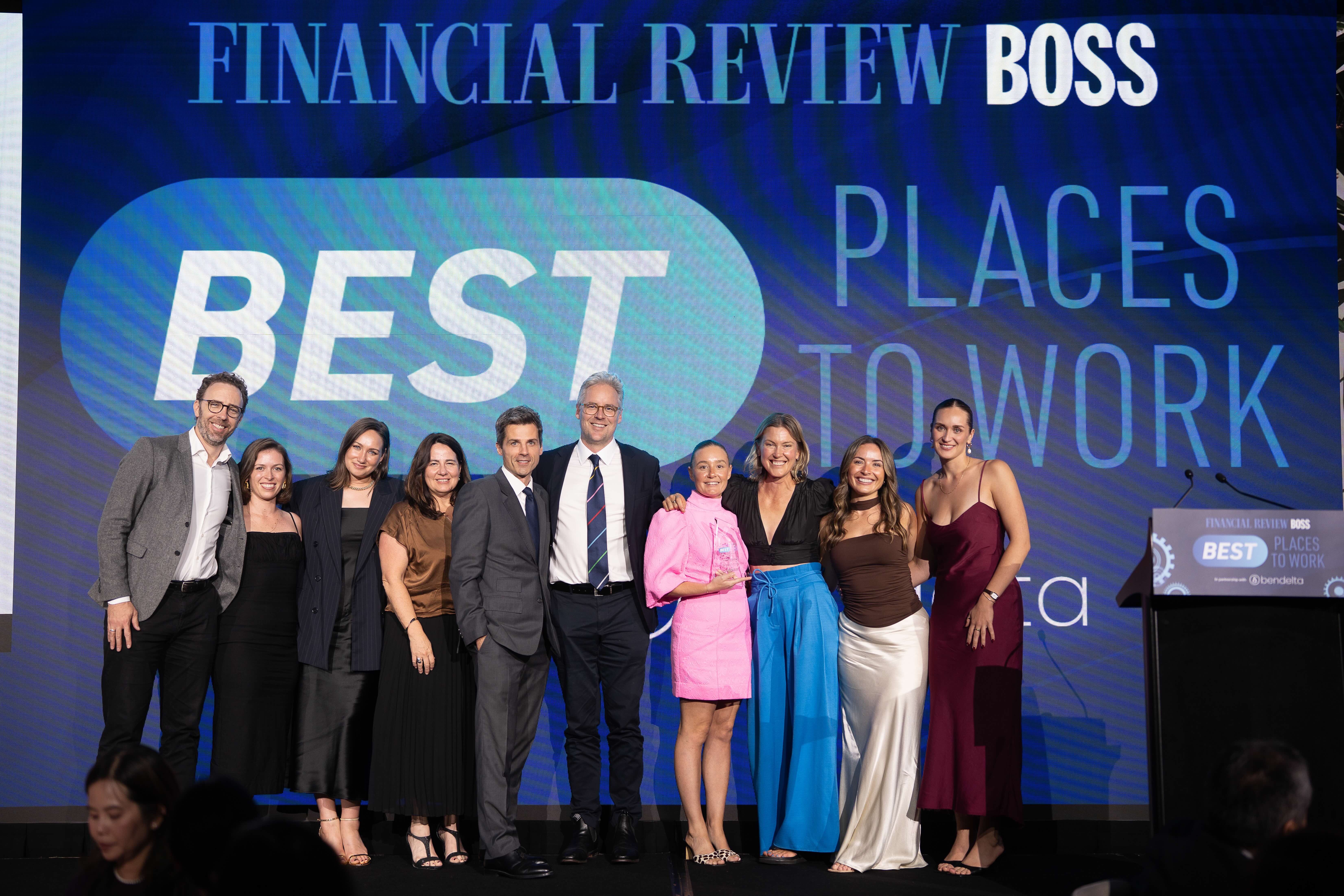
Fresh Clinics awarded at AFR BOSS Best Places to Work 2026
We’re incredibly proud to announce that Fresh Clinics has been named one of the AFR BOSS Best Places to Work for 2026. Not only did we make the prestigious list, but we were also honoured with the special award for ‘Energising’ – a recognition given to the business that best demonstrates a culture that motivates, inspires and brings out the absolute best in its people.
We’re incredibly proud to announce that Fresh Clinics has been named one of the AFR BOSS Best Places to Work for 2026. Not only did we make the prestigious list, but we were also honoured with the special award for ‘Energising’ – a recognition given to the business that best demonstrates a culture that motivates, inspires and brings out the absolute best in its people.
The Australian Financial Review recently shared insights into what makes a workplace truly exceptional, and it is a topic that hits home for us. As our Chief People Officer, Ally Atkins, puts it, "This award is evidence that you don't need to follow the masses with post-work drinks or ping-pong tables to make a difference in your people's lives." Instead, it is about creating an environment where you don't just show up, but where you actually get to be your best.
For those of us in the aesthetics industry, this is particularly relevant. Whether you are running your own clinic or working within a team, the atmosphere you cultivate directly impacts the care you provide to your patients.
Read the full article in the Australian Financial Review here.
Latest Articles

Ahpra Guidelines for Non-Surgical Cosmetic Procedures
The Australian Health Practitioner Regulation Agency (Ahpra) has released updated guidelines for registered health practitioners who perform non-surgical cosmetic procedures. These changes will come into effect in September 2025, and cover two key areas:
1. Advertising guidelines for higher-risk non-surgical cosmetic procedures
2. Clinical guidelines for performing non-surgical cosmetic procedures
The updated advertising standards clarify previously grey areas and bring existing obligations into sharper focus, helping practitioners to better meet their responsibilities. The good news for Fresh Clinics Members is that while the procedural guidelines have been updated, Fresh has long operated in line with these standards.
Whether you're a registered nurse, doctor, or other health professional offering cosmetic services, these updates apply to you. It’s essential to stay informed and ensure your practice remains compliant.
The below is a summary of the Clinical guidelines for performing non-surgical cosmetic procedures:
Purpose and scope
- These guidelines apply to non-medical registered health practitioners (e.g., nurses, dentists, pharmacists) who perform non-surgical cosmetic procedures.
- They aim to clarify professional responsibilities, ensure safe, ethical practice, and support informed patient decision-making.
- They do not expand the scope of practice or authorise practitioners to perform procedures outside their regulatory limits.
What counts as a non-surgical medical procedure
- Procedures that aim to change appearance (e.g., Botulinum toxin, dermal fillers, PRP, thread lifts, fat-dissolving injections, CO₂ laser resurfacing, and energy-based device treatments).
- They must not be confused with clinically justified treatments (e.g., removing skin cancers, treating severe acne).
Requirements and responsibilities
1. Scope of practice
Practitioners must only perform procedures they are qualified, trained, and competent to do and must comply with state/territory regulations, particularly for Schedule 4 medicines. Fresh Clinics offers state-of-the-art training to practitioners that supports a widening scope of practice for our Members.
2. Patient assessment
A holistic, culturally safe assessment is required, especially for psychological conditions (e.g., body dysmorphic disorder). If there are concerns, referral to an independent health practitioner like a GP or psychologist is required. Fresh Clinics' assessment process is ethical and thorough. Our hybrid model enables both in-person care and doctor support, plus a detailed assessment checklist to vet for BDD.
3. Under 18s
Fresh Clinics does not allow or support treatment for under-18s with S4 medications. According to Ahpra, procedures on minors are restricted and must have:
- A cooling-off period (7 days)
- Parental input & consent
- No upfront payment
4. Prescribing
Prescribing S4 medications must involve real-time (in-person or video) consultations — asynchronous prescribing is banned. No batch prescriptions are allowed; each person must have an individual prescription. Fresh Clinics handles and documents this safely within the Fresh App.
5. Informed Consent
Must include verbal and written plain-language consent from the patient. The practitioner must disclose:
- Procedure details, risks, alternatives
- Recovery expectations
- Provider credentials and fees
- Medicare does not cover cosmetic treatments
Separate, documented consent is required for any image use. These images must not be stored on personal devices. Patients can withdraw consent at any time, and practitioners must stop using images where possible. Fresh Clinics captures consent both physically in the Fresh App and verbally via telehealth.
6. Clinical care and aftercare
Practitioners must ensure continuity of care and have protocols for emergencies and complications, and must provide clear post-procedure instructions and contact details to patients. Fresh Clinics has strict and compliant aftercare, processes, and documentation. Learn more here.
7. Education and experience
Practitioners must complete:
- Relevant theoretical and hands-on training
- Ongoing CPD (Continuing Professional Development) in cosmetic procedures
- Must be competent in managing risks and complications, not just performing the procedure.
Fresh Clinics' training and education are CPD certified. We also regularly host free resources and webinars that offer CPD points to Members. Our complication management and training for complication management is the gold standard and the best in Australia.
8. Advertising and finance
Practitioners must follow:
Practitioners must not:
- Glamourise procedures
- Offer financial incentives, discounts, or influencer deals
- Promote finance schemes (e.g., loans, afterpay)
9. Facilities and infection control
Facilities must match the procedure risk level and be compliant with all legal and safety standards. Procedures involving injections or piercing skin should ideally occur in an accredited facility. Fresh Clinics supports Members through strict compliance checks and protocols.
10. Complaints handling
Patients must be informed of how to lodge complaints (e.g., Ahpra, health complaints bodies), and NDAs must not prevent complaints to regulators.
Specific Guidance for Nurses and Midwives (Appendix A)
- Midwives cannot perform cosmetic procedures.
- RNs: Must have 1 year of full-time postgraduate experience in General or specialist nursing practice (excluding non-surgical cosmetic injectables) before entering cosmetics; endorsement as NP not possible solely in cosmetics. Fresh Clinics has always had this requirement in place for our Members.
- ENs:
- Must work under RN supervision
- Need experience in a related area (e.g., dermatology)
- Cannot inject in high-risk facial areas unless under strict conditions
The below is a summary of the Advertising guidelines for higher-risk non-surgical cosmetic procedures:
Purpose and scope
- Developed by National Boards to ensure safe, honest, and responsible advertising of higher-risk non-surgical cosmetic procedures.
- Applies to registered health practitioners, non-registered individuals, and businesses that advertise these procedures.
- Focuses on protecting vulnerable consumers, given the serious and potentially irreversible risks involved in these procedures.
What counts as a higher-risk non-surgical medical procedure
Botulinum toxin, dermal fillers, PRP, thread lifts, fat-dissolving injections, and Sclerotherapy.
Advertising requirements
1. Practitioner responsibility
Advertising must not exploit insecurities or target psychologically vulnerable individuals (e.g., with body dysmorphic disorder). Practitioners must prioritise the duty of care over financial gain. Cost info must be clear and comply with TGA regulations.
2. Claims & titles
Advertising must not exaggerate qualifications or imply specialist status without appropriate registration, and registration details must be clearly displayed.
3. Testimonials
Strictly prohibited. This includes:
- Patient stories or outcomes
- Likes, reposts, or links to patient reviews
- Social media ‘stories’ with testimonials
- Practitioners must not interact with third-party testimonials
4. Influencers & ambassadors
Advertisers are responsible for content shared by influencers on their behalf, and influencers must not use testimonials or misleading claims.
5. Use of Images
No misleading, retouched, or filtered images. Before and after images must be:
- Genuine, unedited, and comparable in conditions
- Accompanied by disclaimers on the variability of results
- Not used on individuals under 18
- No sexualised, entertainment-focused, or lifestyle imagery
6. Risk & recovery
Risks must be clearly stated, not downplayed (e.g., avoid terms like “simple” or “painless”). Recovery timelines and possible lifestyle impacts must be disclosed. Procedures must not be trivialised (e.g., competitions or giveaways).
7. Body image & mental health
Advertising must not:
- Imply normal ageing or variations need fixing
- Promise improved mental health or self-esteem
- Promote unrealistic or idealised beauty standards
8. Expectations of outcomes
Claims must be objective and evidence-based. Practitioners must be clear about:
- When results will appear
- How long they will last
- Need for ongoing treatments
9. Protecting at-risk audiences
No advertising to under-18s or on youth-oriented platforms. Avoid targeting vulnerable groups through metadata, hashtags, or excessive posting.
Actionable steps you can take now:
1. Set aside dedicated time
This is not a document to skim. Block out time in your calendar to read the full guidelines without interruption. You may need to revisit it multiple times.
2. Go analogue
Print the documents or have a notebook ready. Highlight important sections and jot down notes or questions as you go. This helps you retain the content and identify what specifically applies to your clinic.
3. Audit your own platforms
Set time aside to review your social media, website, and marketing materials. We recommend doing this yourself. While some AI-driven tools or services are available, we’ve found they often miss important context or aren’t fully aligned with Australian regulations and complexities between TGA and Ahpra.
4. Budget for updates
You may need a refreshed brand photoshoot (avoiding needles or identifiable patient info), new graphic assets, or website changes. Factor this into your business plan now, and make sure any agencies or freelancers you work with are across the new rules.
5. Adjust your IG settings
Update your Instagram business profile to restrict your content to 18+ only. This is a simple step toward compliance that many overlook.
6. Focus on the law, not the norm
Don’t rely on what others in the industry are doing. Knowing and applying the actual regulations, not what appears to be common practice, is key to protecting your reputation and remaining compliant.
8. When in doubt, seek legal advice
If you’re engaging external marketers or influencers, or if you have questions around compliance for your unique business model, a qualified legal advisor can help clarify your responsibilities.
About Ahpra
The Australian Health Practitioner Regulation Agency (Ahpra) is the national body responsible for regulating health professionals across Australia. Ahpra sets the standards that ensure public safety and maintain professional conduct across 16 health professions.

Managing a Complication with Sharna Hill
When Sharna faced one of the most challenging moments in her career, Fresh Clinics helped her navigate it smoothly.
Introducing Sharna
Sharna is a registered nurse with over 30 years of experience across various fields. In 2021, she founded Canvas Cosmetic Clinic in South Perth.
One of the first things Sharna did when opening her practice was to join Fresh Clinics. Over the years, she’s valued our support, medical oversight, and professional guidance – but never more so than in August 2024.
Recognising the emergency
It began as an ordinary day. Sharna was performing a cheek filler, and everything seemed normal.
“We were doing cheek filler, and so we had an entry point at the zygoma. We had just started when I saw a big white flash. I knew straight away it was a vascular occlusion,” Sharna recalls. “I waited a few seconds, checked the capillary refill, and confirmed it. ‘Yep, we actually do have one.’”
Understanding the gravity of the situation, Sharna didn’t panic. Instead, she stopped everything, took a breath, and reassured her patient.
“The most important thing in that moment is to stay calm,” she explains. “There’s nothing you can do to change it – only move forward positively and ensure the patient remains calm.”
Immediate response with Fresh Clinics’ guidance
With no time to waste, Sharna immediately reached out to Fresh Clinics’ medical team for expert support. “We got on to Fresh, and they guided us through reconstituting the Hyalase and starting the dissolving process.”
Over the next 4-5 days, Sharna used 17 vials of Hyalase to dissolve the filler, far more than many practitioners might anticipate needing. No adverse event is ever the same as the last, so it’s important to remember that the same rule applies to the treatment and resolution; the response and requirements are always on a case by case basis.
“A lot of people assume that if you have a vascular occlusion, you inject Hyalase, it dissolves, and that’s the end of the story. But that’s not the case,” she explains. “You have no control over where the filler embolises. Little chunks break off into other vessels, so you have to keep treating until it’s all gone.”
The importance of preparation and support
Reflecting on the experience, Sharna notes the importance of having the right support and stock on hand, especially for practitioners working in remote areas.
"Imagine how stressful that would be if you were on your own, felt unsupported, and didn’t have the product you needed to dissolve the filler. That’s why stock management is so important,” she says.
Despite the high-pressure situation, Sharna never doubted her ability to handle it. “I felt quite calm in the moment. I never once thought, ‘Oh my God, what am I going to do?’ I knew I had used the right technique and mitigated risk as much as possible, but this just proves that complications can happen to anyone.”
Why Fresh Clinics is essential for every cosmetic practitioner
Sharna believes every cosmetic nurse should have a trusted medical oversight partner like Fresh Clinics.
“You don’t know what you don’t know. You can be as confident as you like, but when something happens, you realise there are things you hadn’t even considered,” she says. “Having Fresh means you’re supported from every angle, whether it’s business, medical guidance or dealing with adverse events.”
For Sharna, the experience reinforced the need to avoid isolation. “We’ve all been in that position where we didn’t know what to do – whether it was 20 years ago, 5 years ago, or last year. Being part of a cohort that truly supports and helps you is invaluable.”
Fresh Clinics made all the difference in Sharna’s case, providing immediate access to expert medical advice, clear protocols for adverse event management, and ongoing reassurance.
If you want to practice with confidence, knowing you have the right support in place should an adverse event occur, it’s time to partner with Fresh.

Helping Sue Stay Compliant and Confident
For Sue, owner of Bella Complexion, running a compliant and streamlined clinic is just as important as delivering high-quality treatments.
With years of experience in cosmetic medicine, she knows that staying on top of industry regulations can be overwhelming, especially as a solo operator. That’s why Sue has been a Fresh Clinics member since 2017, relying on our platform to ensure compliance, efficiency, and access to medical support when it matters most.
A seamless, compliant system
With Fresh Clinics, Sue doesn’t worry about compliance slipping through the cracks. Everything is organised and accessible, from monthly compliance checks in the Fresh platform to streamlined digital consent forms, the digital Drugbook, real-time patient documentation, and aftercare.
“You just feel that you're compliant with all of the changes that are happening. If AHPRA knocked on my door, I know that everything is covered,” she explains. For Sue, the Fresh Clinics system is not just a convenience – it’s peace of mind.
“As a single operator, it’s nice to have an app that makes my life so easy. I monitor the fridge, I have all my emergency drugs in place, and the patient speaks to the doctor as well. There’s no nook or cranny for them to pick on.”
But, even with the best practices in place, complications can happen…
A subtle sign with significant implications
Last year, Sue experienced her first vascular occlusion in 12 years.
“I took extra special care – aspirated the syringe, counted to ten, injected slowly, kept moving the needle. Everything looked great, and the patient was happy.” Twelve hours later, though, Sue noticed a subtle change.
“She had a little bruise, nothing major, but when I saw the photo, my heart sank. Over the next little while, I could see it developing. It followed a reticular pattern up to her temple and down to her jawline.”
Calling Fresh Clinics for help
Immediately, Sue called Fresh Clinics’ medical team.
“I explained the situation, and we got on a call with the doctor. We dissolved it with Hyalase, and she ended up needing 10 rounds. Without quick action, she could have had necrosis or even, in a worst-case scenario, blindness.”
Having Dr John Holbrook, one of Australia’s most experienced aesthetic doctors, on the case made all the difference, says Sue.
“There was no panic on his side. He’s so experienced that he remained calm, focused, and conscientious. When you work with doctors who aren’t comfortable with emergencies, they can get stressed and react poorly – but with Fresh, you’re in safe hands.”
Managing complaints with confidence
If adverse events are an unavoidable part of healthcare, so too are complaints. When a patient complains about the treatment you’ve provided, it can be upsetting and unnerving. It makes you question yourself.
One of the many good things about the Fresh platform is that it can help to keep you compliant, ensuring you’ve followed the appropriate treatment protocols, gained consent, documented everything, and provided proper aftercare.
That meant a great deal to Sue when she received a complaint from a patient. Under other circumstances, Sue would have panicked, but thanks to Fresh, she was confident she'd followed all the appropriate procedures at the time. She calmly contacted Fresh, and they located the documentation she needed to show that she had done her job properly and followed all necessary steps for appropriate treatment and thorough aftercare.
Why Fresh Clinics is a must-have for solo practitioners
Sue believes that no cosmetic nurse should try to navigate compliance or manage complications alone.
“You don’t know what you don’t know. You can be as confident as you like, but when something happens, you realise how important it is to have support,” she says.
With Fresh Clinics, Sue has a structured, compliant, and stress-free system that helps her focus on what she loves most – helping her clients age well on their own terms. Summing up her view of Fresh Clinics, Sue says, “It’s a very polished service, and I love being part of it.”

Embracing AI in Marketing for Cosmetic Clinics
-2.png)
It’s no secret that artificial intelligence is becoming a part of everyday business. From writing captions to planning your content calendar, AI can help make marketing easier, faster, and more efficient.
But let’s be clear: AI isn’t here to replace you or your clinic’s unique brand voice. What it can do is help you save time and stay consistent, so you can focus more on patient care and outcomes.
AI = Your new marketing assistant
The most successful clinics are using AI to write better emails, shape messaging for patients’ needs, and automate repetitive admin tasks. It’s not about losing the human touch, it’s about using tools that give you more time to be present for your patients.
You’re still the expert. AI just helps with the heavy lifting behind the scenes.
Your 90-day AI refresh plan for your business
Treat your marketing like you treat skin—it needs regular TLC to stay glowing. Here’s your every-90-days marketing check-in. Every quarter, take a moment to reflect on:
- Your mission: What change are you helping your patients make?
- Your ideal patient: Who are they, and what are they looking for?
- Your point of difference: Why would someone choose you over another clinic?
- Your strengths: Where can AI support you, and where is your personal touch essential?
Think of it like a quarterly skin check-up, but for your marketing.
No matter how good AI gets, patients will always want a real human connection. They want to feel safe, heard, and understood, and that’s something that can’t be automated. Use AI to draft your email, but you add the warmth. Use it to auto-send birthday messages, but follow up with a personal message or check-in.
And remember: behind every open rate, every click, and every conversion... is a human being who trusts you with their face. Marketing isn’t optional - it’s a core part of growing a successful business. And learning how to do it well is one of the most valuable skills you can build.
Fresh Clinics Members get exclusive access to The Clever Bunch, a 12-week marketing mentoring program run by international marketing experts at Basic Bananas.

Why Thrive is the Future of Aesthetics
In a rapidly shifting industry where new competitors, products, and regulatory changes are rewriting the rules, growth alone isn’t enough. You can’t control change. But you can build a business that’s ready for it.
As we approach The Fresh Life 2025, the theme 'Thrive' invites us to explore the depths of resilience, smart growth, differentiation, and longevity. It’s about strategic, intentional success that stands the test of time, even when the rules keep changing.
This year, we're done with just surviving. It’s time to think bigger. To build stronger. To thrive.
What it means to Thrive
Thriving is growth with purpose. It's about creating businesses that are not only successful today, but are also designed to lead the future of aesthetics tomorrow.
At The Fresh Life 2025, we’ll be diving into what it takes to thrive:
- Resilience by design
True resilience is about strong foundations, smart decision-making, and having a clear direction so your business can adapt and evolve without losing its way. - Strategic growth
At The Fresh Life, you’ll learn how to grow intentionally, making the right moves at the right time, with a clear vision for where you want your business to go. - Differentiation that matters
Positioning is not just about being different; it's about being relevant. You also need to communicate that difference in a way that your patients can feel. - Retention that works
Real success isn’t just about attracting new patients - it’s also about keeping them. We’ll be exploring loyalty strategies that turn first visits into lifelong relationships and satisfaction for your patients, without relying on endless promotions or discounting your value. - Real local impact
Forget big ad budgets. Thriving businesses are those that understand their communities, tap into local insights, and build strong reputations that no amount of advertising can buy.
Why ‘Thrive?’
Think of a palm tree. It doesn’t just survive in harsh conditions; it thrives in them. Flexible under pressure. Rooted deep for strength. Designed to grow exactly where others struggle.
At The Fresh Life 2025, we’re building businesses that embody that same philosophy: Strong, strategic, adaptable, and flourishing.
This year’s Fresh Life will be filled with masterclasses, expert panels, and real-world strategies that will help you build a business that’s not just bigger — it’s better, smarter, and stronger than ever before.
Don't miss your chance to THRIVE. Tickets to The Fresh Life 2025 are now on sale - secure your spot here!
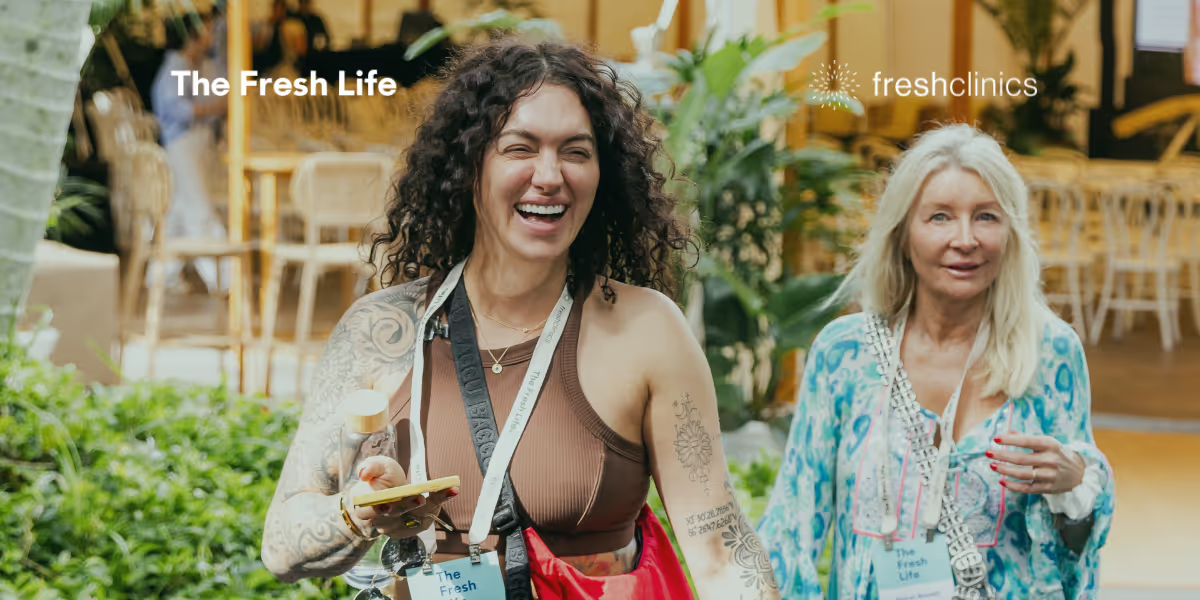
Thrive at The Fresh Life 2025 Conference
In a rapidly shifting industry where new competitors, products, and regulatory changes are rewriting the rules, growth alone isn’t enough. You can’t control change. But you can build a business that’s ready for it.
As we approach The Fresh Life 2025, the theme 'Thrive' invites us to explore the depths of resilience, smart growth, differentiation, and longevity. It’s about strategic, intentional success that stands the test of time, even when the rules keep changing.
This year, we're done with just surviving. It’s time to think bigger. To build stronger. To thrive.
Now in its fourth year, The Fresh Life has become known for three things that make all the difference:
What it means to Thrive
Thriving is growth with purpose. It's about creating businesses that are not only successful today, but are also designed to lead the future of aesthetics tomorrow.
At The Fresh Life 2025, we’ll be diving into what it takes to thrive:
- Resilience by design
True resilience is about strong foundations, smart decision-making, and having a clear direction so your business can adapt and evolve without losing its way. - Strategic growth
At The Fresh Life, you’ll learn how to grow intentionally, making the right moves at the right time, with a clear vision for where you want your business to go. - Differentiation that matters
Positioning is not just about being different; it's about being relevant. You also need to communicate that difference in a way that your patients can feel. - Retention that works
Real success isn’t just about attracting new patients - it’s also about keeping them. We’ll be exploring loyalty strategies that turn first visits into lifelong relationships and satisfaction for your patients, without relying on endless promotions or discounting your value. - Real local impact
Forget big ad budgets. Thriving businesses are those that understand their communities, tap into local insights, and build strong reputations that no amount of advertising can buy.
Why ‘Thrive?’
Think of a palm tree. It doesn’t just survive in harsh conditions; it thrives in them. Flexible under pressure. Rooted deep for strength. Designed to grow exactly where others struggle.
At The Fresh Life 2025, we’re building businesses that embody that same philosophy: Strong, strategic, adaptable, and flourishing.
This year’s Fresh Life will be filled with masterclasses, expert panels, and real-world strategies that will help you build a business that’s not just bigger — it’s better, smarter, and stronger than ever before.
Don't miss your chance to THRIVE. Tickets to The Fresh Life 2025 are now on sale - secure your spot here!
Invest in Yourself at The Fresh Life 2025
Australia’s most-loved aesthetics conference is back - bigger, bolder, and better than ever.
The Fresh Life returns to Brisbane’s Howard Smith Wharves from September 2-4, this year built around the evolving needs of cosmetic nurses, clinic owners, and aesthetic professionals.
Whether you're new to the industry or looking to refine your skills, The Fresh Life is the one event on your calendar where you’ll walk away recharged, reconnected, and ready to grow.

Now in its fourth year, The Fresh Life has become known for three things that make all the difference:
1. Clinical confidence through hands-on learning
You’ll leave with real, practical skills. Learn from expert-led demonstrations and structured protocols designed to build your confidence, improve patient outcomes, and expand your capabilities - all in a supportive environment where it’s safe to ask questions and try new things.
2. Business growth strategies that work
From patient journey design to team building, you’ll hear from those who’ve done it - and are ready to share how. You’ll walk away with tips you can implement the same day.
3. Real talk and meaningful connections
We don’t shy away from the big conversations: regulatory changes, professional autonomy, and ethical patient care. Join panel discussions that are honest, practical, and empowering.
At The Fresh Life, you’re more than just an attendee. We’ve crafted this conference to feel like an extension of your support network, where traditional industry boundaries fade, and your voice is always heard. This is your space to grow, connect, and feel empowered. You’ll leave with new skills and the confidence and community to support you long after the event ends.
Real results from The Fresh Life 2024
Meet Rachel and Ashlea, the founders of Santé Skin Boutique in Western Australia. Their clinic is known for celebrating real people, real skin, and real results.
Attending The Fresh Life 2024 was a defining moment for the duo. As first-time attendees, they arrived eager to expand their knowledge and bring fresh insights back to their clinic. What they didn’t expect was just how transformative the experience would be.
“
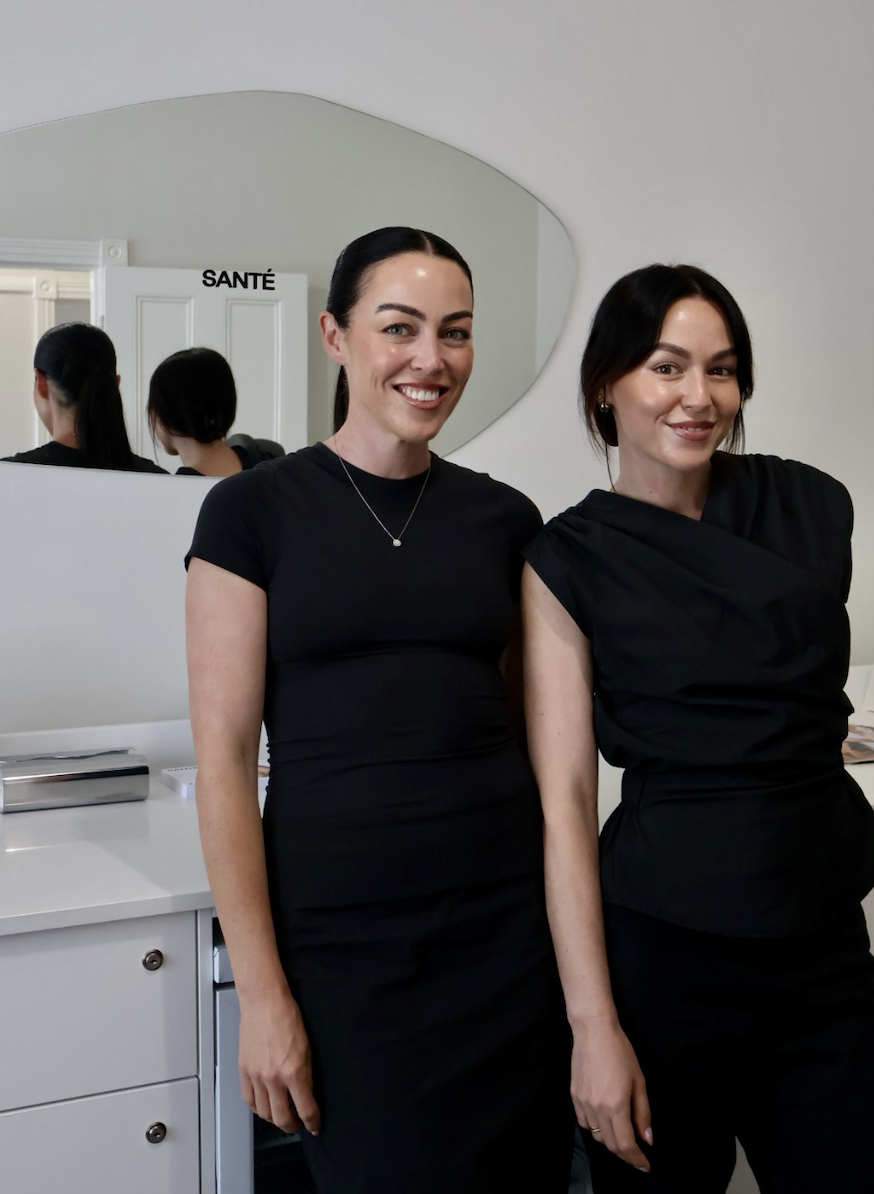
The Fresh Life was a huge milestone for us - our very first aesthetics conference - and it did not disappoint! We went in looking to learn new skills and techniques, but we walked away with so much more.
The real highlight was the connections we made. Being a small business owner can sometimes feel isolating, so stepping into such a welcoming and inspiring community was everything. The Fresh family made us feel right at home, and being surrounded by industry leaders, expert speakers, and incredibly talented nurses left us beyond inspired.”
One of the most impactful takeaways for Rachel and Ashlea was the power of the consultation process. Inspired by Mike Clague’s session on enhancing patient satisfaction, they saw an opportunity to take their customer journey to the next level.
From this, they created the ‘Santé Skin Edition’ - a personalised consultation tool designed to guide patients on their skin journey. This includes a customised ‘Skin Regime’ with at-home skincare recommendations and a ‘Skin Schedule’ outlining in-clinic treatments tailored to their skin goals.
“The response has been amazing! Patients love having a clear, personalised plan they can take home and reference, and for us, it’s been a game-changer in improving patient retention and encouraging pre-booked treatments. Simple, effective, and transformative - just how we like it.”
For those considering attending The Fresh Life 2025, they have one piece of advice: “Go in with an open mind and be ready to be inspired - it’s an experience that will change the way you work, think, and connect in this industry.”
Tickets to The Fresh Life 2025 are now on sale. Don’t miss your moment - secure your spot here.
Retail in Cosmetic Clinics: A Natural Approach to Selling
Retail isn't just reserved for department stores or beauty boutiques. In fact, integrating retail products in your aesthetic clinic can significantly enhance patient outcomes, add to your revenue, and offer a competitive advantage.
A tailored approach to treatments not only enhances patient outcomes but also creates opportunities to introduce complementary products and services. By personalising recommendations based on individual needs, clinics can build trust and improve patient satisfaction, making them more likely to explore additional offerings. Patients are already investing in their skin; guiding them toward the right products ensures they achieve the best possible results.
Patient Outcomes
Patients come to your clinic seeking solutions for their skin concerns, and the products they use at home play an important role in maintaining results. 80% of a patient's outcomes come from their at-home routine. By offering retail products tailored to skin concerns, you empower patients to extend the benefits of your treatments, and encourage them to come back.
Overcoming the Hesitation to Sell
Many practitioners feel uncomfortable selling retail products, fearing it will seem pushy or take time away from treatments. However, retailing should be seen as an extension of patient care rather than a sales pitch.
Strategies to make retail feel natural:
- Position retail as part of treatment plan: Frame product recommendations as essential for post-treatment care and long-term results
- Use the right language: Features are the factual aspects of a product - ingredients, clinical data, etc. Benefits, on the other hand, answer the question, "What's in it for me?" For instance, instead of just stating that a serum contains Vitamin C, highlight that it will brighten their skin, reduce pigmentation, and give them a radiant glow
- Integrate retail into the consultation: Introduce products early in the conversation rather than at checkout, making them feel like a natural part of the process
- Leverage trust: Unlike a walk-in at a department store, your patients have invested time and trust in your expertise. Recommending products that align with their treatments will reinforce this trust
Retail as a Revenue Stream
Retail offers a profitable revenue stream with minimal effort. Unlike aesthetic treatments, retail sales generate income even when you’re not in the clinic. Successful clinics integrate e-commerce, allowing patients to repurchase products online, which in return creates a passive income.
Start thinking beyond treatments and embrace retail as a powerful tool for growth.
At Fresh Clinics, we support our members in building successful businesses, including strategies for seamless retail integration. If you're ready to take your clinic to the next level, reach out to our team today, call us, or schedule a time to chat below.
Why Compliance Matters in Aesthetic Medicine
Over the weekend, reports emerged about three individuals in NSW being hospitalised after receiving botulinum toxin treatments. Notably, the treatments were done at residential premises by a non-healthcare practitioner with an unapproved variant of botulinum toxin.
The cases of botulism have sparked widespread concern and once again placed the aesthetics industry under scrutiny.
As expected, this has caused concern within the industry and among the public. However, while stories like this grab attention, they often fail to distinguish between illegal operators and highly trained, compliant medical professionals who prioritise patient safety.
While these incidents are alarming, they highlight the importance of regulatory compliance, training, and choosing authorised providers for cosmetic treatments.
What is Botulism?
In an aesthetic context, botulism can occur if a sufficiently large dose of botulinum toxin is inadvertently administered. When a patient is injected with TGA-approved products (Dysport, Xeomin, Letybo, Nuceiva, and Botox are all approved for use in Australia by the TGA) by trained healthcare practitioners, developing botulism from cosmetic injectables is exceedingly rare.
The doses of these products used in aesthetics are generally not large enough to cause systemic symptoms and botulism, which can include:
- Progressive weakness, particularly in the area of injections
- Difficulty swallowing
- Drooping eyelids
- Blurred or double vision
- Difficulty breathing
The unfortunate reality is that incidents like these can occur when unqualified individuals administer treatments without proper training or oversight. These unregistered individuals pose significant risks to those receiving treatments and often, as is the current case in NSW use non-TGA-approved or counterfeit products, improper dosing, and unsanitary conditions - all of which can lead to devastating severe complications including botulism.
Tips for Practitioners to Maintain Compliance
Fresh Clinics works with and advocates for practitioners in the industry to uphold the highest standard of safety and care. Some of the key actions that cosmetic nurses and doctors should follow to maintain compliance include:
- Using TGA-approved S4 medications, including those approved products mentioned above (these can be sourced through Fresh Clinics)
- Completing quarterly clinic compliance checks
- Holding the correct council permits, and insurance, and maintaining up-to-date training
- Keeping emergency S4 medications on site
- Holding the correct poisons permits
- Maintaining Ahpra registration
Staying Updated on Compliance with Dr John Delaney and Dr John Holbrook
What Patients Should Look Out For
We encourage anyone considering aesthetic treatments to verify the qualifications of their practitioner and avoid risky, cheaper alternatives.
As Dr Jeremy McAnulty from NSW Health stated in the recent reports, botulism, while rare, can have life-threatening consequences. This is why it is vital for patients to:
- Verify that their practitioner is qualified and registered with Ahpra
- Ensure treatments are conducted in a clinical setting
- Avoid unregulated "home jobs" or discounted services that may compromise safety
Fresh Clinics’ Dedication to Compliance and Safety
Fresh Clinics works tirelessly to maintain the highest standards of compliance and safety across every practitioner in our network.
We work exclusively with trained, licensed nurses and doctors who adhere to Australian regulatory requirements, including Ahpra, Therapeutic Goods Administration (TGA) state Departments of Health, and local council standards and requirements.
Every treatment authorised with Fresh Clinics is overseen by qualified medical doctors, ensuring that patients receive the care they can trust.
Our Members operate under strict compliance protocols, supported by software and systems designed to ensure patient safety and quality care:
- Medical Directorship: Every treatment is supported by medical oversight, ensuring that all procedures are clinically appropriate and safe
- Regulated Products: Our Members exclusively use TGA-approved S4 medications where sourced through Fresh Clinics
- Complication Management: Should a complication arise, our doctors are available 24/7 to provide immediate advice and intervention
Fresh Clinics is the trusted partner for safe and compliant aesthetic treatments. We provide end-to-end support, from seamless telehealth consultations and regulatory compliance to complication management and training.
For patients, this means peace of mind knowing their treatments are performed by skilled professionals operating within a regulated framework. For practitioners, it means having the tools, knowledge, and support to thrive in a complex and evolving industry.
If you have questions about compliance or need support, reach out to our team today, call us, or schedule a time to chat below.